
Hope for Perfectionists: Solomon’s Imperfect Request

As someone who struggles with perfectionism, I often agonize over questions like “Did I say something wrong? Do something wrong?” when people – and sometimes even God – don’t respond the way I hope. While it’s good to take the log out of my own eye, I can easily take this too far and assume there is always a correlation between my social finesse or spiritual growth and how a situation is unfolding.

My unhealthy fixation on personal competence is why, when I was reading the famous story of Solomon asking God for wisdom in 1 Kings 3:1-15 a few days ago, I was struck for the first time by everything God chose to overlook about Solomon, even as he responded to his request with abundant favor.

That night the Lord appeared to Solomon in a dream, and God said, “What do you want? Ask, and I will give it to you!”
 Solomon replied, “You showed great and faithful love to your servant my father, David, because he was honest and true and faithful to you…
 Now, O Lord my God, you have made me king instead of my father, David, but I am like a little child who doesn’t know his way around…  Give me an understanding heart so that I can govern your people well and know the difference between right and wrong. For who by himself is able to govern this great people of yours?”

1 Kings 3:5-8

Each time I’ve read this story before, I’ve thought, “Wow, Solomon was already so wise and humble! If God appeared to me and told me to name my heart’s desire, there’s no way I would have responded that well.”

But as I read this passage again recently, I began noticing other details. While Solomon did make a much wiser request than I would have likely made, he’d already made other choices that directly violated God’s law. He’d married a foreign wife who worshiped false gods (3:1; 11:4). Not only were Israelites worshiping God in places other than those God had specified, but Solomon himself was participating in that worship (3:2). 

However, God doesn’t mention any of this when he appears to Solomon, although he will address both issues later in Solomon’s reign (1 Kings 11:1-13). Instead, he responds to the heart of love that motivated Solomon to offer a staggering 1,000 burnt offerings, as well as the eternal covenant God previously made with Solomon’s father, David.

How does this interaction encourage me? While I don’t think it communicates that we can habitually disregard God’s Word and expect uninterrupted blessing (Paul discusses the relationship between grace and obedience in Romans 6:1-11), for someone like me who struggles with perfectionism, this story brings hope that when God blesses us, he does so out of a conscious choice to overlook our imperfections, not as a reaction to our crossing every “i” and dotting every “t.”

God can shower us with abundance and remain both holy and loving because he’s looking not at us, but rather at Jesus’ sinless life that was lived in our place, and his spotless death that absorbed the full force of divine wrath that we deserve. This is what God was anticipating when he answered Solomon’s prayer so extravagantly, and this is also what he looks back to each time he responds to you and me. 

“So then, since we have a great High Priest who has entered heaven, Jesus the Son of God, let us hold firmly to what we believe. This High Priest of ours understands our weaknesses, for he faced all of the same testings we do, yet he did not sin.  So let us come boldly to the throne of our gracious God. There we will receive his mercy, and we will find grace to help us when we need it most.” ~Hebrews 4:14 -16 

Reflections from a Shattered Mirror: My First Driving Incident

I should have seen it coming. I should have seen it coming as I scampered out of the parent-teacher conference, hoping parents who were familiar with my years-long battle with seizures would notice it was Mr. Utomo’s wife who was driving home to save the day. I definitely should’ve seen it coming as I caught myself speeding down Monterey highway, clocking close to 60 mph in a 45 mph zone. Perhaps I should’ve seen it coming as early as last year, when I delighted in recounting Ivan’s humorous – and costly – collision with the newly-placed bollards separating San Jose’s bike and car lanes.

But I did not see it coming.

A couple of weeks ago, Ivan was facilitating the final informational meeting for the international trip he leads every June for Valley Christian. In 2023, we went to London and Paris, and last year we visited Japan. This year we’re heading to Austria, Hungary, and Czechia, so stay tuned for my post-trip recap!

The evening of Ivan’s presentation we arrived 15 minutes early, which allowed plenty of time to set up the PowerPoint and greet hyper-punctual parents. Until we discovered that Ivan brought his backpack sans laptop. He has been relatively inseparable from his laptop since I met him in 2013. Nevertheless, now was not the time to delve into the philosophical or psychological implications of this anomaly. Now was the time for action.

“No problem!” I beamed, delighted to be of more vital assistance than passing out medication release forms – a job that can also be performed by a well-placed chair. “I’ll dash home and grab the laptop. Be back soon!”

We live about seven minutes from school. I calculated that the meeting might start a couple of minutes late, but If Ivan opened with a Q&A instead of his presentation, there wouldn’t be a material loss. 

Ivan’s laptop was lying on the coffee table – within easy reach of the door – when I burst into our living room at 5:50 pm, adrenaline pumping and fully prepared to go to herculean measures in order to locate the missing equipment. Nonplussed, I fired off a quick “Heading back now” text and dashed out to our white Hyundai.

Something I haven’t mentioned in my posts about re-learning to drive is my lack of depth perception. To me, the world looks flat. This is not a result of my accident. I was born without depth perception, and I learned to compensate for this when I began driving as a teenager. Basically, I need to drive slower and allow more space between myself and surrounding objects than other drivers.

But that night, I wasn’t thinking about my vision. I was amused that Ivan had been separated from his laptop for the first time in over a decade, and delighted that I was earning my keep as his assistant and showing off my relatively new driving skills to parents I only see a couple of times a year.

I didn’t see the post.

Our condo has a carport. Our parking spot is flanked by our neighbors’ SUV on one side, and a wooden post on the other. Although I got my driver’s license back over six months ago, I still back out of the carport with trepidation, cognizant that even a tiny error might damage our car or our neighbor’s.

Nevertheless, that night I was fixated on the impending triumph of passing Ivan his laptop in front of a roomful of parents. I accelerated out of our carport for the first time in my driving career until –  POP! A pistol crack caused me to slam on brakes.

 Our right passenger’s mirror lay shattered in our parking spot, neatly clipped off by the carport post. There had been no warning – just instant, irreversible damage. All thoughts of a hero’s re-entry to the parent-teacher conference were instantly replaced with the realization that what I’d just done to our car was far more costly than Ivan forgetting his laptop.

I also realized that my husband was still waiting on me to deliver said laptop. And he’d get anxious very quickly if I did not materialize soon after texting I was on my way back. All I could do was breathe a quick prayer for God’s protection and commence a very tentative return journey to school, painstakingly checking my right blind spot every few seconds.

Ivan’s smile of delight when he saw me trudging down the hallway with the laptop cut like a razor. 

“Thank you so much – “ he began, but I cut him off.

“Just start.” I hissed, then added apologetically. “We’ll talk later.”

Somehow I endured the lengthy presentation and passed out the medication forms with a smile, all the while wishing Ivan had selected a chair as his assistant instead of me. Chairs do not rack up exorbitant car repair bills. 

Now that I’ve had time to reflect on this incident, I can see God using it in several ways. While the mirror is costing more and taking longer to fix than we’d anticipated, it’s also a relatively mild way to sanctify my need to be needed. My driving record is still “clean” and the only thing besides our car that got seriously hurt was my pride. Ivan responded to my confession with textbook compassion, and has not complained about the difficulties of driving – or parking – without a mirror since then. I’ve learned that, given my vision, there’s no extenuating circumstance that justifies rushing when I’m in the driver’s seat. I’ve also been reminded that any help I may be able to offer someone is a privilege, and the moment I begin taking credit for it is the moment I risk turning a God-given gift into something damaging. 

Now to finish fixing that mirror…

Life!Line Podcast is Up, plus “Hello, God” Launch Party Tomorrow!

Good morning, Blogging Family! As promised, here’s the podcast link to the radio interview with Craig Roberts that we did earlier this week. We were so grateful for Craig’s support for our first book, Walking with Grace, and it was a privilege to speak with him again and discuss how God has continued to shape our lives, whether that’s been learning to practice trusting God in the little details of daily life or seeing God’s redemption play out in the big picture with more intense trials and challenges. I hope our conversation will be encouraging to you!

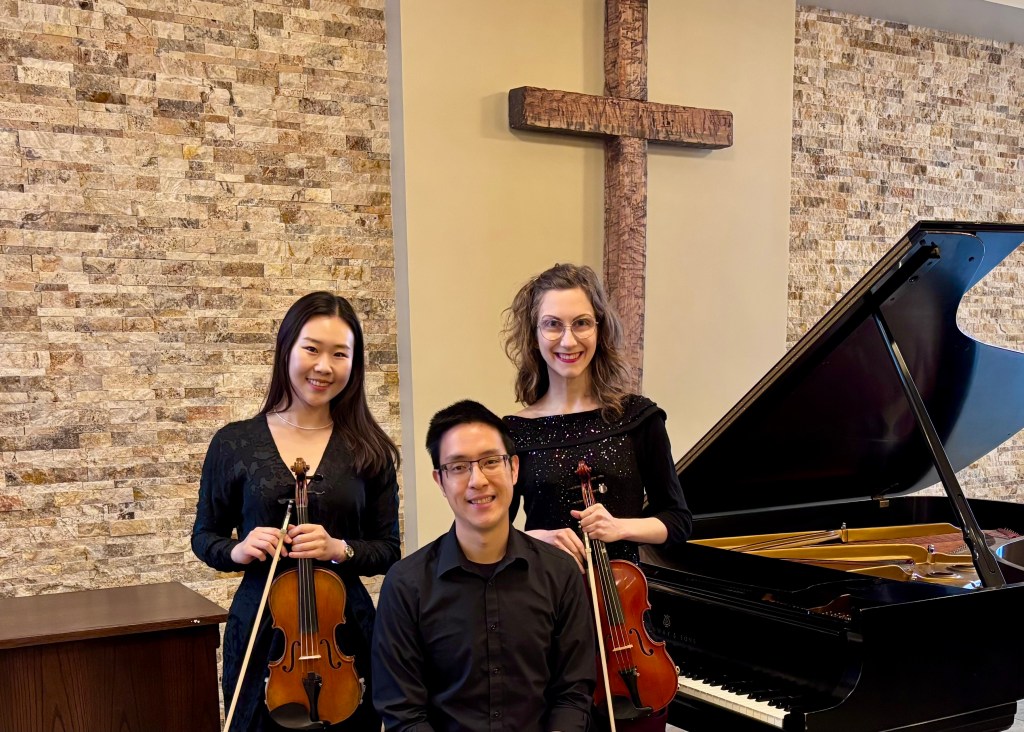
Also, we’ve been posting this on social media for a few weeks, but in case you’ve missed it, we’ll be hosting a live launch party and book signing for Hello, God tomorrow in Los Altos from 6:30- 8:30 pm. This is designed to be a casual evening of music, fellowship, and giveaways. Come when you can, bring a friend, and leave when you like! The time will include a violin performance from Grace, readings from “Hello, God,” and a short devotional from Ivan. We’ll also have games, snacks, and a raffle to win copies of Hello, God and Walking with Grace. Follow this link for event details. We’d love for you to join us!

It’s Release Day for “Hello, God”!

Hi everyone! We’re so excited that Hello, God: Seeking the Lord When Words Fall Short is finally out today! We just finished a live broadcast with Life!Line’s Craig Roberts, who was also the host for the live book launch for Walking with Grace. It was a tremendous blessing speaking with Craig again, and I’ll be posting the links to the show here soon.

If you’re new to the blog and are looking for information on how to order Hello, God after listening to today’s episode of Life!Line, you can order it from Shepherd Press. Shepherd Press is also offering a special discount through 5/31 if you use the code HELLO at checkout! You can also order book and Kindle versions through Amazon.

Thank you so much to our regular blog readers for walking with us! We’re very excited for what the Lord continues to do, and hope the show will be an encouragement!

“Be Still and Know:” A Personal Confession

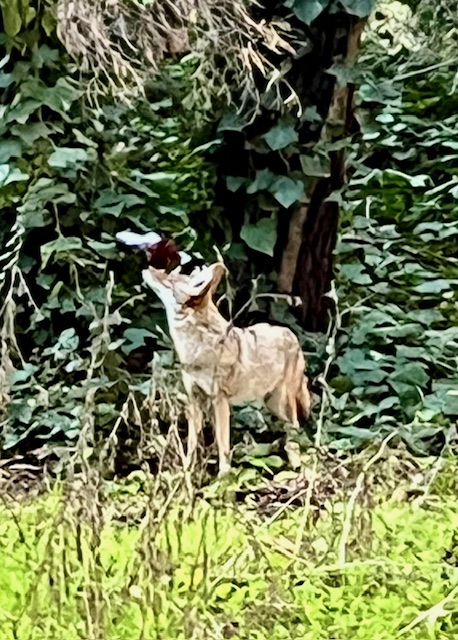
I took this photo on a recent walk…

Good morning, Blogging Family! Today I’m bringing you a confession as well as an encouragement. I’d planned to write a post inspired by Psalm 46: 

“Be still, and know that I am God! I will be honored by every nation.  I will be honored throughout the world.”

Psalm 46:10

But the longer I agonized over my draft, the more I sensed that I was not being still. Or honoring God as God.

My intentions for writing were good. I began with a nice idea. I hoped it would encourage you all. I also thought it might complement the themes in our forthcoming devotional. But these goals were rooted in my human agenda. They didn’t come from a place of being in God’s presence and seeking his direction. 

And this sudden inability to write reminded me of two truths:

  1. “Be still” can also be translated “cease striving.” The past few months have been filled with highs, lows, and plenty of temptations to strive. We had an unexpected death on one side of the family, followed by a birth on the other. Writing my second book last year was a “mountaintop” spiritual experience, but its release this year has required trusting God with a timeline and process that is different from my own vision. Many of these events tempt me to believe that adjusting my own efforts in some way might have produced different results or could bring more peace about the current ones. But Psalm 46 opens with a hyperbole that counters that logic: “So we will not fear when earthquakes come and the mountains crumble into the sea” (v. 2).  The point is that no matter the scale of the chaos, genuine confidence comes from remembering who God is and believing what he says, rather than in trying to fix things ourselves.
  2. “Knowing” is a heart posture, first and foremost. I can mentally assent that God is God. I can talk – or write – about his sovereignty, goodness, and overarching purposes for trials. But if those beliefs aren’t inscribed on my heart, then my correct head knowledge won’t bear fruit in my life. Functionally, it won’t look like I know those things at all.   

So, how do we get to this place of genuine stillness and knowing? Maybe you’re like me and you realize there’s a gap between what we say we believe and what others might conclude we believed if they only observed our actions. I think humbly admitting this disconnect to God and others is the first step. 

I’d also invite you to join me in practicing stillness and meditation. Perhaps these are already robust aspects of your devotional life. If they’re new to you, here are some helpful ideas for getting started:

Stillness: During your Bible reading or prayer time, set aside a few minutes to sit in silence before the Lord. If you’ve never done this before, 2-5 minutes might be a good place to start. The idea is that while we may be comfortable talking to God, it’s less common to sit quietly in his presence and give space for him to respond. He may respond in a variety of ways, (e.g. by bringing to mind a verse or something from a song or sermon, or in some other way). The key is to be open to however God chooses to respond, and also to continue the practice even if it doesn’t play out the way you imagined. It’s the heart posture of sitting quietly before the Lord that matters the most, especially believing that God draws near to those who draw near to him (James 4:8).

Meditation: I love this article by Steve Midgley on the Puritan practice of meditation. There are many approaches and lengths of time you can use for meditation, but a simple start would involve finding a short passage of Scripture and reading it a few times, including one time out loud if possible. Then, use these readings as inspiration for praise, confession, and petition.  First, praise God for elements of his character and acts that you see manifested in the passage. Next, confess any ways you don’t see this passage reflected in your own life, or would like to see it reflected more. Finally, ask God for his empowering grace to manifest a greater belief in the elements of his character you’ve spent time praising, as well as help demonstrating obedience in any areas you may have been led to confess. This would also be the time to intercede for anyone that God has put on your heart as you read and prayed. 

Thank you for joining me in this post that turned out to be quite different from the one I’d planned! I also hope it’s a more accurate reflection of how God is currently working in my life. The practices of stillness and meditation have been crucial in my spiritual growth over the years. But if I’m honest, I’ve gotten caught up in so much striving that I need to return to the heart behind these practices.

I love this encouragement from James 1:25: “But if you look carefully into the perfect law that sets you free, and if you do what it says and don’t forget what you heard, then God will bless you for doing it.”

Amen! Thank you as always for walking with me!

A Gospel-Centered Mother’s Day

The implacable Southern California sun refracted off our bone-white driveway and stung my eyes. Sweat clung to the inside of my tank top. “Mom -” I hesitated. “- where do you find strength to keep going under pressure?” 

My family had endured its rough seasons over the years. All my grandparents passed away before I turned twenty. Although we lived hundreds of miles away and my mom homeschooled me and my sister, she traveled to Georgia as much as she could to help with their care. None of us knew it yet, but a few years later she would move in with Ivan and me for five months after my accident.

What already struck me as a 19-year-old was that Mom never complained about the constant demands of caring for others. I’ve pondered her answer to my question as Ivan and I have walked through our own trials over the years, and I’d like to share it with you all in honor of Mother’s Day.

“Well,” she replied, after a moment’s pause. “God helps you find beauty in the things you love.”

I was startled. Through my parents’ ministry, I’d already encountered plenty of un-beautiful situations like death, miscarriage, and divorce. As I’ve contemplated Mom’s words and learned more about how God sees us through the gospel, their meaning has taken more shape.

We live in a world that has rejected God. But God in his mercy still allows our world to be beautiful and showers us with common grace, whether or not we acknowledge its Source (Acts 14:17). 

What’s more, once we surrender to Christ, when God looks at us he chooses to see his precious, perfect Son, rather than our sinful corruption:

For he chose us in him before the creation of the world to be holy and blameless in his sight. In love he predestined us for adoption to sonship through Jesus Christ, in accordance with his pleasure and will— to the praise of his glorious grace, which he has freely given us in the One he loves.”

Ephesians 1:4-6

This does not mean that God glosses over our brokenness. Rather, he grants us positional holiness, while patiently completing the good work that he began the moment that we accepted Christ (Phil. 1:6). So we exist in an “already” and “not yet” state of grace. 

What about those of us called to love people who are not walking with the Lord? I think we can ask God for strength to not grow weary in doing good, and for grace to see everyone as made in the image of God, no matter how much sin may distort that image. God will reward us at the proper time if we do not give up, whether we see that reward in this life or in Heaven. Although it’s easy to agonize over hypotheticals – “Should I have used a better illustration? Would that Bible verse have been more impactful?” – I continue to grow in the awareness that only God’s supernatural intervention can awaken us to our need for salvation (Eph. 2:4-5). All he asks is for us to be instruments ready for him to use, and leave the results to him. 

When Mom encouraged me to find beauty in what I loved, I don’t think she was advocating for ignoring brokenness. But I do think her outlook reflected hope that God is transforming those of us who have placed our faith in Christ into his image, however infinitesimal that progress may seem at times. May this give us great humility and great peace as we seek to grow in Christ and love those around us!

Introducing “Hello, God” Summer Discussion Group!

Hello, Blogging Family! Thanks so much for following my preview series from Hello, God. last week. I hope those brief devotionals were encouraging to you, and also that our book might be a useful resource for you or someone you know who is seeking to grow in their faith.

We’re super excited to announce that we’ll be holding a discussion group over Zoom during the month of July. Discussions will start with reflections from “Hello, God.” These reflection questions get more intensive as the devotional progresses, but I’ve previewed some earlier ones here: “The Camel and the Needle,” and “Micah 7.” We’ll also be covering a different topic each week that corresponds with one of the book’s larger themes:

Week 1: How do we talk to God?

• Week 2: How does God talk to us?

• Week 3: How do we pray through trials?

• Week 4: How do our relationships affect our prayer life?

Sessions will meet on Zoom on Monday nights during the month of July. Space is limited to the first 20 pre-orders. We’ll decide on an exact time once we know the schedules and time zones of participants. We would love for you to join us!

***

Shepherd Press is offering a discount on pre-orders of Hello, God, Seeking the Lord When Words Fall Short until 5/31. https://www.shepherdpress.com/products/hello-god/. Use code “HELLO” to get 25% off! 

“Hello, God” Final Preview – Micah 7

Good Morning, Blogging Family! Thank you so much for following this series of previews from Hello, God. I hope they have been encouraging to you! Today’s clip was inspired by the application section from two chapters that look at the parable of the Prodigal Son and examine how our relationships with others are often a litmus test for how closely we are walking with the Lord.

***

USE IT OR LOSE IT:

  1. Have you ever been tempted to react like the angry older brother in Jesus’s story? Why or why not? 
  2. Micah 7:18-19 is a beautiful picture of how God forgives us. In the days that followed, God helped me to pray it for each one of the people I needed to forgive, thanking God that He was willing to forgive them and asking Him to help me offer them the same no-strings-attached forgiveness that I’d received.  Depending on your own situation, use the following verses as prayer inspiration for yourself or someone else:

“Who is a God like you, pardoning iniquity
    and passing over transgression
    for the remnant of his inheritance?
He does not retain his anger forever,
    because he delights in steadfast love.
He will again have compassion on us;
    he will tread our iniquities underfoot.
You will cast all our sins
    into the depths of the sea.”

3.  Many of us will identify with elements of both the Lost Son and the Angry Older Brother, which is why I believe Jesus includes both characters in His story. No matter which character you identified with the most at the outset of this study, be open to what the Lord may be trying to show you as you return to the story prayerfully over a period of time. Asking God open-ended questions like, “Which character am I?” and not setting parameters on His answers is another step in growing in your conversations together. 

***

Shepherd Press is offering a discount on pre-orders of Hello, God, Seeking the Lord When Words Fall Short until 5/31. https://www.shepherdpress.com/products/hello-god/. Use code “HELLO” to get 25% off! 

“Hello, God” Preview 4 of 5 – The Lord’s Prayer

Good Morning, Blogging Family! This clip is inspired by the first of two chapters near the end of Hello, God that look at the Lord’s Prayer and suggest ways to apply it to your prayer life. Stay tuned for the conclusion of our preview series – a meditation on Micah 7 – tomorrow!

***

“‘Lord, teach us to pray.’ The disciples’ request would sound reverent, childlike—but they don’t stop there. They tack on an earthly comparison reminding their Messiah, eternal God dressed in human flesh, that they haven’t fully grasped his identity yet. ‘Teach us to pray, as John taught his disciples‘ (Luke 11: 1).

How does Jesus respond to his disciples’ misplaced modifier? There are plenty of instances where He does reprove his followers’ fixation with human tradition, but in this case He graciously ignores the slight and addresses the crux of their question: how to connect intimately with God. 

When we look at the opening lines of Jesus’s teaching prayer (commonly known as the Lord’s Prayer) in Luke 11:2, several simple, yet startling, truths arrest our attention.     

“Father, hallowed be your name.

Your kingdom come.

Give us each day our daily bread…”

First, Jesus’s prayer transforms the intimidating Judge of the Old Testament into “Father.” While He’s still instructing His disciples (and us) to pray for God’s name to be lifted high and revered, He personalizes the Creator and gives us a direct access to Him that John’s disciples could never have imagined. 

Next, Jesus’s teaching prayer undermines everything His disciples thought they knew about God’s kingdom. In Jesus’s day, most Jewish people thought the Messiah would emancipate their nation from the Roman empire. But the prayer Jesus teaches His disciples, unlike their cultural preconceptions, doesn’t put a time stamp on God’s kingdom arriving on earth. That’s because He wants them to realize God’s kingdom is first and foremost a spiritual one, made up of sons and daughters bought back from eternal destruction. God’s kingdom was coming in their day, and it is still coming in ours.

Finally, Jesus adds something deeply personal and unlike the rote prayers His disciples likely learned as children. He adds requests for daily, material provision. The sketches of God they would have glimpsed in the synagogue might have emphasized His jealousy for the glory of His name. Or His promise to deliver Israel, if the nation humbled itself enough. But the Father Jesus paints in His teaching prayer is also deeply concerned for whether they—uneducated “nobodies” from a disreputable district in Israel—have food on the table…

USE IT OR LOSE IT:

  1. Have you previously considered Jesus’s prayer as a rote recipe to recite at church or school, or as a living model to help you grow your own prayer life? Has today broadened your perspective? Why or why not?
  2. Jesus paints with broad strokes in His teaching prayer, graciously giving us plenty of liberty to color in our own unique details. Take each of first three lines and try to come up with your own version. For example: 

‘God, thank You that You love me so much more perfectly than any earthly parent.  I praise You for how wise You are, how powerful, how mighty—how You delight to show unfailing love and mercy to me, even though I don’t deserve it. Lord, please bring Your kingdom quickly to this broken world! I see sickness and sin and injustice all around me, and people turning to all sorts of things they believe are going to fix them. But I know that what they really need is the transforming message of Your Good News. Father, thank You so much that You care about the tiny practical details of my life, and want me to ask You for what I need…‘”

***

Shepherd Press is offering a discount on pre-orders of Hello, God, Seeking the Lord When Words Fall Short until 5/31. https://www.shepherdpress.com/products/hello-god/. Use code “HELLO” to get 25% off! 

“Hello, God” Preview 3 of 5 – Psalm 138

Good Morning, Blogging Family! This video is inspired by a chapter from Hello, God that looks at one of my favorite psalms, 138, and shares how God has used that passage over the years to strengthen me when I felt like I couldn’t make it through another day. Stay tuned for an excerpt from Lord’s Prayer tomorrow!

***

“During the years that I battled uncontrolled seizures, I also developed intractable migraines. Doctors hypothesized that each seizure would trigger a migraine as an after-effect. Since I rarely went a day without a seizure, I always had a migraine. Once it became clear that these conditions were linked and there was unlikely to be a pharmaceutical solution to either, my access to pain medication was restricted and I was told to endure the migraines naturally…

…God continued sending psalms to my rescue. David, with his deep brokenness and reckless dependence on God’s grace, has a signature tendency to offer God raw praise in the midst of unimaginable pain. (Try being accused of insanity [Psalm 34], or being hunted down by your own son [Psalm 3]!) For me, these raw praises were the most contagious because they gave me permission to flip-flop between praising God in one breath and crying out to Him from the depths of my soul in the next. 

Psalm 138 is a classic flip-flopping psalm. David opens with a raucous chorus, rejoicing in God’s faithfulness both to him personally (v. 3) and to the righteous in general (vv. 5-6). It’s easy to imagine him leading worship in the sanctuary, hands raised high in adoration. 

But, then, we hit verses 7-8 and discover that’s not the psalm’s setting at all. David’s not leading worship. He describes himself as “[walking] in the midst of troubles,” surrounded by angry enemies. How was he just able to write such a flattering portrayal of God only a few verses before? 

David can still praise God because he doesn’t believe God will leave him where he is. He takes hold of those characteristics that he mentioned at the beginning, characteristics God has demonstrated throughout his life and Israel’s history, characteristics such as faithfulness and lovingkindness.  He preaches those traits to himself.  If God is who David has known Him to be, and is eternal and unchanging, then David can trust that deliverance is on the way:

“Though I walk in the midst of trouble,
    you preserve my life;
you stretch out your hand against the wrath of my enemies,
    and your right hand delivers me.
The Lord will fulfill his purpose for me;
    your steadfast love, O Lord, endures forever.”

            Psalm 138 reminded me of two truths on those mornings when I didn’t think I had it in me to make it through the next hour, much less the rest of the day:

 1) Godnot I, would fulfill His plan for me that day. David could have put the unrealistic pressure on himself that he must somehow make sense of his trial and discover some higher purpose. But he doesn’t do that. He humbly admits that whatever spiritual growth or transformation is going to take place will be completely the Lord’s doing. 

2) Nothing I did or did not do that day could change God’s heart toward me. It’s tempting to think we can earn or lose brownie points in God’s Book of Suffering by how well we manage our pain, tend to our responsibilities, marshal what meager resources we have left, etc. But that only adds distress and sells the lie that our right standing with God depends on something other than Christ’s work on the cross. Remember there is now no condemnation for those who are in Christ Jesus! (Romans 8:1) Jesus has already lived the perfect life on our behalf and we can be completely at rest, dressed in His gorgeous, blood-bought robes of righteousness…”

***

Shepherd Press is offering a discount on pre-orders of Hello, God, Seeking the Lord When Words Fall Short until 5/31. https://www.shepherdpress.com/products/hello-god/. Use code “HELLO” to get 25% off!