Jesus, Our Living Water

Dying of thirst is one of the worst deaths I can imagine, both for its duration and for the psychological torment that accompanies it. Although this is a real threat for some parts of the world, very few of us in the United States spend much time thinking about it, unless we work in emergency medicine or forget to pack a water bottle when we’re heading to the gym. 

Sometimes I wonder if this lack of exposure to real thirst has made Jesus’ promise to give us “living water” in John 4:10-14, or David’s cry to God from “a dry and thirsty land where there is no water” in Psalm 63:1, a bit harder to appreciate when we’re doing well, or cling to when we’re struggling.

“But whoever drinks of the water that I will give him will never be thirsty again.The water that I will give him will become in him a spring of water welling up to eternal life.”

~John 4:14

In God’s sovereignty, in the very early days of my accident, I did experience what it was like to believe I was dying of thirst. Although my body was receiving adequate nutrition, first through an NG tube and later through a stomach tube, I was not allowed to eat or drink for several weeks. My family assumed that I would “feel” fine since my nutritional needs were being met, but we quickly discovered that was not the case. Doctors explained that, unless food and water pass through your mouth, your brain believes you are thirsting and starving to death. I became obsessed with begging for food, but especially water. It didn’t matter how often people explained that it wasn’t safe for me to eat or drink, and that my body was receiving everything it needed –  nothing could assuage my overpowering desire for a drink. Even sleep didn’t provide relief. In my dreams, I was either dying of thirst or taking one long, refreshing drink after another. I also became a bold-faced liar, assuring whoever happened to be in the room that I had “just” gotten permission to start eating and drinking again. Somehow, no one ever believed me. 

As torturous as this experience felt, I realize it is still light-years away from the moment-by-moment pain and fear faced by people with truly restricted or zero access to water or food. However, knowing a little of what it’s like to experience serious thirst psychologically has helped me understand better both what David was describing when he cried out to God, and what a rich promise Jesus makes when he offers us “living water.” Recently, it’s also been causing me to reevaluate how I “expect” God to come through for me when I’m in the midst of a trial. Do I have one outcome I’m praying for (in this example, receiving literal food and water)? And in fixing all my hopes on this outcome, am I missing God’s actual provision (the “food” coming through the NG tube)? 

Contrasting my own assurance that I was perishing with the truth that I was actually receiving everything I needed, as well as observing how this attitude plays out in my life today as I still struggle to embrace that what God gives me is sometimes very different from what I want or believe I need, reminds me that translating “head knowledge” about God to “heart knowledge” that transforms my everyday walk is an ongoing journey that will last until Heaven. May we trust God’s faithfulness to complete the good work he is doing in all of us!

Surrounded by Glory

Ivan: Hello, Blogging Family! This picture was taken at Prague Castle, from Grace’s and my trip to Central Europe last month. Many cities we visited boasted medieval palaces or fortresses built on the surrounding hills. This is because hills offer prime views of the area for both defense and recreation.

What we see matters. Our perspective shapes our thoughts, feelings, and actions. One of my favorite Bible stories, 2 Kings 6:8-23, illustrates this truth powerfully.

Here, the prophet Elisha and his servant find themselves completely surrounded by a hostile army. The servant, understandably, panics: “Alas, my master! What shall we do?”

Elisha’s response is incredible:

 He said, “Do not be afraid, for those who are with us are more than those who are with them.” Then Elisha prayed and said, “O Lord, please open his eyes that he may see.” So the Lord opened the eyes of the young man, and he saw, and behold, the mountain was full of horses and chariots of fire all around Elisha.

2 Kings 6:16-17

Elisha’s servant only saw the physical army, which signaled their imminent death. However, Elisha saw Heaven’s spiritual army, which revealed the power and presence of the Lord God Almighty. Imagine how Elisha’s servant must have felt when his spiritual eyes were opened and he saw rank upon rank of “horses and chariots of fire” surrounding him and Elisha. There couldn’t be a sharper reversal to his previous perspective.

If we believe this earthly life is all there is – that there is no God, Heaven, or Hell – we will live a certain way. We will maximize power and pleasure and function as if we are the center of the universe. Sadly, this path ultimately leads to our ruin and causes us to hurt those around us rather than bless them.

God’s path – God’s perspective – is so much better. If we humbly align our perspective with His, we will realize that we were made for so much more than physical subsistence. We were made to know God, worshiping Him and enjoying Him forever.

“From then on Jesus began to preach, ‘Repent of your sins and turn to God, for the Kingdom of Heaven is near.'” (Matthew 4:17)

Grace: As I consider this story, it seems unlikely Elisha would choose a servant who wasn’t also committed to following the Lord. And so when I read about his panicked reaction to the Assyrian army, my heart is moved with compassion for someone who loved God enough to assist a prophet in a kingdom that was rampant with idolatry. In other words, this man was probably aware that serving Elisha – and by extension God himself – would likely require him to put his life on the line at some point. But when that moment finally arrived, he lost sight of how faithful and powerful God had proven himself, not just to Israel in previous generations, but more recently to Elisha’s predecessor, Elijah.

If I’m being honest, when I read this story, I see myself. While I haven’t been called to risk my life for the gospel thus far, Jesus calls each of us to take up our cross daily and follow him (Luke 9:23). In my own life, I’ve seen him sustain me powerfully through intense trials over the years, especially physical ones. Nevertheless, when I encounter emotional pain, I can lose sight of his past love and faithfulness and be tempted to function like what I see in front of me is all there is. And this “functional blindness” is the difference between continuing to walk by the Spirit and temporarily falling back into old patterns from which Jesus died to set us all free (Rom. 8:6).

Knowing the specific trials and triggers that tempt us back toward functional blindness is an important part of the battle. However, as we see in this story, God also often uses the encouragement and intercession of others to remove spiritual blinders that we no longer notice. May he spur us on to this gracious ministry in each other’s lives, and continue revealing to all of us how he is always there, surrounding us with his glorious, almighty presence!

A Fruitful Abiding

Recently, God impressed a single word on my heart: Abide. I’ve heard the word all my life, but I decided to look it up since I’d never given it much thought. According to Merriam-Webster, “abide” means “ to remain stable or fixed in a state.”

As I’ve been pondering this call to abide, I’ve also been reminded of Old Testament verses like “Be still and know that I am God,” (Psalm 46:10), and “In quietness and confidence shall be your strength” (Isaiah 30:15). This past season has been anything but quiet for me, with the publication of Hello, God and our recent trip to Central Europe. One event represents the culmination of a year of praying, writing, and seeking the Lord’s will, and the other is a continuation of how God’s healing enables us to travel internationally, something we once considered impossible. But in another sense, both events intensify the temptation to rely on my own strength, look away from the Lord, and measure my success by human metrics rather than God’s.

That’s why I think the Lord’s reminder to abide is so tender and timely, and I hope sharing it will encourage you as well. Summer can be a time for rest, but it can also be a time for running after even more activities than we pursue during the rest of the year. I’m becoming more and more convinced that being still in the Lord’s presence precedes truly knowing He is sovereign over every detail of my life in my heart as well as my head.

I also think that this theme of quiet confidence in God’s power ties in to Jesus’ sermon on abiding.  

“Abide in me, and I in you. As the branch cannot bear fruit by itself, unless it abides in the vine, neither can you, unless you abide in me.  I am the vine; you are the branches. Whoever abides in me and I in him, he it is that bears much fruit, for apart from me you can do nothing.  If anyone does not abide in me he is thrown away like a branch and withers; and the branches are gathered, thrown into the fire, and burned.  If you abide in me, and my words abide in you, ask whatever you wish, and it will be done for you.  By this my Father is glorified, that you bear much fruit and so prove to be my disciples.”

John 15:4-8

Jesus’ words comfort me because the “abiding” he desires is not measured by anything I do on my own, like meeting the standards I set for myself or others set for me. Rather, to borrow the definition of “abide” I shared earlier, he’s looking for how stable I remain in reading his Word and in prayer. And if I am giving him preeminence in these ways, then I can trust that he will help me produce the fruit he desires. 

May we all continue to grow in our desire to be still, know, and abide this summer!

Of Chocolates, Emperors, and God’s Love

Hello Blogging Family, I hope you all had a great 4th of July yesterday! This picture was taken at the Heindl chocolate factory in Vienna, where Grace and I got to participate in a chocolate-making workshop on our recent school trip. Perhaps Heindl’s most famous products are the Mozartkugel and Sissi Taler, chocolates named after the famous Classical composer and Empress Elisabeth of Austria. I hadn’t heard of Empress Elisabeth before, but discovered that she is very popular in Austria, perhaps the most beloved figure from the Habsburg dynasty.

Thinking about the freedoms we enjoy – and expect – today has provided an interesting contrast between the history we learned on our trip and how we think about God. During our tour of Central Europe, our local guides taught us about many different rulers: kings, emperors, princes. They spanned multiple periods of history, from medieval times through World War I. Some ruled well, others poorly; some were honorable, others sadly not.

The Bible describes God as a king. King David writes in Psalm 103:9, “The Lord has established his throne in the heavens, and his kingdom rules over all.”

But what kind of king is God? As Grace and I learned about the earthly rulers who came and went in the Austro-Hungarian Empire, it was hard to imagine that even the most noble and selfless of them would willingly sacrifice themselves for their people. Instead, they tended to hold on to power and make sure that others couldn’t challenge them!

Jesus did the opposite. Being in fact “King of Kings and Lord of Lords” (Revelation 19:16), He chose to leave His heavenly throne and enter our broken world (Philippians 2:6-8). Why? To redeem us from sin and death, to reconcile us to Himself.

This in itself is more than wondrous, but the love of God goes deeper still: Jesus didn’t die in our place because we were already His people; He died in order to make us His people. In fact, we were His enemies! This is truly unheard of. Which of us would lay down our lives (literally) for those who oppose us, mistreat us, mock us? Which of us, given supreme power and authority, would give it all away and die in the place of our enemies?

Friends, this is exactly what our Lord Jesus did for us. The Apostle Paul writes:

“But God showed his great love for us by sending Christ to die for us while we were still sinners. And since we have been made right in God’s sight by the blood of Christ, he will certainly save us from God’s condemnation. For since our friendship with God was restored by the death of his Son while we were still his enemies, we will certainly be saved through the life of his Son. So now we can rejoice in our wonderful new relationship with God because our Lord Jesus Christ has made us friends of God.”

Romans 5:8-11

We were God’s enemies, yet He died in our place to make us His people, His family, His friends. Each of us must decide how we will respond to God’s offer of forgiveness and redemption. Will we remain His enemies? Or will we, in wonder and gratitude, humbly bow our knees in worship?

As the lyrics of the song “Amazing Love,” say:

I’m forgiven because You were forsaken
I’m accepted, You were condemned
I’m alive and well, Your Spirit is within me
Because You died and rose again

Amazing love, how can it be
That You, my King, should die for me?
Amazing love, I know it’s true
And it’s my joy to honor You
In all I do, to honor You

May we serve our King with gratitude and joy ☺️

A Central European Adventure

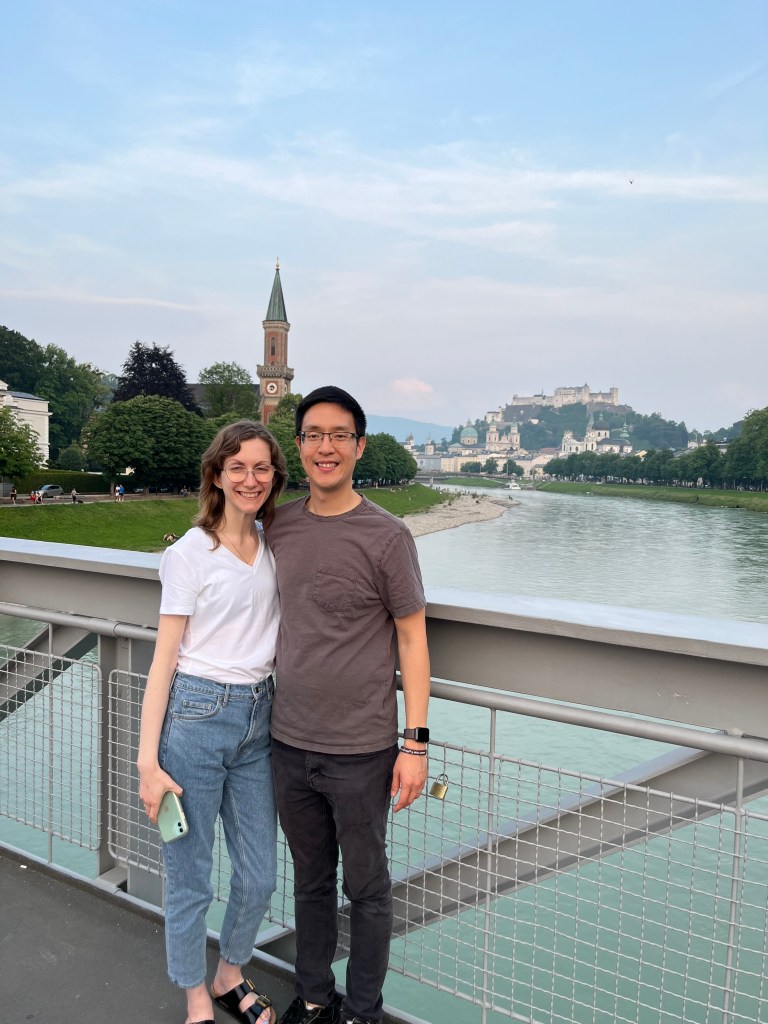
Hello Blogging Family, Ivan here! It’s been a while since my last post. This blog will be a bit different than usual, as I will recap our recent trip to Central Europe. Each year my school’s arts department travels internationally so that our students can experience each country’s art, history, and culture firsthand. This is probably one of my favorite parts of my job.

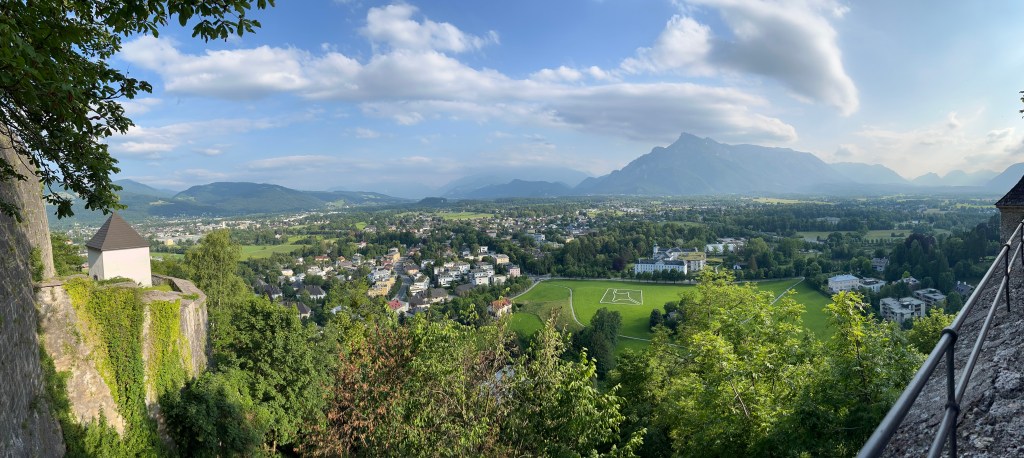
We flew from San Francisco to Frankfurt and then to Munich, before taking a bus to Salzburg, which is Mozart’s birthplace. We actually got to visit a museum which used to be the house where he was raised. It’s hard to describe how I felt standing in the room where Mozart was born. God blessed this one little baby with so much creativity that has blessed millions of people. Salzburg is also where much of The Sound of Music was filmed, so it was fun to retrace the film’s steps. We had dinner outdoors on a patio at Hohensalzburg Fortress, and the view of the city was simply stunning. This was followed by a chamber music concert, a delightful way to close the evening.

View from Hohensalzburg Fortress

The following day we drove to Vienna, stopping at Melk Abbey on the way. Seeing the beauty of the cathedrals was definitely awe-inspiring. God is so amazing that even the most beautiful works of human art and ingenuity cannot compare to His perfect beauty and majesty; and yet He also draws near to us and loves us so personally. He is both transcendent and intimate–how amazing this is!

Melk Abbey

Next, Vienna: what to say! So much history, music, and art. The word that comes to mind is imperial, and this was reflected in the city’s architecture. The scale and grandeur of the buildings, statues, and courtyards were remarkable. We visited the Opera House, Historical Art Museum, and the Museum of Military History, and even got to attend the Vienna Philharmonic’s outdoor concert at Schönnbrun Palace.

Vienna Opera House

From Vienna we drove to Budapest, stopping at Bratislava, the capital of Slovakia, on the way. Our tour guide pointed out that we hit three capitals in one day! So different from life in the US. In Budapest we did a Danube river cruise and walked through Castle Hill. I also got to visit the Franz Liszt museum, which used to be an apartment where he lived. As a pianist, I’ve tended to fall on the Chopin side of the Chopin-Liszt debate, but being in Hungary definitely gave me a deeper understanding and appreciation for Liszt’s music. At dinner our last night in Budapest, we heard a local Hungarian band play, consisting of two violins, a clarinet, upright bass, and cimbalom. Grace told me that classical violinists play a lot of pieces influenced by Hungarian music, and I really enjoyed the unique way the lead violinist played.

Heroes Square in Budapest

For the final leg of our journey we made our way from Budapest to Prague, stopping along the way at Brno, the second largest city in Czechia. Fun fact: our wonderful tour guide informed us that Brno has the second largest catacombs in Europe, after Paris.

I had been forewarned that Prague was a beautiful city, like something out of a fairy tale. But instead of reality being overshadowed by expectations, I discovered that I’d underestimated this city. The winding, multicolored cobblestone streets; the sloping roofs of the medieval buildings; the stunning views from the hill and the bridges; all were spectacular. Our guide took our group to the Old Town Square at sunset, and the blend of the colors in the sky and the city lights turning on was magical.

Window in St. Vitus Cathedral

We visited Prague Castle, which was–you guessed it–beautiful. The stained glass windows at St. Vitus Cathedral were incredible, and I also stepped inside the little house where Franz Kafka wrote “A Country Doctor”. We had the last dinner of the trip at Obecni Dum,a beautiful restaurant decorated in 1920’s style. The next morning we flew from Prague to Zurich (a short one-hour flight) and from there to San Francisco (11.5 hours). Like a dream, our trip was over.

I love to travel, and am so grateful that God allowed me and Grace to go on this trip. But even more than the amazing sights and activities we experienced, I’m most grateful to God that Grace was able to go with me.

There was a time when I wasn’t even sure if Grace would even be able to walk again, much less travel internationally. Looking back, I can see how God has granted us blessing after blessing, such as miraculously healing Grace of her seizures, which has allowed us to reach this point on our lives. Grace still battles ongoing symptoms such as fatigue, and it is only by God’s grace that we were able to go on this trip together. May we always remember to thank the Giver of all the good gifts we enjoy in this life, even as we look ahead to the endless joy of being with Him forever one day. To God be the glory!

Hope for Perfectionists: Solomon’s Imperfect Request

As someone who struggles with perfectionism, I often agonize over questions like “Did I say something wrong? Do something wrong?” when people – and sometimes even God – don’t respond the way I hope. While it’s good to take the log out of my own eye, I can easily take this too far and assume there is always a correlation between my social finesse or spiritual growth and how a situation is unfolding.

My unhealthy fixation on personal competence is why, when I was reading the famous story of Solomon asking God for wisdom in 1 Kings 3:1-15 a few days ago, I was struck for the first time by everything God chose to overlook about Solomon, even as he responded to his request with abundant favor.

That night the Lord appeared to Solomon in a dream, and God said, “What do you want? Ask, and I will give it to you!”
 Solomon replied, “You showed great and faithful love to your servant my father, David, because he was honest and true and faithful to you…
 Now, O Lord my God, you have made me king instead of my father, David, but I am like a little child who doesn’t know his way around…  Give me an understanding heart so that I can govern your people well and know the difference between right and wrong. For who by himself is able to govern this great people of yours?”

1 Kings 3:5-8

Each time I’ve read this story before, I’ve thought, “Wow, Solomon was already so wise and humble! If God appeared to me and told me to name my heart’s desire, there’s no way I would have responded that well.”

But as I read this passage again recently, I began noticing other details. While Solomon did make a much wiser request than I would have likely made, he’d already made other choices that directly violated God’s law. He’d married a foreign wife who worshiped false gods (3:1; 11:4). Not only were Israelites worshiping God in places other than those God had specified, but Solomon himself was participating in that worship (3:2). 

However, God doesn’t mention any of this when he appears to Solomon, although he will address both issues later in Solomon’s reign (1 Kings 11:1-13). Instead, he responds to the heart of love that motivated Solomon to offer a staggering 1,000 burnt offerings, as well as the eternal covenant God previously made with Solomon’s father, David.

How does this interaction encourage me? While I don’t think it communicates that we can habitually disregard God’s Word and expect uninterrupted blessing (Paul discusses the relationship between grace and obedience in Romans 6:1-11), for someone like me who struggles with perfectionism, this story brings hope that when God blesses us, he does so out of a conscious choice to overlook our imperfections, not as a reaction to our crossing every “i” and dotting every “t.”

God can shower us with abundance and remain both holy and loving because he’s looking not at us, but rather at Jesus’ sinless life that was lived in our place, and his spotless death that absorbed the full force of divine wrath that we deserve. This is what God was anticipating when he answered Solomon’s prayer so extravagantly, and this is also what he looks back to each time he responds to you and me. 

“So then, since we have a great High Priest who has entered heaven, Jesus the Son of God, let us hold firmly to what we believe. This High Priest of ours understands our weaknesses, for he faced all of the same testings we do, yet he did not sin.  So let us come boldly to the throne of our gracious God. There we will receive his mercy, and we will find grace to help us when we need it most.” ~Hebrews 4:14 -16 

Reflections from a Shattered Mirror: My First Driving Incident

I should have seen it coming. I should have seen it coming as I scampered out of the parent-teacher conference, hoping parents who were familiar with my years-long battle with seizures would notice it was Mr. Utomo’s wife who was driving home to save the day. I definitely should’ve seen it coming as I caught myself speeding down Monterey highway, clocking close to 60 mph in a 45 mph zone. Perhaps I should’ve seen it coming as early as last year, when I delighted in recounting Ivan’s humorous – and costly – collision with the newly-placed bollards separating San Jose’s bike and car lanes.

But I did not see it coming.

A couple of weeks ago, Ivan was facilitating the final informational meeting for the international trip he leads every June for Valley Christian. In 2023, we went to London and Paris, and last year we visited Japan. This year we’re heading to Austria, Hungary, and Czechia, so stay tuned for my post-trip recap!

The evening of Ivan’s presentation we arrived 15 minutes early, which allowed plenty of time to set up the PowerPoint and greet hyper-punctual parents. Until we discovered that Ivan brought his backpack sans laptop. He has been relatively inseparable from his laptop since I met him in 2013. Nevertheless, now was not the time to delve into the philosophical or psychological implications of this anomaly. Now was the time for action.

“No problem!” I beamed, delighted to be of more vital assistance than passing out medication release forms – a job that can also be performed by a well-placed chair. “I’ll dash home and grab the laptop. Be back soon!”

We live about seven minutes from school. I calculated that the meeting might start a couple of minutes late, but If Ivan opened with a Q&A instead of his presentation, there wouldn’t be a material loss. 

Ivan’s laptop was lying on the coffee table – within easy reach of the door – when I burst into our living room at 5:50 pm, adrenaline pumping and fully prepared to go to herculean measures in order to locate the missing equipment. Nonplussed, I fired off a quick “Heading back now” text and dashed out to our white Hyundai.

Something I haven’t mentioned in my posts about re-learning to drive is my lack of depth perception. To me, the world looks flat. This is not a result of my accident. I was born without depth perception, and I learned to compensate for this when I began driving as a teenager. Basically, I need to drive slower and allow more space between myself and surrounding objects than other drivers.

But that night, I wasn’t thinking about my vision. I was amused that Ivan had been separated from his laptop for the first time in over a decade, and delighted that I was earning my keep as his assistant and showing off my relatively new driving skills to parents I only see a couple of times a year.

I didn’t see the post.

Our condo has a carport. Our parking spot is flanked by our neighbors’ SUV on one side, and a wooden post on the other. Although I got my driver’s license back over six months ago, I still back out of the carport with trepidation, cognizant that even a tiny error might damage our car or our neighbor’s.

Nevertheless, that night I was fixated on the impending triumph of passing Ivan his laptop in front of a roomful of parents. I accelerated out of our carport for the first time in my driving career until –  POP! A pistol crack caused me to slam on brakes.

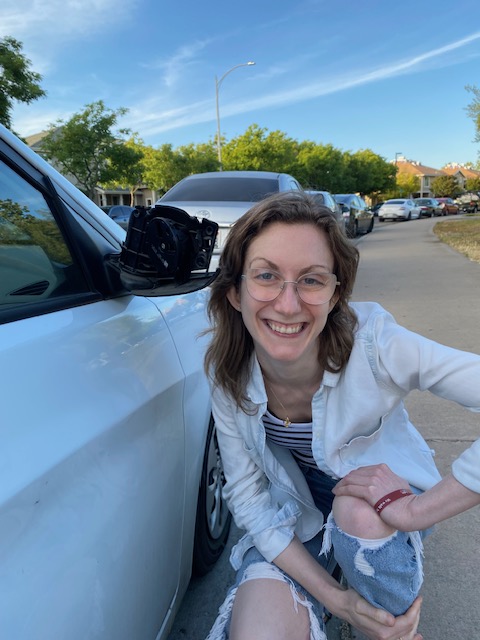
 Our right passenger’s mirror lay shattered in our parking spot, neatly clipped off by the carport post. There had been no warning – just instant, irreversible damage. All thoughts of a hero’s re-entry to the parent-teacher conference were instantly replaced with the realization that what I’d just done to our car was far more costly than Ivan forgetting his laptop.

I also realized that my husband was still waiting on me to deliver said laptop. And he’d get anxious very quickly if I did not materialize soon after texting I was on my way back. All I could do was breathe a quick prayer for God’s protection and commence a very tentative return journey to school, painstakingly checking my right blind spot every few seconds.

Ivan’s smile of delight when he saw me trudging down the hallway with the laptop cut like a razor. 

“Thank you so much – “ he began, but I cut him off.

“Just start.” I hissed, then added apologetically. “We’ll talk later.”

Somehow I endured the lengthy presentation and passed out the medication forms with a smile, all the while wishing Ivan had selected a chair as his assistant instead of me. Chairs do not rack up exorbitant car repair bills. 

Now that I’ve had time to reflect on this incident, I can see God using it in several ways. While the mirror is costing more and taking longer to fix than we’d anticipated, it’s also a relatively mild way to sanctify my need to be needed. My driving record is still “clean” and the only thing besides our car that got seriously hurt was my pride. Ivan responded to my confession with textbook compassion, and has not complained about the difficulties of driving – or parking – without a mirror since then. I’ve learned that, given my vision, there’s no extenuating circumstance that justifies rushing when I’m in the driver’s seat. I’ve also been reminded that any help I may be able to offer someone is a privilege, and the moment I begin taking credit for it is the moment I risk turning a God-given gift into something damaging. 

Now to finish fixing that mirror…

Life!Line Podcast is Up, plus “Hello, God” Launch Party Tomorrow!

Good morning, Blogging Family! As promised, here’s the podcast link to the radio interview with Craig Roberts that we did earlier this week. We were so grateful for Craig’s support for our first book, Walking with Grace, and it was a privilege to speak with him again and discuss how God has continued to shape our lives, whether that’s been learning to practice trusting God in the little details of daily life or seeing God’s redemption play out in the big picture with more intense trials and challenges. I hope our conversation will be encouraging to you!

Also, we’ve been posting this on social media for a few weeks, but in case you’ve missed it, we’ll be hosting a live launch party and book signing for Hello, God tomorrow in Los Altos from 6:30- 8:30 pm. This is designed to be a casual evening of music, fellowship, and giveaways. Come when you can, bring a friend, and leave when you like! The time will include a violin performance from Grace, readings from “Hello, God,” and a short devotional from Ivan. We’ll also have games, snacks, and a raffle to win copies of Hello, God and Walking with Grace. Follow this link for event details. We’d love for you to join us!

It’s Release Day for “Hello, God”!

Hi everyone! We’re so excited that Hello, God: Seeking the Lord When Words Fall Short is finally out today! We just finished a live broadcast with Life!Line’s Craig Roberts, who was also the host for the live book launch for Walking with Grace. It was a tremendous blessing speaking with Craig again, and I’ll be posting the links to the show here soon.

If you’re new to the blog and are looking for information on how to order Hello, God after listening to today’s episode of Life!Line, you can order it from Shepherd Press. Shepherd Press is also offering a special discount through 5/31 if you use the code HELLO at checkout! You can also order book and Kindle versions through Amazon.

Thank you so much to our regular blog readers for walking with us! We’re very excited for what the Lord continues to do, and hope the show will be an encouragement!

“Be Still and Know:” A Personal Confession

I took this photo on a recent walk…

Good morning, Blogging Family! Today I’m bringing you a confession as well as an encouragement. I’d planned to write a post inspired by Psalm 46: 

“Be still, and know that I am God! I will be honored by every nation.  I will be honored throughout the world.”

Psalm 46:10

But the longer I agonized over my draft, the more I sensed that I was not being still. Or honoring God as God.

My intentions for writing were good. I began with a nice idea. I hoped it would encourage you all. I also thought it might complement the themes in our forthcoming devotional. But these goals were rooted in my human agenda. They didn’t come from a place of being in God’s presence and seeking his direction. 

And this sudden inability to write reminded me of two truths:

  1. “Be still” can also be translated “cease striving.” The past few months have been filled with highs, lows, and plenty of temptations to strive. We had an unexpected death on one side of the family, followed by a birth on the other. Writing my second book last year was a “mountaintop” spiritual experience, but its release this year has required trusting God with a timeline and process that is different from my own vision. Many of these events tempt me to believe that adjusting my own efforts in some way might have produced different results or could bring more peace about the current ones. But Psalm 46 opens with a hyperbole that counters that logic: “So we will not fear when earthquakes come and the mountains crumble into the sea” (v. 2).  The point is that no matter the scale of the chaos, genuine confidence comes from remembering who God is and believing what he says, rather than in trying to fix things ourselves.
  2. “Knowing” is a heart posture, first and foremost. I can mentally assent that God is God. I can talk – or write – about his sovereignty, goodness, and overarching purposes for trials. But if those beliefs aren’t inscribed on my heart, then my correct head knowledge won’t bear fruit in my life. Functionally, it won’t look like I know those things at all.   

So, how do we get to this place of genuine stillness and knowing? Maybe you’re like me and you realize there’s a gap between what we say we believe and what others might conclude we believed if they only observed our actions. I think humbly admitting this disconnect to God and others is the first step. 

I’d also invite you to join me in practicing stillness and meditation. Perhaps these are already robust aspects of your devotional life. If they’re new to you, here are some helpful ideas for getting started:

Stillness: During your Bible reading or prayer time, set aside a few minutes to sit in silence before the Lord. If you’ve never done this before, 2-5 minutes might be a good place to start. The idea is that while we may be comfortable talking to God, it’s less common to sit quietly in his presence and give space for him to respond. He may respond in a variety of ways, (e.g. by bringing to mind a verse or something from a song or sermon, or in some other way). The key is to be open to however God chooses to respond, and also to continue the practice even if it doesn’t play out the way you imagined. It’s the heart posture of sitting quietly before the Lord that matters the most, especially believing that God draws near to those who draw near to him (James 4:8).

Meditation: I love this article by Steve Midgley on the Puritan practice of meditation. There are many approaches and lengths of time you can use for meditation, but a simple start would involve finding a short passage of Scripture and reading it a few times, including one time out loud if possible. Then, use these readings as inspiration for praise, confession, and petition.  First, praise God for elements of his character and acts that you see manifested in the passage. Next, confess any ways you don’t see this passage reflected in your own life, or would like to see it reflected more. Finally, ask God for his empowering grace to manifest a greater belief in the elements of his character you’ve spent time praising, as well as help demonstrating obedience in any areas you may have been led to confess. This would also be the time to intercede for anyone that God has put on your heart as you read and prayed. 

Thank you for joining me in this post that turned out to be quite different from the one I’d planned! I also hope it’s a more accurate reflection of how God is currently working in my life. The practices of stillness and meditation have been crucial in my spiritual growth over the years. But if I’m honest, I’ve gotten caught up in so much striving that I need to return to the heart behind these practices.

I love this encouragement from James 1:25: “But if you look carefully into the perfect law that sets you free, and if you do what it says and don’t forget what you heard, then God will bless you for doing it.”

Amen! Thank you as always for walking with me!