God’s Perennial Power: Reflections from 10,000 Feet

When we moved to Northern California in 2017, I discovered a phenomenon known as “Ski Week.” Most of the schools in our area take a week-long break in February. This struck me as humorous for two reasons: 1) There is no snow in our area on which to ski, and 2) students still receive a full Spring Break around Easter. But when I attempted to investigate the rationale behind Ski Week, the best answer I received was, “It gives them a chance to go find snow in case they want to ski!” This didn’t entirely satisfy my inquiring mind. Nevertheless, as the wife of a professional educator, I remain grateful for the break.

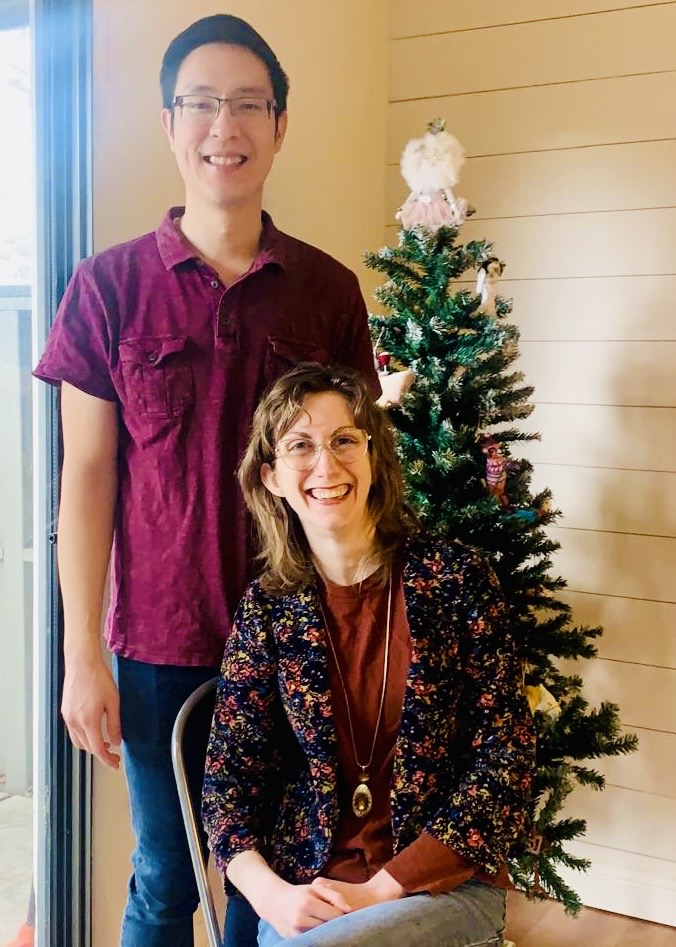
This year we took advantage of Ski Week to visit my family in Georgia. (The picture for this post was taken on the Isle of Hope in Savannah.) It was during our southward migration that we also fulfilled the stated purpose of Ski Week and found snow – albeit during a three hour layover in Chicago. I’m no stranger to snow, having also lived in Wisconsin and Upstate New York, but Ivan has remained firmly rooted to California ever since moving to the U.S. Given this discrepancy, I seized the moment when I glanced up from lunch in the Midway food court and glimpsed some of the largest, fluffiest, whitest, snowflakes I have ever seen pirouetting across the plexiglass windows. 

“Oh my goodness, sayang!” I often use Ivan’s Indonesian nickname when I want his attention. He was engrossed in highlights from some English Premier League soccer games he’d missed during our first flight.

“You’ve got to check out this snow! It’s really good!” He looked up, and I began warmly contrasting the fairytale flakes that we were currently observing with the tiny, needle-like, flecks of ice that I’d often experienced in real snow storms. Ivan’s polite nods brought my lecture to a rapid close, however. I realized he would be better served savoring this moment for himself, without my comparisons.

On our return journey to California, I encountered the antithesis of the winter wonderland we’d observed in Chicago. Halfway through our second flight, I was startled to observe an apocalyptic wasteland. The ground was a lifeless, ash color, devoid of plants or people, and scored by ditches running in uneven geometries. A web-like mass deeply etched into the earth suggested what might have once been a delta. Overcome by the hopelessness of the terrain, I turned to Ivan.

“Hey – any idea where we are right now?” 

He flipped from the movie he was watching to his flight tracker.

“Uh – it says Nebraska. Why?”

I tapped on my window. “It just looks so – desolate.”

Nebraska. I remembered my sister mentioning that she’d heard from a family friend that Wisconsin had gotten remarkably little snow this year, although the temperatures were still frigid. I’d always imagined states like Nebraska getting even more snow than Wisconsin. What would it be like to a endure a harsh winter without the compensation of terrain carpeted in white? Now, flying over Nebraska, the prospect was more dismal than I’d imagined.

But as my thoughts spiraled further south, I realized that even the harshest winter blossoms into spring.  New growth and sunshine breathe life into the most frozen tundra  – and desperate human heart. Perhaps that’s why God uses the weather to illustrate the irresistible power of his Word in Isaiah 55:10-12:

“The rain and the snow come down from the

heavens

and stay on the ground to water the earth.

They cause the rain to grow, 

producing seed for the farmer

and bread for the hungry.

It is the same with my word.

I send it out, and it always produces fruit.

It will accomplish all I want it to,

and it will prosper everywhere I send it.”

Depending on your location, Spring could already be reaching irrepressible fingers into your mornings, or it could still be several weeks away. Perhaps you’ve been going through a trial for a long time and can no longer imagine life without it. Perhaps you’re starting to see God work, but wondering whether you can hold out until he brings his work to completion. Or you may be enjoying a season of peace and prosperity. While we have a calendar that gives us general markers for winter and spring, we don’t have that same insight into the spiritual seasons of our lives, or why God works at different times and ways in our lives compared to the lives of those around us. 

Whatever your current experience may be, we can embrace the illustration that God gives in Isaiah 55 as reassurance that he is always working. He will accomplish exactly what he intends, exactly when he intends to. For our part, we can demonstrate our faith by continuing to enter his presence in prayer, and presenting our hearts to the shaping power of his Word. I also find hope when I consider the extended implications of what God’s “word” can mean. Most often we think of the 66 books of the Bible, but God also created the universe by his spoken word. What’s more, Jesus is sometimes referred to as the “Word” (John 1:1,14; Col. 1:19, 2:19). No matter what kind of spiritual season you’re in, I hope we can take courage together that God is working, not just through the power of his Scriptures, but also through divine intervention and the ongoing intercession of our Savior and perfect Advocate, Jesus Christ.

Immanuel, Revisited

“O Come, O Come, Immanuel,” is one of my favorite Christmas carols. A musical child, I was first arrested by its haunting melody.  Later, its plaintive lyrics resonated with my teenage contemplations. As an adult, I’m even more captivated by these elements and also heartened by the final stanza’s call for Christ to return and right the world once and for all.

But as I consider what “Immanuel” – God with us  – has meant to me over the years, I’ve also come to realize Mary and Joseph’s experience of God’s presence was likely different from what we imagine.  

The gospel of Luke tells us that Joseph and Mary traveled to Bethlehem to comply with a Roman census, where Mary gave birth to Jesus in a stable because the inns were full. While this chain of events fulfilled the prophecy that Jesus would be born in Bethlehem, there’s no prophecy stating Jesus had to be born in a stable. 

Mary got an angelic message announcing she would bear the Savior of the world, and Joseph got a dream reassuring him that Mary’s child was the Son of God, not the result of her infidelity. But neither of them got additional information on the specifics surrounding Jesus’ birth. Instead, as Mary’s time approached, they found themselves faced with a 90-mile trek teeming with wild animals and robbers, not to mention the possibility that Mary could give birth along the way. 

Furthermore, have you considered the social pressure they must have endured throughout Mary’s pregnancy? Unwed motherhood carried the death penalty in biblical times. Although Mary and Joseph could infer from their angelic messages that Mary’s life would be spared, her survival wouldn’t have protected them from severe stigma.

Giving birth in a stable after an arduous, 90-mile trek and nine months of false accusations (or worse), must have felt like rock bottom for Joseph and Mary, even if they’d been told their baby would be the savior of the world. It’s also interesting that as far as we know they never saw the “heavenly hosts” that appeared to the shepherds, or the star that guided the wise men. Nevertheless, I’m sure that visitors who joyfully acknowledged their baby’s identity were a welcome relief.

But it’s also relevant to note that the historical story of Joseph, Mary, and Jesus doesn’t end at the manger. The gospel of Matthew tells us that the wise men alerted King Herod to the fact that there was potentially a new “king of the Jews” on the scene, and he ruthlessly murdered all baby boys under 2 years old in Bethlehem.

But what did the massacre mean for Joseph and Mary? Although Matthew tells us an angel alerted Joseph ahead of time, and the family escaped to Egypt, have you imagined what their exile must have been like? They’d just endured the stigma of an unwed pregnancy and given birth in horrific conditions, only to receive unlooked-for encouragement through supernatural intervention. Just when things were starting to look brighter, Mary and Joseph found themselves fleeing to a foreign country – and not just any foreign country, but one with almost a thousand years of animosity toward their own. A place where no one spoke their language, let alone worshiped their God. Mentioning their son was going to be the Savior of the world was off the table.

My point in highlighting these aspects of the Christmas story is not to make things sound unduly negative, but to suggest that our concept of what “God with us” means could be broadened. Mary and Joseph had at least four direct supernatural encounters (the visit from the angel Gabriel and Joseph’s three dreams), and the incredible privilege of watching Jesus grow from infancy to adulthood. But these supernatural events occurred relatively close together, and we know little about the rest of their lives.

In my own life, although God has worked supernaturally twice, I still deal with physical limitations and relational stressors that have made recent months challenging. When we’re discouraged, it’s easy to focus on the high points – whether the ones we read about in Scripture, or see around us – and compare our assumptions of God’s presence in others’ lives with our experience of God’s presence in our own. The truth is God is always with us, whether we feel him there or not. 

Luke 2:19 tells us, “But Mary kept all these things in her heart, and she thought about them often.”

Most likely, Jesus looked and acted like a regular baby, at least initially. Raising her first child in a hostile foreign country couldn’t have been easy.  But Mary had seen God’s power displayed unmistakably, and she was committed to renewing her mind. 

Whatever this season holds for each of us, I pray we will make a practice of calling to mind what God has already done, both as revealed in Scripture as well as in our own lives and the lives of those we love.

O come, desire of nations, bind
In one the hearts of all mankind
Bid Thou our sad divisions cease
And be Thyself our King of peace

Rejoice! Rejoice! Emmanuel
Shall come to thee, O Israel

The Camel and the Needle

Good morning, Blogging Family! I recently received news that, due to a variety of unforeseen circumstances, including Hurricane Helene and the health of one of our production team members, the release of Hello God has been delayed from Holiday 2024 until 2025. I don’t have an exact date yet, but I will let you know as soon as I do. 

In the meantime, I wanted to share this short devotional that I wrote last year when I was drafting some sample chapters as a proposal for what would become Hello, God. The book has evolved a lot since then, in both content and depth.  However, I think the heart of learning to talk to God honestly has remained the same, and that includes trusting him to work what is impossible for sinful humans. I hope this short devo will encourage you to keep praying and hoping, whether you’re asking God for someone’s salvation (as is the explicit point of the parable) or something else.

***

This amazed them. But Jesus said again, ‘Dear children, it is very hard to enter the Kingdom of God. In fact, it is easier for a camel to go through the eye of a needle than for a rich person to enter the Kingdom of God!’

The disciples were astounded. “Then who in the world can be saved?” they asked.

Jesus looked at them intently and said, ‘Humanly speaking, it is impossible. But not with God. Everything is possible with God.’” ~ Mark 10:24-27

Have you ever seen a camel? Maybe you met one at the zoo when when you were little.  Maybe, if you met your camel with the nice kind of adult at the right sort of zoo, you got to feed it or even sit on its back.  If so, I’ll  wager you made a variety of discoveries about your quirky new friend. Maybe you expected her shaggy hump to stand firmly in place when you leaned on it. Perhaps you quickly discovered it’s actually a jelly-like mass of water and fat!  Did you expect him to amble evenly around his paddock like the ponies in the pony ride? The camel sways side-to-side in a  jolty, skating motion, you may have learned as you hung on for dear life.

If these experiences don’t ring any bells for you, I recommend looking up a video or these weird, magnificent animals in motion. Take in the originality and beauty of this single specimen of God’s creation.

On the other hand, most of us know our way around needles. Whether it was a parent mending ripped jeans in elementary school, our sister’s obsession with cross-stitching in junior high, or even just the ever-evolving immunization recommendations, I’ll bet almost all of us have felt that quick sting answered by a teardrop of blood more times than we would like.

Can you think of any two things more opposite than a shaggy, side-stepping camel, and a platinum-titanium, extra-fine point embroidery needle? Correction: the eye of that extra-fine point embroidery needle. This eye is a miniscule hole in one end of the needle, barely visible to an average human eye, just big enough to pass one tiny end of silk thread back and forth through whichever delicate fiber we’re embroidering.  This is as close to fairy handiwork as you’ll get in real life. 

Now, close your eyes and imagine that camel you petted or rode as a kid, or just watched on YouTube, standing in the middle of a scorching desert. It’s over  120*  F and the camel will die if it doesn’t get a drink in the next five minutes.  There’s a spring of the purest water bubbling up only a few yards away, and the only thing separating the camel from the water is a tiny embroidery needle lying on the sand between them. The needle’s so tiny that you didn’t even see it at first! 

Jesus says the only way for that camel to pass to reach the life-giving water is by  kneeling down and squeezing itself through the eye of the embroidery needle. No short cuts, shrinking potions, or flat-out cheating by stepping over the needle. Does your camel make it to the other side? Why or why not?

USE IT OR LOSE IT:

  1. What is Jesus’ point to his disciples about salvation? About prayer in general?
  2. At first glance this parable seems depressing. How could Jesus also have meant it as an encouragement?
  3. Do you have an “impossible” prayer request in your life right now? What about it makes you think it’s “impossible”?
  4. How do you think God wants you to pray about it differently after reading today’s devo?