When we moved to Northern California in 2017, I discovered a phenomenon known as “Ski Week.” Most of the schools in our area take a week-long break in February. This struck me as humorous for two reasons: 1) There is no snow in our area on which to ski, and 2) students still receive a full Spring Break around Easter. But when I attempted to investigate the rationale behind Ski Week, the best answer I received was, “It gives them a chance to go find snow in case they want to ski!” This didn’t entirely satisfy my inquiring mind. Nevertheless, as the wife of a professional educator, I remain grateful for the break.
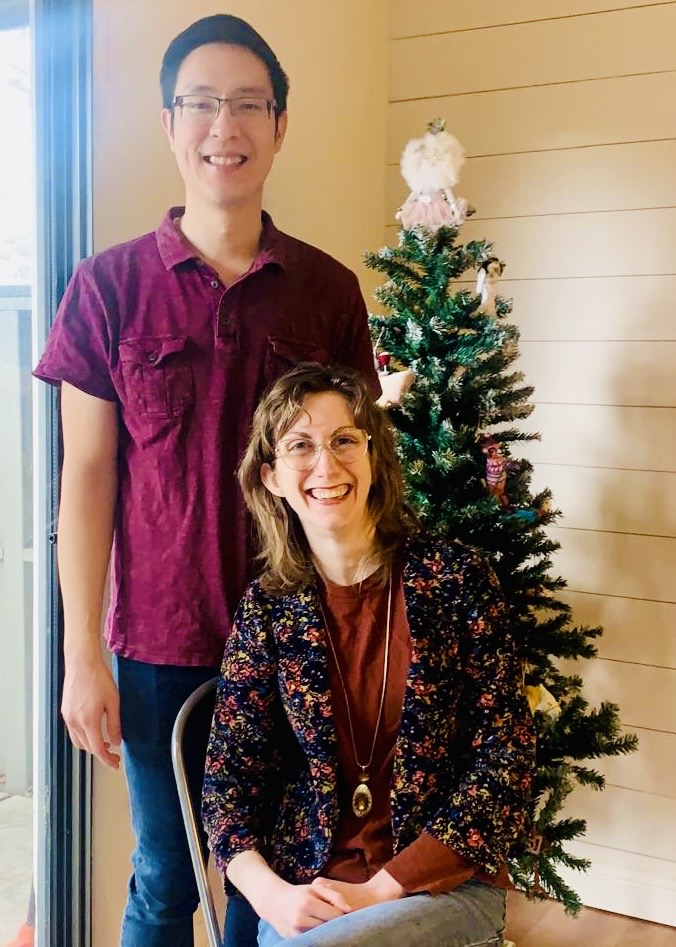
This year we took advantage of Ski Week to visit my family in Georgia. (The picture for this post was taken on the Isle of Hope in Savannah.) It was during our southward migration that we also fulfilled the stated purpose of Ski Week and found snow – albeit during a three hour layover in Chicago. I’m no stranger to snow, having also lived in Wisconsin and Upstate New York, but Ivan has remained firmly rooted to California ever since moving to the U.S. Given this discrepancy, I seized the moment when I glanced up from lunch in the Midway food court and glimpsed some of the largest, fluffiest, whitest, snowflakes I have ever seen pirouetting across the plexiglass windows.
“Oh my goodness, sayang!” I often use Ivan’s Indonesian nickname when I want his attention. He was engrossed in highlights from some English Premier League soccer games he’d missed during our first flight.
“You’ve got to check out this snow! It’s really good!” He looked up, and I began warmly contrasting the fairytale flakes that we were currently observing with the tiny, needle-like, flecks of ice that I’d often experienced in real snow storms. Ivan’s polite nods brought my lecture to a rapid close, however. I realized he would be better served savoring this moment for himself, without my comparisons.
On our return journey to California, I encountered the antithesis of the winter wonderland we’d observed in Chicago. Halfway through our second flight, I was startled to observe an apocalyptic wasteland. The ground was a lifeless, ash color, devoid of plants or people, and scored by ditches running in uneven geometries. A web-like mass deeply etched into the earth suggested what might have once been a delta. Overcome by the hopelessness of the terrain, I turned to Ivan.
“Hey – any idea where we are right now?”
He flipped from the movie he was watching to his flight tracker.
“Uh – it says Nebraska. Why?”
I tapped on my window. “It just looks so – desolate.”
Nebraska. I remembered my sister mentioning that she’d heard from a family friend that Wisconsin had gotten remarkably little snow this year, although the temperatures were still frigid. I’d always imagined states like Nebraska getting even more snow than Wisconsin. What would it be like to a endure a harsh winter without the compensation of terrain carpeted in white? Now, flying over Nebraska, the prospect was more dismal than I’d imagined.
But as my thoughts spiraled further south, I realized that even the harshest winter blossoms into spring. New growth and sunshine breathe life into the most frozen tundra – and desperate human heart. Perhaps that’s why God uses the weather to illustrate the irresistible power of his Word in Isaiah 55:10-12:
“The rain and the snow come down from the
heavens
and stay on the ground to water the earth.
They cause the rain to grow,
producing seed for the farmer
and bread for the hungry.
It is the same with my word.
I send it out, and it always produces fruit.
It will accomplish all I want it to,
and it will prosper everywhere I send it.”
Depending on your location, Spring could already be reaching irrepressible fingers into your mornings, or it could still be several weeks away. Perhaps you’ve been going through a trial for a long time and can no longer imagine life without it. Perhaps you’re starting to see God work, but wondering whether you can hold out until he brings his work to completion. Or you may be enjoying a season of peace and prosperity. While we have a calendar that gives us general markers for winter and spring, we don’t have that same insight into the spiritual seasons of our lives, or why God works at different times and ways in our lives compared to the lives of those around us.
Whatever your current experience may be, we can embrace the illustration that God gives in Isaiah 55 as reassurance that he is always working. He will accomplish exactly what he intends, exactly when he intends to. For our part, we can demonstrate our faith by continuing to enter his presence in prayer, and presenting our hearts to the shaping power of his Word. I also find hope when I consider the extended implications of what God’s “word” can mean. Most often we think of the 66 books of the Bible, but God also created the universe by his spoken word. What’s more, Jesus is sometimes referred to as the “Word” (John 1:1,14; Col. 1:19, 2:19). No matter what kind of spiritual season you’re in, I hope we can take courage together that God is working, not just through the power of his Scriptures, but also through divine intervention and the ongoing intercession of our Savior and perfect Advocate, Jesus Christ.