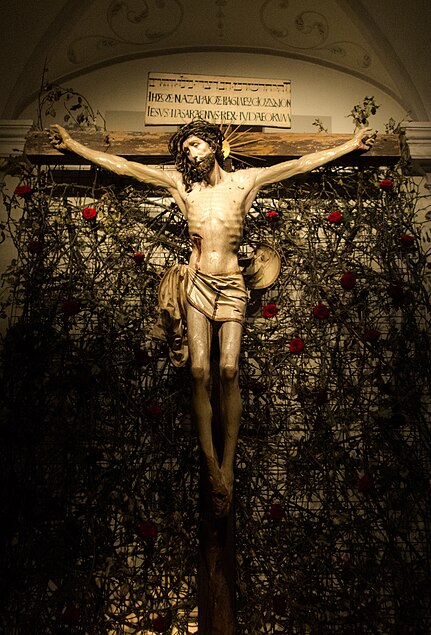
Hello, Blogging Family! I hope you had a blessed Reformation Sunday yesterday. This holiday has impacted me differently after our trip to Central Europe this summer. I’ve always been a voracious student of history, art, and music, and was excited to visit some of the countries that were crucial to classical music, the World Wars, and church history. I realized that Austria, Slovakia, Hungary, and Czechia are either Catholic or secular today, but I also knew that some of them had either been instrumental in the original spread of Christianity across Europe or the Protestant Reformation. They are still home to some of Europe’s oldest and most beautiful cathedrals. But I wasn’t prepared for the spiritual landscape we encountered during our trip.
We were blessed to tour cathedrals in each country, as well as Melk Abbey in Austria. Melk is a Benedictine monastery that was founded in 1089 and is famous for its ancient library as well as the dignitaries that have visited (including Mozart, Napoleon, and Empress Maria Theresa). The art and architecture in all these locations exceeded my expectations, and at Melk I especially loved seeing some medieval manuscripts I’d studied in facsimile during grad school at SCAD!
But I was also deeply saddened as I pondered the Jesus portrayed by this art, and imagined how different my life would be if this were the only Jesus I knew. Everywhere we went, the representations of Christ we saw were effeminate and dead. He was typically either nailed to a cross, or being tended by his mother or saints after his death. While it’s essential to spend time remembering how much Jesus suffered for our sins, our hope of eternal life comes from the truth that he is a risen, powerful Savior who conquered death and is alive and working today (1 Cor. 15:12-28).
This focus on death wasn’t just limited to Jesus. At each cathedral, we were greeted by a list of saints’ relics that were either available for regular viewing or on “special occasions.” These ranged from finger bones and scraps of clothing, to a martyr’s tooth and jawbone that had been encased in jewels. When I asked our guides what they thought about the churches and relics they were representing, their answers were insightful. Some responded, “This is the church I was baptized and married in!” although whether they still attended was less forthcoming. Others highlighted that relics do not fare well when subjected to DNA testing.
But one theme was universal: whatever the guides’ personal feelings about their churches, everyone agreed that the Protestant reformation was an inconvenient blip that had been decisively addressed by the Counter-Reformation hundreds of years ago.
I’ve had several months to reflect on this emphasis on death and the impact it seems to have had on the countries we visited, as well as do more research to compare data with the spiritual climate we sensed. For example, the Austrian embassy reports 3.8% of the population to be Protestant/evangelical, but most missions agencies believe this number is closer to 0.5%. Few Austrians actually attend the Catholic churches into which they were baptized. In recent years, New Age practices have begun gaining popularity with those searching for some form of spirituality.
I think there are many factors at work here, but one of them could be that we are highly influenced by the images we absorb as children. If we only see Jesus portrayed as dead and powerless, and are taught instead to seek the intercession of dead saints and professional clergy, to whom we also have limited access, what immediate or eternal hope does this offer? Deep down all of us know we will never be good enough to earn God’s favor, and how much confidence can we really put in humans who left this earth centuries before us?
As protestants in the United States, it’s easy to dismiss Reformation Sunday as the anniversary of a German monk nailing a theological treatise to the door of a church on the other side of the world. But visiting these cathedrals in Central Europe and witnessing the functional outworking of the Counter-Reformation has reminded me that Reformation Sunday represents so much more than just that. It represents returning to an understanding that we come to God through faith alone in a living, powerful, resurrected Savior, who made a way for us to speak directly with God in prayer without human intermediaries. It represents the freedom – indeed the responsibility – to read God’s Word for ourselves instead of relying on “professional Christians” like priests to tell us what God says about himself. And through these reformations of speaking to and hearing from God ourselves, Reformation Sunday represents a renewed understanding that God is not only immediately accessible, but he wants to hear from us and speak to us, each and every day.
I hope these reflections will remind you of privileges that, if you’re like me and grew up in a protestant church, we can often take for granted. I also hope that if countries like Austria, Czechia, Slovakia, and Hungary haven’t been on your prayer radar until now, you will join me in praying that God will pave the way for his gospel to gain more and more traction in these countries. He may even have a role for you or me to play!
 Walking With Grace