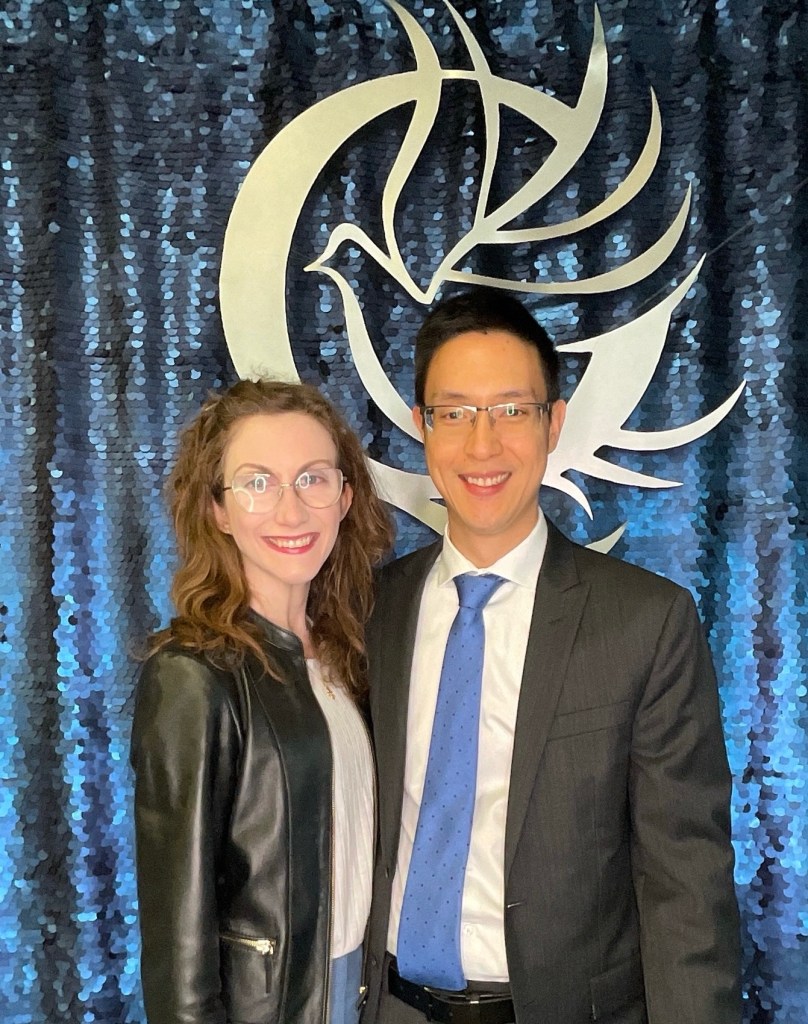
Hello Blogging Family, thank you for your prayers and encouragement in response to our recent news! Between our upcoming move to Indianapolis, and Grace’s unexpectedly clear MRI, God has really been teaching us to trust in Him in recent weeks.
Have you ever felt like only about 17% of your plans come to fruition the way you anticipated? Maybe some of us can boast of a >50% success rate. But even the best planners among us can’t guarantee a 100% success rate, because, well, we aren’t God.
Isn’t it interesting how, despite knowing this in our heads, we often still get surprised or frustrated when our powers of prediction fail us? When, inevitably, an unlooked for circumstantial factor enters the equation, or people somehow don’t react the way we thought they would, or should?
Reflecting on my own life, I can name many examples of how God “redirected” my plans: when I was in college, I wanted to teach at a college/university. God has placed me in K-12 environments, in which I’ve grown so much as an educator, and for which I am very grateful. I had also anticipated staying in San Jose for the bulk of my teaching and administrative career, but God has opened the door for a new chapter in Indiana.
Even before I’d met Grace, I had wanted to one day get married and have a family; eleven months into our first year of marriage, Grace experienced her accident. This eventually led to us being told by medical professionals that the biological route to parenthood would be closed to us permanently, due to Grace’s seizures, and still partially-dissected carotid artery. In God’s wonderful sovereignty, at this point, He has removed both of those medical barriers.
Wow. Thank you Lord!
God gives, and God takes away. All things are from Him, through Him, and to Him. The apostle James gently but firmly reminds us:
Come now, you who say, “Today or tomorrow we will go into such and such a town and spend a year there and trade and make a profit”— yet you do not know what tomorrow will bring. What is your life? For you are a mist that appears for a little time and then vanishes. Instead you ought to say, “If the Lord wills, we will live and do this or that.”
James 4:13-15
As we walk with the Lord each day, may we more and more learn to surrender all aspects of our lives to Him, trusting that He knows infinitely more than we do, and He cares for us more than we can comprehend. When He “redirects” us, it will always be for His glory and our good.
Whatever you are facing today, whatever decisions need to be made, whatever unexpected news reaches you–know that the God of the universe is with you, and He will shepherd you with goodness and mercy. May we be encouraged by the lyrics to this song:
“Many things about tomorrow, I don’t seem to understand; But I know who holds tomorrow, And I know who holds my hand.”
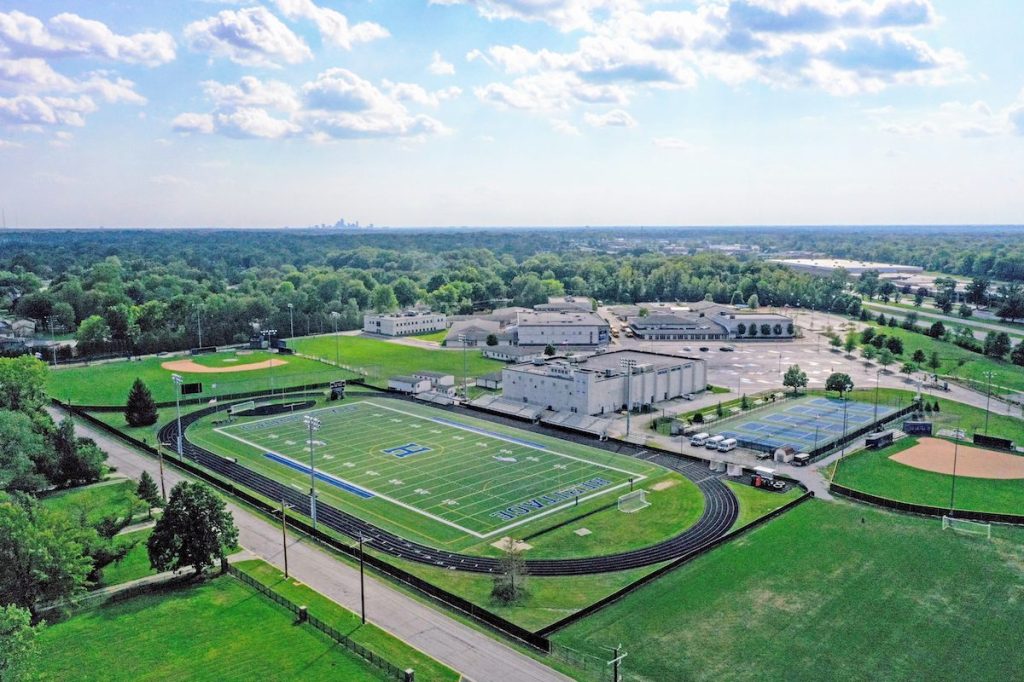
Hello Blogging Family, Grace and I have some bittersweet news to share…after nine and a half years in San Jose, Lord-willing we will be relocating to Indianapolis next month! I’m excited to share that I’ve accepted the position of Fine Arts Director at Heritage Christian School. The Lord has been so gracious to open this door of opportunity, and we are trusting Him to continue guiding us in this next chapter.
As the prophet Jeremiah said:
“The steadfast love of the Lord never ceases; His mercies never come to an end; they are new every morning; great is Your faithfulness.”
lamentations 3:22-23
Truly, great is God’s faithfulness. It’s often easier to see this in hindsight, but it is nevertheless true at all times. When Grace and I moved from Riverside to San Jose in June 2017, we could never have imagined all that lay ahead for us here. We moved with the mindset of, “God will provide” — and He did, in a way only He could have.
As many of you know, my training is as a musician; my undergraduate and Master’s degrees are in Piano Performance. In tech-saturated Silicon Valley, this is a bit of a niche skill set. Many professional musicians make a living by combining incomes from performing, teaching, and maybe composing or arranging. However, given Grace’s acute medical needs at that time, I knew we needed more financial stability than a gigging lifestyle could provide. Teaching music at a school would allow me to use my music training while providing a stable income.
In God’s great mercy, He opened the door for me to work at Valley Christian Schools (VCS) immediately after we moved to San Jose. I initially applied to teach Junior High science (not having a professional background in science, but knocking on every door I could find). In God’s providence, very kind and helpful people helped me connect with the Director of the Conservatory of the Arts at VCS. I spoke with him and he graciously invited me to join the Conservatory team as a Junior High and High School teacher.
Over time, I shifted my emphasis from teaching to school administration. Four years ago I took on the role of Associate Director for the Conservatory; and last summer by God’s grace I completed my EdD in Organizational Leadership. I’ve really enjoyed working in school administration, as it’s given me the opportunity to think strategically while at the same time continue to work with teachers, students, and families.
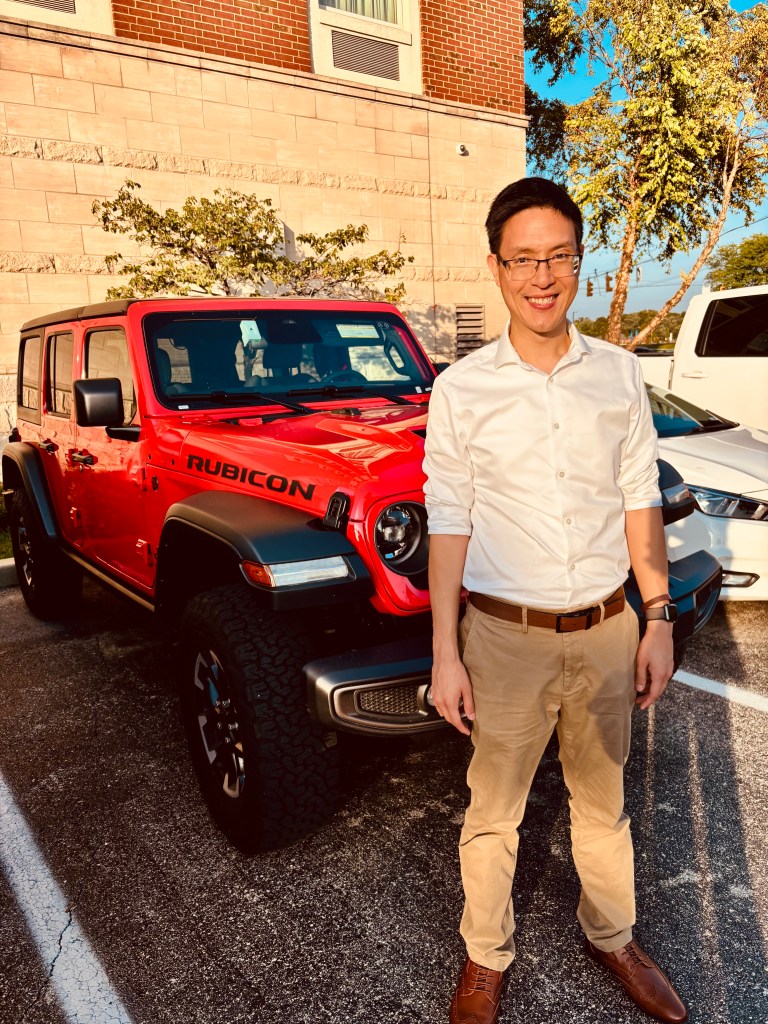
This past summer, I became aware of Heritage’s search for someone to lead their arts department; we connected, and on August 31st, Grace and I flew out to Indianapolis so that the following day I could visit Heritage in person. In God’s timing, the Fine Arts Director position was offered, and I accepted. (Incidentally, this is also where the picture above comes in; we had reserved a “compact” rental car online, but received the pictured Jeep Wrangler instead! Neither Grace nor I had driven a Jeep before, so this was also a new adventure. 😉)
I used the word “bittersweet” at the beginning of this post because, while Grace and I are excited for this next stage in my career, we are at the same time very much not looking forward to saying goodbye to the many wonderful people we’ve met and formed relationships with here in the Bay Area. To our San Jose community: thank you for being channels of God’s blessing in our lives over these past nine years. May you seek the Lord more and more each day, and may He lead and bless you.
To our future friends and community in Indianapolis: We look forward to walking alongside you, and pray that God would use us to bless and encourage one another as we seek to honor Him in all we do. To all our blog family, thank you for faithfully walking with us over the past (almost) ten years! Here’s to new horizons.
As a TBI survivor, I am deeply aware of what it means to live with an invisible, life-altering, injury. Depending your own life history, you may possess scars that are apparent to the naked eye. Or perhaps you’ve experienced trials that don’t manifest physically but still have wide-reaching emotional and spiritual effects. 2 Cor. 3:17-19 is a passage that God consistently uses to encourage me, and I pray it will be encouraging to you all as well!
“Now the Lord is the Spirit, and where the Spirit of the Lord is, there is freedom. And we all, with unveiled face, beholding the glory of the Lord, are being transformed into the same image from one degree of glory to another. For this comes from the Lord who is the Spirit.”
One result of my injury brain injury is that I struggle with hypothetical thinking. Whether or not you share a similar physical challenge, finding hope for today in the amazing future promises that the Apostle Paul lays out may feel difficult. How does the promise of future glory transform our daily experience in concrete ways?
We begin by remembering God’s character never changes. (Malachi 3:6). Therefore, we can trust that His Word – and the promises it contains – are completely trustworthy and not subject to alteration. We also see God explicitly declaring that His Word expresses both His sovereignty and His foreknowledge in Isaiah 46:9-10: “I am God, and there is no other… declaring the end from the beginning and from ancient times things not yet done, saying, ‘My counsel shall stand, and I will accomplish all my purpose.'” Putting all these concepts together, we can trust that when God supernaturally inspired men to author Scripture, there were not any human conditions or events at any point in history that would occur outside of His sovereign plan or that His Word would not be sufficient for.
From this foundation, we can move into the basic promise of 2 Cor. 3:17, which although a bit more abstract, is still relatively accessible. If we are believers, Paul is saying that we have all already received the Holy Spirit. If you notice what I am doing here, I am still dealing with facts that are either eternal (can be thought of as present tense) or took place in the past (usually easier to conceptualize).
Next, we see that Paul says the Holy Spirit produces freedom in our lives. This is moving toward the conceptual, but is still relatively recognizable. That being said, we can make it more concrete by asking: What would I like to be rid of? Or, What would I like to be able to do? While we don’t know God’s plan for physical healing in everyone’s life, we do know that the Holy Spirit always gives believers the power to grow in knowing and loving Him and loving others (Matt. 22:37-39; 2 Peter 1:3-9). He wants us to get rid – be free – of attitudes, actions, and circumstances that hinder these goals. We should also seek out attitudes, actions, and circumstances that help us foster these goals. Freedom comes from being more aligned with God’s goals, which are always more concerned with our heart than our physical abilities – or deficits.
While TBI often impacts emotional regulation, thus making certain aspects of loving God and others more difficult for me, Scripture tells us that no physiological calamity can touch our souls, and that God is in the process of renewing all of us. (Matt. 10:28; 2 Cor. 4:16). Although certain aspects of our sanctification may be more challenging depending on when we came to Christ, our cultural background, or even something like a physical limitation, we can be confident that it is still possible to grow in loving God and loving others. The more we submit to the work God wants to do in us through the power of His Word and His Holy Spirit, the more we will experience the “freedom” God promises us in 2 Cor. 3:17-19, whether or not we are able to imagine freedom as an abstract concept.
The same is true for the next promise – that we will be transformed “from one degree of glory to another.” This is the portion that has been the most challenging for me to conceptualize. Most of us can probably imagine concrete examples of beauty or pleasure, such as a kaleidoscopic sunset, or chocolate chip cookies baking, or the downy fur of your favorite puppy. “Glory” in a spiritual sense might be harder to call to mind in the same concrete way we do for beautiful or pleasurable earthly experiences. The good news is that no one knows for sure what heaven will be like, so those of us who have trouble visualizing what Paul is describing in 2 Corinthians 3 are in good company. What we do know for sure is that even now, everything God allows into our lives is conforming us “to the image of His Son” (Romans 8:29). When we get to Heaven, this transformation process will be completed. The Apostle John writes that “we shall be like Him, because we shall see Him as He is” (1 John 3:2).
For me, putting this verse into practice has meant looking forward to seeing my Savior face-to-face and enjoying His presence completely free from the lingering remnants of sin. I can’t wait to possess a mind and body that are perfectly suited to both glorifying God and enjoying Him forever. It also means looking forward to sharing this experience with fellow believers in our perfected state, free from the limitations and sin that can make even the best relationships challenging.
In the present, I think this also means looking for ways to praise God for how we see Him increasing not just our ability to love Him and love others, but also how we see Him increasing these abilities in the lives of those around us. This daily sanctification is the downpayment of the glory we’ve been promised, and the more we grow in identifying and expressing gratitude for His Spirit’s work in our lives, the more we will grow in our ability to anticipate and hope in future glory. This daily gratitude also reminds us that God is keeping His promise to complete His good work in all of us, even we are going through a trial or His work seems more apparent at certain times than others.
I am far from doing any of these things well or consistently, but I am grateful for how God continues to use this passage to renew both my mind and heart. I pray that sharing a little bit if my journey with this 2 Cor. 3 has been encouraging for you, and that God will use these verses to bring vivid hope for whatever you may be going through. We can trust that His promises never fail!
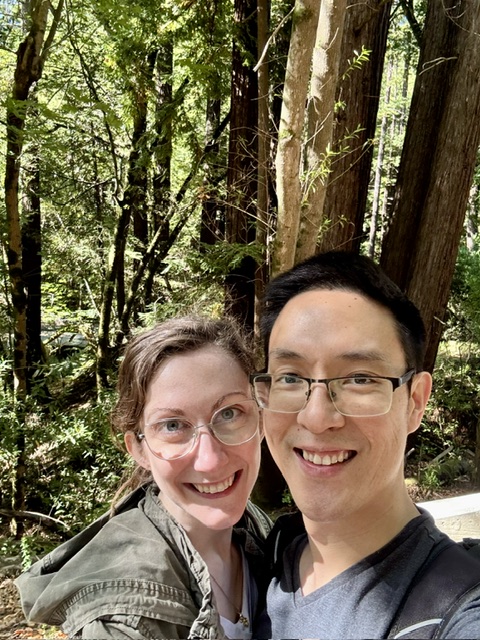
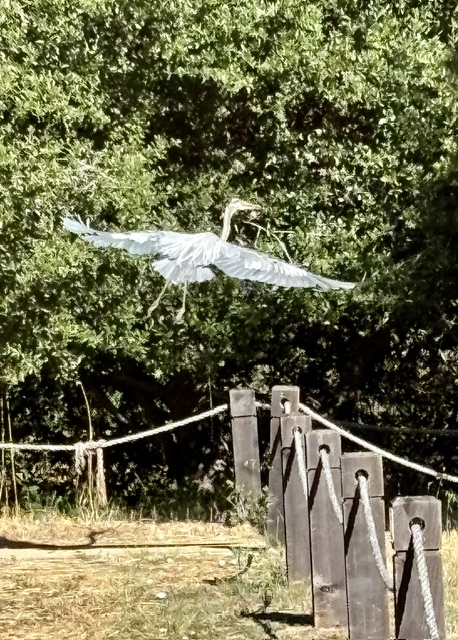
Good morning, Blogging Family! Two weeks ago Grace and I were looking for a new redwoods park to explore, and we found Bear Creek Redwoods Open Preserve, which was only 30 minutes away. Most other forests are over an hour away, either by Oakland or across the Golden Gate Bridge in Marin County. As you can see in Grace’s photo at the end of this post, we even spotted a heron successfully hunting a mouse!
While we were exploring, it was amazing to consider that the redwoods around us could live for hundreds of years, far longer than any human. It’s even more amazing to think about how “old” God is–that He is, in fact, older than time itself! He is beyond time; He transcends it. He is eternal.
This August also marks the beginning of my 10th year at VCS. I’m grateful for God’s grace and mercy in bringing me to this milestone! Yet ten years are like the blink of an eye, from an eternal perspective. As Moses said in Psalm 90:
“Lord, you have been our dwelling place in all generations. Before the mountains were brought forth, or ever you had formed the earth and the world, from everlasting to everlasting you are God.
You return man to dust and say, ‘Return, O children of man!’ For a thousand years in your sight are but as yesterday when it is past, or as a watch in the night.” (Ps 90:1-4)
I don’t know what this year will hold, but I know that God is still God. He has been my dwelling place, and will continue to be. Whatever you may be facing in this season, I pray that God’s eternal nature will comfort you too as you depend on His sovereign care for you. As Moses prayed, may we also pray:
“So teach us to number our days that we may get a heart of wisdom.”
Psalm 90:12
May God “establish the work of our hands” (Ps 90:17) as we humbly walk with Him each day, doing our best to steward what He has entrusted to us. One day soon, by the grace of Christ, we will see the Eternal One face to face and enjoy being with Him forever. Blessings to you!
Good Morning, Blogging Family! This past weekend, we were incredibly grateful to share our testimony in a breakout session at ICPF USA‘s NorCal conference. We learned about this organization through a friend at church who has been involved for most of her life, first as a student and now as Media Director for the NorCal chapter. The theme for this year’s conference was “Unshakeable,” and the key verses were from Hebrews:
“Therefore let us be grateful for receiving a kingdom that cannot be shaken, and thus let us offer to God acceptable worship, with reverence and awe, for our God is a consuming fire.”
Hebrews 12:28-29
It was a blessing to meet brothers and sisters from not just around the country but around the world, yet experience the sweet and nearly instant bond of fellowship that occurs in the family of God. We were greatly encouraged to see so many families worshiping together, and also meet people from all life stages and backgrounds. As always, our favorite part continues to be hearing testimonies of God’s faithfulness and power in the lives of those we meet!
It has also been encouraging and convicting to meditate on Hebrews 12:28-29 in preparation for the conference. One truth that the Lord continues to impress on my heart (but that did not make it into our talk!) is that our gratitude and worship is based on receiving the kingdom of Heaven. God’s kingdom hinges on His promises, not our perfection. While it is true that He does use us as instruments to accomplish His will in spreading the gospel and building His church, Christ’s atoning work on our behalf was finished 2,000 years ago. Furthermore, even the spread of the gospel and the preservation of the church depend ultimately on God’s Word and Spirit being active. And because of this, in even in the most challenging seasons of our lives, our identity is first “receiver,” then “partner.”
We continue to be so grateful for opportunities to share what God has done and worship with brothers and sisters in Christ from many different backgrounds. Thank you as always for your prayers and we hope this can encourage you as well!
Good morning, Blogging Family! We’re blessed and excited to announce a new ministry partnership. As we’ve continued to pray and consider how to be good stewards of our testimony, God consistently puts serving the brain injury/TBI community on our hearts. We also believe that, although my combination of stroke and TBI is relatively rare, this can also help us better understand and pray for brothers and sisters experiencing a wide variety of trials, even if their particulars might be different than what we’ve gone through.
We’re also really grateful that God is continuing to answer our prayers by allowing a partnership with Hope After Brain Injury. I have admired this organization for a long time because, although there are many wonderful resources for brain injury/TBI available, it is still challenging to find Christian organizations that specialize in brain injury. It’s even harder to find Christian organizations that specialize in brain injury and put their resources online! I’m very grateful for the work this organization is doing for both brain injury survivors and caregivers, and that they make so much available to people living all over the country. Their book, Letters of Hope and Wisdom for Brain Injury Survivors, is the first full-length Christian book I’ve found that offers practical education and guidance to survivors and families during various stages of the brain injury journey. (Dr. Stuart Scott has an excellent mini-book for caregivers during the initial stages of brain injury.) We’re also very humbled and grateful that Hope After Brain Injury is now featuring Hello, God on their “Resources for Survivors” page. This is an unexpected blessing, and we pray it will be a small way to share the comfort and hope God continues to pour into our lives (2 Cor. 1:3-7).
Thanks as always for walking with us, and we also encourage you to take advantage of Hope for Brain Injury if you know of anyone who could benefit from their resources!
Hello Blogging Family! It’s now been just about a month since Grace and I returned from our trip to Australia and Indonesia. I’m still so thankful that God allowed us to travel together, since in the early days of Grace’s accident I would’ve absolutely ruled out international travel. It’s good to be proven wrong by God.
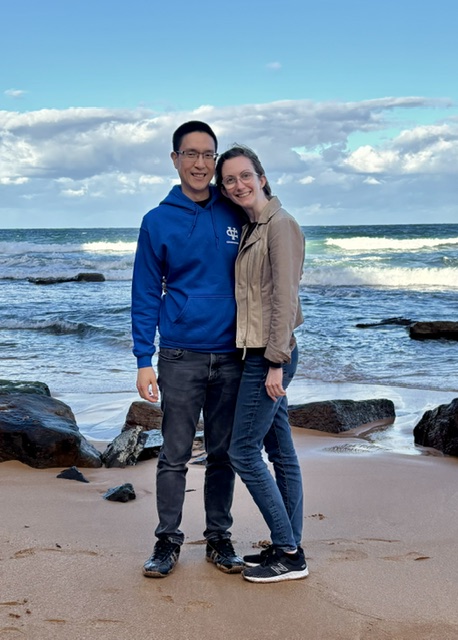
The picture above is from Newport Beach in Sydney. June is winter in Australia, so the temperature was in the 60’s when we visited this beach, pleasantly cool and not too hot at all! We were among the only people there that afternoon. I was struck by the wide expanse of the sky meeting the curving horizon in the distance. The view was bounded by towering rock cliffs on either side of the beach, creating a picturesque cove.
Living in the middle of a busy, tech-saturated city, it’s easy for me to forget the grandeur of the natural world God created. As impressive as man’s creations have been, they pale in comparison to the works of the Creator Himself–including ourselves.
Psalm 100:2 reminds us: “Know that the Lord, he is God! It is he who made us, and we are his; we are his people, and the sheep of his pasture.”
And David, in Psalm 8, famously said:
When I look at your heavens, the work of your fingers, the moon and the stars, which you have set in place, what is man that you are mindful of him, and the son of man that you care for him? O Lord, our Lord, how majestic is your name in all the earth!
Psalm 8:3-4, 9
How majestic is the name of the Lord, in Australia, Indonesia, California, and across the whole world! God, in His wisdom and grace, has made you and me “a little lower than the heavenly beings” (Ps 8:5). As human beings we bear the image of God Himself. What an incredible privilege!
Yet may we also never forget that we were never meant to be the center of the universe–either the actual physical universe, or the private ones each of us inhabit in our hearts and minds. Yesterday, our pastor was preaching on the topic of missions, and he pointed out that perhaps many of us have yet to experience the “Copernican revolution” of replacing a man-centered view of the reality with a God-centered view.
A God-centered view of reality was what prompted David to cry out, “What is man that you are mindful of him?” Is that how we view ourselves today?
Sometimes, even when I’m not fully aware of it, I act as if God owes me something. When I don’t get what I want, or get what I don’t want, the frustration or bitterness that ensues proves that, in that moment, I’m not viewing Him as my Lord but rather as my benefactor.
But Jesus’ rightful title has always been and will always be, “King of Kings and Lord of Lords” (Rev 19:16). The ultimate joy and blessing of this life and the next is to personally know and be known by the God who created the world, and us–to worship and enjoy our Savior and King forever. Be encouraged today that, in His grace, He is mindful of us.
Happy Monday, Blogging Family! At this point, many of you know that my dad will be retiring from full-time ministry near the end of the year. Needless to say, this is a bittersweet transition for our family. It has already provided opportunities to reflect on how the Lord has provided for, sustained, and blessed my parents’ lives and ministry over the years. I’m sure we will continue grow in gratitude (and also sadness as their season of vocational ministry concludes) as Fall approaches.
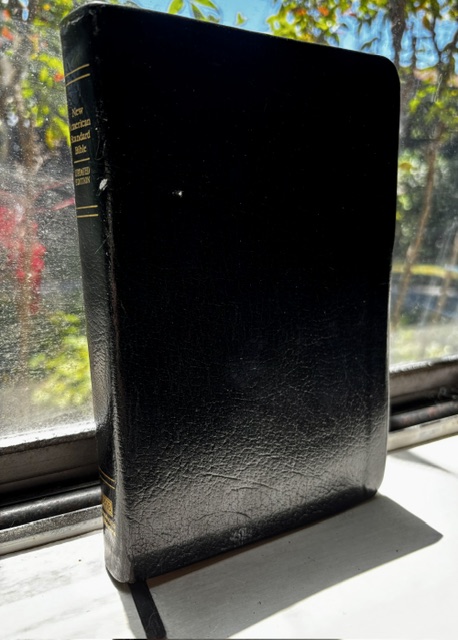
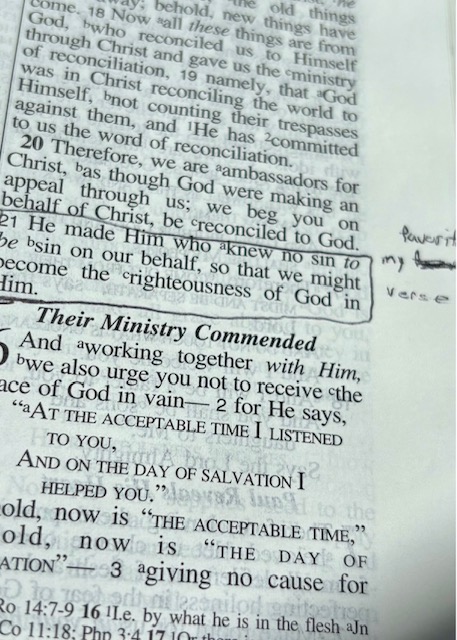
An unexpected blessing I’ve received during this time is rediscovering some “artifacts” my dad preserved in his office over the decades – and several cross- country moves. One of these was my first “grown up” Bible. Although I admit that I had forgotten about it in recent years, when Dad returned it to me last week, it brought back many childhood memories.
As you can see from the picture, it’s a relatively standard NASB leather Bible. As an eight- or nine-year-old, I remember being very impressed with the “grown up” black leather Bibles my parents carried to church, and wishing I could have one that looked like theirs. This was before I became a Christian, so looking back I am also sure that I was most motivated by the appearance of carrying a “grown up” Bible and looking like an “obedient” child – especially to adults. Nevertheless, my parents must have paid attention to what I was asking, because my dad presented me with my very own “grown up” Bible, and also explained to me that the NASB was the “best” modern translation. As you might imagine, this really boosted my assumption that others would view me as “grown up” and “good.” I do remember being very proud of carrying my new Bible to church, but I don’t remember how often I read it if no one was watching. Looking back on this turn of events as an adult, I am grateful that my parents were willing to bless me with a real leather Bible at such a young age, especially since my dad would have still been in seminary!
Later that year, or possibly the next year, I remember hearing a sermon that helped me understand that no matter how hard I tried – or even succeeded – at appearing “good” to other people, God could see all the evil thoughts of my heart. This made my outward “obedience” like filthy rags in His sight. I was not a good little girl at all, no matter what kind of Bible I had. The only thing that could help me have a right relationship with Him was trusting that Jesus had died for my sin and conquered sin and death by rising again. This also included admitting that I sinned against God whether or not other people saw it, and asking God’s mercy and forgiveness. Since I was born into a Christian home, and my dad went to seminary when I was 5, I can’t remember a time when I could not recite the gospel. But for me, just like anyone else, “knowing” the gospel was not enough. I still needed the Holy Spirit to open my eyes in a specific, personal way to my own spiritual deadness, as well as the hope of salvation and eternal life that is available through Jesus’s life, death, and resurrection.
After that moment, the “grown up” Bible that I had originally wanted for appearance’s sake suddenly became intrinsically valuable. I remember wanting to spend time reading it, whether or not anyone saw me, and also wanting to go to church. Although I was still a relatively young child, the Holy Spirit had taken up residence in my heart and I understood these previously boring activities were ways to learn more about God.
In 2026 many of us are probably using the ESV or something similar rather than the NASB (this story takes place around the turn of the millennium 😊), but it’s a testimony to God’s Spirit working through His Word that in elementary school I wanted to spend time reading a translation that we now consider a bit unwieldy. As I’ve had time to flip through its pages over the past week, I’ve been pleasantly surprised to find many passages in the New Testament circled and underlined and marked in a child’s handwriting as “favorite,” several of which I still often use in personal prayer or counseling. One of them is the Apostle Paul’s famous prayer:
And this I pray, that your love may abound still more and more in real knowledge and all discernment, so that you may approve the things that are excellent, in order to be sincere and blameless until the day of Christ; having been filled with the fruit of righteousness which comes through Jesus Christ, to the glory and praise of God.
Phil. 1:9-11
I also remember being very excited when the ESV was released sometime during high school, and as I’ve had time to do a side-by-side this week I can see why many of us made the switch. However, I will always be so grateful for how God used my parents and my first “grown up” Bible to begin His good work in my life, and I’m so thankful to be reunited with it after many years. I also plan to continue using it as a physical reminder of God’s faithfulness, provision, and protection throughout all our lives.
Whatever season you may find yourself in, I pray that God will open your eyes to reminders of His faithful, shepherding hand, and His sure promise to work all things to produce His fruit in your life and shape you more and more into the image of His Son, which is always our ultimate good.
Hello Blogging Family! Last Saturday Grace and I had the opportunity to attend Valley Christian School’s Warrior Celebration, where we honored our previous president’s 40 years of service to the school and looked ahead to the future. It’s hard to believe this is my ninth year working at VCS, and I’m thankful for how God has used this school to provide for me and Grace and allow us to live in the Bay Area.
My role at the school has changed over the years, and one of the more recent developments is overseeing the student Worship Team, which we call Warrior Worship (our school mascot is the Warriors). We have chapel once a week on Wednesdays, which normally start with a time of musical worship and then goes into a message. A team of high school students leads the music portion, and I’ve really appreciated getting to work with them as their teacher.
For the worship team class, our class periods involve rehearsing music, but my favorite part are the portions when we consider what it means to live with God and for God — in short, discipleship. We have discussions such as:
Many of students who attend Valley are not from Christian backgrounds, so I’m proud of the students who serve on worship team, and all the other students who have chosen to actively represent Christ to their peers. I’m reminded each day too that all of my actions as a teacher directly or indirectly constitute a witness for Jesus. What kind of a witness am I? Am I being faithful to honor Him through my words and actions?
Whether we work in a secular or Christian context, may we always remember that God’s eternal purposes also include our professional lives; even if you are not working right now, you are still an ambassador for Christ to every person you interact with today. May God be glorified through us wherever we are.
Good morning, Blogging Family! Thanks again so much for all your prayers over the past few weeks! It was also super encouraging for us to read the comments on my last post and learn ways that God has used Psalm 46 in your lives over the years. He truly is faithful!
Now that my hand is recovered, I wanted to give an update on what we’ve been up to this winter since the recital, as well as what we’re looking forward to the rest of the spring. It’s crazy to think that this time last year we were preparing to release our second book, Hello, God: Seeking the Lord When Words Fall Short, which drew on my personal experience of re-learning to pray after the brain injury. We’re both so grateful that God has opened the door for us to write two books about lessons He’s taught us from my accident, and continue to pray that He would use them for His purposes. Remembering what we were up to this time last year also explains what we’re currently pursuing!
First, based on my experiences sharing my faith in various hospital settings, as well as the journey we have shared with you all, I felt led to explore biblical counseling a few years ago. Due to a variety of factors, including writing two books in relatively short succession, counseling certification has not been something I mentioned here. Since January, I’ve been devoting the bulk of my energy to this ministry and have been blessed to see the Lord at work in people’s lives. I’ve also been very convicted about areas in which I need to personally grow as I spend time praying and preparing for sessions each week.
Although counseling is a major theme of my life right now, God is also being faithful in continuing to provide writing opportunities. Last summer, I got approved as a vendor for the San Jose Public Library, and loved teaching a fiction workshop last September. This April, I’ll be back to lead a poetry workshop. Although my published books have been nonfiction, I’m grateful to both SCAD and CalBaptist for challenging me to write in many genres while I was in school. So this is a huge blessing from the Lord because it challenges me to keep my writing skills sharp and allows me to continue teaching. I also see it as an indirect opportunity to witness because, although it’s a secular workshop, I can mention my own published work. 🙂
Finally, Ivan and I are grateful to have a couple of chances to share music and our testimony on the horizon. We loved sharing the history of violin with the Classical Conversations homeschool community last year, and are blessed to be returning in April, this time to talk about both violin and piano. We’re also excited to be partnering with a local small group to lead worship and share our testimony.
I’ll be posting more as we participate in some of these events. Thanks as always for your prayers and for walking with us!