When I began writing this post yesterday, I did not know that Jubilant Sykes was no longer with us, but was even then in the presence of our loving Heavenly Father. I won’t get into the specifics of his passing, as they are tragic and disturbing, but you can read about them here. Mr. Sykes was acclaimed in the world of secular classical music as a gifted opera singer, but many in the Christian community (including myself) knew and loved him for the way he used his extraordinary voice to worship our Lord.
This is the post I’d written yesterday, which I’ve decided to still share with you as a way to acknowledge his passing and praise God for the way he used Mr. Sykes while he was with us on earth. I hope you will also join with me in praying for his family during this heartbreaking time.
***
As I mentioned a couple of days ago, Ivan and I are listening Christmas songs and carols every morning this season. “Mary Did You Know” is a song most of us probably know and love, but I must say this is my absolute favorite rendition. And coming from a musical background plus being a pastor’s kid, I’ve heard it sung more than a few times. đ
I first heard Jubilant Sykes sing “Mary, Did You Know?” when I was a small child while my dad was in seminary. Due to my age, the import of the words was mostly lost on me, but I was still deeply moved by the power and conviction with which Mr. Sykes sang. As I grew older, I began to understand the song a bit more (he sang it every year). As an adult, I find the words profoundly meaningful, and I also understand much better how Mr. Sykes is able to convey them in such a worshipful way. I hope this version blesses you as much as it does me.
Hello, Blogging Family! I hope you had a blessed Reformation Sunday yesterday. This holiday has impacted me differently after our trip to Central Europe this summer. Iâve always been a voracious student of history, art, and music, and was excited to visit some of the countries that were crucial to classical music, the World Wars, and church history. I realized that Austria, Slovakia, Hungary, and Czechia are either Catholic or secular today, but I also knew that some of them had either been instrumental in the original spread of Christianity across Europe or the Protestant Reformation. They are still home to some of Europeâs oldest and most beautiful cathedrals. But I wasnât prepared for the spiritual landscape we encountered during our trip.
We were blessed to tour cathedrals in each country, as well as Melk Abbey in Austria. Melk is a Benedictine monastery that was founded in 1089 and is famous for its ancient library as well as the dignitaries that have visited (including Mozart, Napoleon, and Empress Maria Theresa). The art and architecture in all these locations exceeded my expectations, and at Melk I especially loved seeing some medieval manuscripts Iâd studied in facsimile during grad school at SCAD!Â
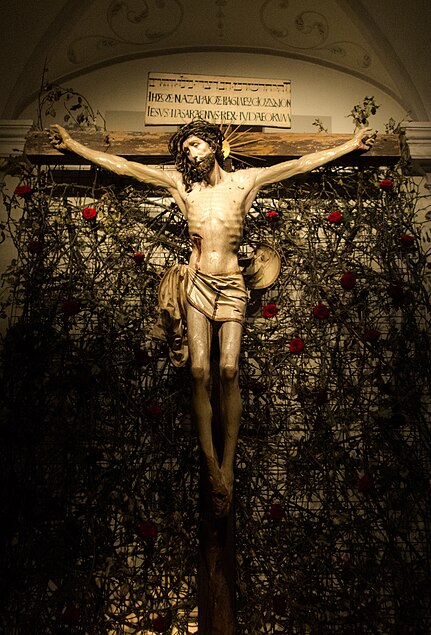
But I was also deeply saddened as I pondered the Jesus portrayed by this art, and imagined how different my life would be if this were the only Jesus I knew. Everywhere we went, the representations of Christ we saw were effeminate and dead. He was typically either nailed to a cross, or being tended by his mother or saints after his death. While itâs essential to spend time remembering how much Jesus suffered for our sins, our hope of eternal life comes from the truth that he is a risen, powerful Savior who conquered death and is alive and working today (1 Cor. 15:12-28).
This focus on death wasnât just limited to Jesus. At each cathedral, we were greeted by a list of saintsâ relics that were either available for regular viewing or on âspecial occasions.â These ranged from finger bones and scraps of clothing, to a martyrâs tooth and jawbone that had been encased in jewels. When I asked our guides what they thought about the churches and relics they were representing, their answers were insightful. Some responded, âThis is the church I was baptized and married in!â although whether they still attended was less forthcoming. Others highlighted that relics do not fare well when subjected to DNA testing.Â
But one theme was universal: whatever the guidesâ personal feelings about their churches, everyone agreed that the Protestant reformation was an inconvenient blip that had been decisively addressed by the Counter-Reformation hundreds of years ago.
Iâve had several months to reflect on this emphasis on death and the impact it seems to have had on the countries we visited, as well as do more research to compare data with the spiritual climate we sensed. For example, the Austrian embassy reports 3.8% of the population to be Protestant/evangelical, but most missions agencies believe this number is closer to 0.5%. Few Austrians actually attend the Catholic churches into which they were baptized. In recent years, New Age practices have begun gaining popularity with those searching for some form of spirituality.Â
I think there are many factors at work here, but one of them could be that we are highly influenced by the images we absorb as children. If we only see Jesus portrayed as dead and powerless, and are taught instead to seek the intercession of dead saints and professional clergy, to whom we also have limited access, what immediate or eternal hope does this offer? Deep down all of us know we will never be good enough to earn Godâs favor, and how much confidence can we really put in humans who left this earth centuries before us?
As protestants in the United States, itâs easy to dismiss Reformation Sunday as the anniversary of a German monk nailing a theological treatise to the door of a church on the other side of the world. But visiting these cathedrals in Central Europe and witnessing the functional outworking of the Counter-Reformation has reminded me that Reformation Sunday represents so much more than just that. It represents returning to an understanding that we come to God through faith alone in a living, powerful, resurrected Savior, who made a way for us to speak directly with God in prayer without human intermediaries. It represents the freedom â indeed the responsibility â to read Godâs Word for ourselves instead of relying on âprofessional Christiansâ like priests to tell us what God says about himself. And through these reformations of speaking to and hearing from God ourselves, Reformation Sunday represents a renewed understanding that God is not only immediately accessible, but he wants to hear from us and speak to us, each and every day.
I hope these reflections will remind you of privileges that, if youâre like me and grew up in a protestant church, we can often take for granted. I also hope that if countries like Austria, Czechia, Slovakia, and Hungary havenât been on your prayer radar until now, you will join me in praying that God will pave the way for his gospel to gain more and more traction in these countries. He may even have a role for you or me to play!
Itâs also crazy that Ivan and I are approaching 10 years of marriage this December. A decade seems like a long time, but given my accident and years of battling seizures, we both commented that we feel more like newlyweds! Much of this year has been focused on slowing down, taking stock of where we’re at in our relationship with the Lord and each other, how much we’ve learned, and more importantly how far we have yet to go.
Thatâs why Iâve been meditating on this verse from Psalm 51:
“Create in me a clean heart, O God, and renew a right spirit within me.”
Psalm 51:10
I think itâs an interesting contrast, especially for those of us whoâve been believers for a long time. Whether or not weâre repenting of grievous sin like David was, itâs interesting to consider why he pairs these requests.
He could have simply asked God to cleanse his heart, but asking God to âcreate” a clean heart sounds more like starting from scratch. However, in the next line, the word ârenew” highlights that heâs not coming to God for the first time, or in our modern language âbecoming a Christian.â
Perhaps this paradox can be explained by the parallelisms that occur in Hebrew poetry, but I think it also captures the experience that many of us encounter when we run into a problem or sin that seems so overwhelming it can only be solved by God giving us a heart transplant. Yet that verse’s second half, ârenew a steadfast spiritâ acknowledges the reality that sometimes this happens even when weâve been walking with him for a long time.
Ultimately, our hope for continued transformation does not lie in our own willpower. Although David was writing in the Old Testament, he pleads âtake not your Holy Spirit from me” in verse 11. His experience of the Holy Spirit was different from ours. However, he knew that his ability to overcome sin was not due to his own strength, but Godâs enabling presence and power. This is even more true for us today after Jesus’ resurrection (John 14:16-24).
While I hope few of us hit lows as deep as Davidâs, I think the desire for a ânew heartâ is relatively common, and I love that God in his wisdom prompted David to pair the request to create a clean heart and renew a steadfast spirit – two actions we might consider mutually exclusive – in the same verse.
For Ivan and me, we’re extremely grateful for all God has done in our lives, but we can also be tempted to feel like we should be further along relationally or spiritually. Meditating on David’s life and how he was called “the man after God’s own heart” although his trajectory was far from linear, and pondering how this single verse brings so much insight to the complexities of sanctification has been greatly encouraging. I hope it will encourage you as well!Â
One of my favorite names for God is El-roi, or âthe God who sees me.â (Gen. 16:13). This name for God, and the story of God dealing tenderly and patiently with Hagar, a woman who was a foreigner, slave, and surrogate mother, has become increasingly precious to me since my accident. God uses a variety of ways to show us that he sees us, including the compassion of our brothers and sisters in Christ. Last week was a sweet reminder of what it was like to feel seen in the early days of my recovery, and also an opportunity to watch that gift be passed on to the next generation.
Last Monday, we took some worship team students from Valley Christian down to BIOLA to spend a couple of days observing chapels and audit a songwriting workshop taught by Matt Redman. This trip was especially meaningful because Ivan taught the three Redman boys piano when we lived in Southern California. Most parents keep their relationship with their childrenâs music teacher strictly professional, so we were really surprised the Redmans took an interest in how we were doing after my accident â especially since Iâd never met them when it happened. Once I got a little stronger, they even let me come along to lessons to have a change of scene. This was incredibly thoughtful, since public spaces were still too crowded and noisy for my brain injury to tolerate, which meant I stayed in our apartment most of the time.
I was incredibly nervous the first time Ivan brought me to a lesson. I was clutching two books and a journal, determined to vanish into a shadowy corner as soon as I got through the door. The Redmanâs house was devoid of shadowy corners. Furthermore, I was not the piano teacherâs recovering tagalong, but someone they actually wanted to see. Mattâs wife, Beth, sat  and talked with me quietly in the living room for as long as I could tolerate, while also being sensitive to what Ivan must have mentioned about my struggles with fatigue and overstimulation. On the drive home, both Ivan and I were taken aback by this turn of events. However, after a few days of bewilderment I decided they were just being hospitable and I shouldnât push my luck. The following Saturday I fortified myself with books and journal â and we repeated the entire ritual.Â
After a few weeks I finally embraced that the Redmans werenât viewing me as a charity project, or even trying to maintain some sort of public image. They were doing what they did because they loved God, and I loved God, and that commonality was far stronger than all our differences. Bethâs choice to give up a large chunk of her Saturday mornings gave me something to look forward to every week and provided a huge source of spiritual encouragement, as well as a rare opportunity to feel seen as a normal human being in spite of all the medical appointments that kept us scrambling Monday-Friday.
Last week, as we were sitting in the songwriting clinic with our wide-eyed high schoolers and a handful of BIOLA undergrads, I was deeply encouraged to hear Matt share that his primary calling was not to help people sing better, but to help people seeGod better. God is a self-revealing God, he shared, and no matter what our vocation is, our calling is to live in such a way that people can see Godâs character in what we do. For Matt, that means writing songs that reflect biblical truths and also give space for congregations to respond to those truths. I happen to be a writer, so my application is similar, although I donât have to worry about whether my words work with a melody. But for all of us, I think the principle of helping people see God through our lives stems from one of my favorite verses, 1 John 4:19. âWe love because he first loved us.â God saw us first and loved us first, and is always forever seeing and loving us through the death and resurrection of his Son, Jesus. And if we are saved, it is our gratitude for this supernatural seeing and loving, and our reliance on his Spirit, that empowers us to deeply see and deeply love those around us.
Good morning, Blogging Family! I rarely write about politics, but today is a heavy day as we mourn the violent and untimely death of someone who represented free speech and the good news of Jesus Christ.
Itâs easy to look at Charlie Kirkâs death and turn it into a parable about the state of our nation or a platform for reinforcing our own political views. But I want to pause and contemplate what it means for any life to be snuffed out. We are all made in the image of God, whether or not we surrender our lives to Jesus, and therefore it grieves God deeply when that image is violated or destroyed (Gen. 9:6). God also places us all in families, giving us unique roles that only we can play. Our absence, whether physical or emotional, creates a vacuum that cannot be downplayed. So when I consider yesterdayâs loss, although it has significant implications for our country, Iâm most impressed by how grieved the Lord is over what has transpired. And secondarily, by how much we should be mourning for Charlieâs precious wife and children.
But there is also hope. Charlie Kirk was not just a political figure. He was also a brother in Christ who understood that true transformation is not possible apart from a worldview rooted in the gospel. (If youâre curious about his Christian witness, check out this video on atheism and morality and this video on the gender controversy). I admired him because he could have difficult conversations on politically-charged topics while modeling 1 Peter 3:15:
âInstead, you must worship Christ as Lord of your life. And if someone asks about your hope as a believer, always be ready to explain it.â
And it is this Christian testimony that gives hope as we pray for Charlie’s family. While I believe we should grieve him as a human being, father, and brother in Christ first and foremost, I believe that our shared kinship in Christ means that his loss, while irreplaceable, is one illumined by redemption. Charlie ran the race well and is rejoicing before the face of his Father and Redeemer, finally received into that great cloud of witnesses that was cheering for him during his time on earth. And the God he is worshiping this very moment has also revealed Himself to us as âour merciful Father and the source of all comfortâ (2 Cor. 1:3). He is near to the brokenhearted and carries them in His arms every day (Psalm 34:18; 68:19). While no one will ever be able to replace who Charlie was to his family, we can trust that the Lord will be faithful to keep His promise to comfort, carry, and heal them day by day.
No matter where you fall on the political spectrum, I hope that today can be a day of remembering the shared preciousness of human life and the image of God that we all bear, no matter our background. I hope it will also be a time of remembering the unity that is found in Christ, as well as the hope that this offers when weâre confronted with tragedy. Finally, I hope that Charlieâs example will encourage us to be more bold in sharing the good news of Jesus Christ kindly and unapologetically in the contexts in which God has placed us.
âNo one lights a lamp and then puts it under a basket. Instead, a lamp is placed on a stand, where it gives light to everyone in the house.â ~ Matt. 5:15
Good afternoon, Blogging Family! Did you know it’s been just over a year since I began learning to drive again? This photo is a throwback from my first time behind the wheel at the end of August 2024. Life moves so quickly that it’s easy to lose sight of how God has been working, so I wanted to take a moment to acknowledge how grateful I am for his restoring this part of my life.
For seven years, seizures made driving completely out of the question. Even after we realized God had healed my seizures, I needed to be “clean” for a year before I could move forward with getting my license back. To say I was nervous about handling a car without being able to feel my left hand, not to mention the visual-spatial deficits and fatigue that remain from my brain injury, was an understatement!
But God has been faithful, and one year later I’m able to drive relatively normally (including freeways), although parallel parking remains above my pay grade. đ We don’t have plans to get a second car since, as of my last physical, I’m still not at a place where I could sustain a traditional job. However, I’m grateful to have the option to drop Ivan off at work and run errands during the day.
If you’re new to the blog, or would like a refresher on our journey – I say “our” because it required a lot of help from Ivan to get me driving again – I’ve included a round-up of posts below:
“I Drove a Car!”: My first time behind the wheel, as well as a breakdown of the medical concerns about my driving after two strokes and a head injury.
“Driving Practice is Marriage Practice”: Snapshot of what “re-learning to drive” was like for Ivan and me, plus that time a wasp got stuck in the car while I was driving!
“A Licensed Driver!” The providential – and surprisingly convoluted – story of the day I got my license back.
Ivan: Hello everyone! This picture was taken when Grace and I had the wonderful opportunity to speak at Wheaton College. Though the hallway itself is nondescript, its juxtaposition of light and shadow stood out to me. The metaphor of light and darkness is also one of the most common themes throughout the Bible: “God is light, and in him is no darkness at all” (1 John 1:5). Sin is often portrayed as darkness. In fact, Jesus admonishes us not to live in the dark, but to step into the light: “For everyone who does wicked things hates the light and does not come to the light, lest his works should be exposed. But whoever does what is true comes to the light, so that it may be clearly seen that his works have been carried out in Godâ (John 3:20-21).
Let’s build on this metaphor: Imagine that your heart is a house with many rooms. Most of the rooms have open windows, with curtains fluttering in the breeze and sunshine pouring in. But there is a room – or two or three – with locked doors; the curtains are drawn, and the windows shut. These rooms are filled with darkness.
We intellectually know that God sees all things, including the depths of our hearts; we also know that the life of the believer should be a life of total surrender to our Lord and Savior. And yet are there certain rooms in our hearts that we’re trying to keep closed off to God?
What would it look like if we truly opened all the doors and windows in our hearts to God’s light and love? What would it look like if we kept absolutely nothing from God, if every aspect of our lives were fully lived in the light of God’s mercy and grace? What a life that would be. May we daily step in to His light, encountering His holiness and living in His power and love.
Grace: When I consider why I delay confessing sin or temptation to God and people, my excuse is usually fear. Although I know my sins are forgiven because of Christ’s work on the cross, depending on the situation it can be very hard for me to shake the idea that I have disappointed God – again – especially after all he has done for me. And when it comes to people, it is even harder to predict how they will respond to my admitting sin or weakness. Sometimes they respond with grace and kindness, and sometimes, sadly, they don’t. When they don’t, that makes it even more challenging to remember that God himself is not angry with me, because Christ’s work on my behalf is already complete. The truth is, the only thing that strains my relationship with God is my own prideful fear of being honest. But God has promised that when we confess our sins “he is faithful and just to forgive us our sins and to cleanse us from all unrighteousness” (1 John 1:9). While none of us can control the human response to our coming into the light, we can trust what God has told us about himself, and pray for the discernment to see the difference between flawed human reactions and the unlimited forgiveness and mercy that is always available in Christ.
“There is no fear in love, but perfect love casts out fear. For fear has to do with punishment, and whoever fears has not been perfected in love. We love because he first loved us.”
Dying of thirst is one of the worst deaths I can imagine, both for its duration and for the psychological torment that accompanies it. Although this is a real threat for some parts of the world, very few of us in the United States spend much time thinking about it, unless we work in emergency medicine or forget to pack a water bottle when weâre heading to the gym.Â
Sometimes I wonder if this lack of exposure to real thirst has made Jesusâ promise to give us âliving waterâ in John 4:10-14, or Davidâs cry to God from âa dry and thirsty land where there is no waterâ in Psalm 63:1, a bit harder to appreciate when weâre doing well, or cling to when weâre struggling.
âBut whoever drinks of the water that I will give him will never be thirsty again.The water that I will give him will become in him a spring of water welling up to eternal life.â
~John 4:14
In Godâs sovereignty, in the very early days of my accident, I did experience what it was like to believe I was dying of thirst. Although my body was receiving adequate nutrition, first through an NG tube and later through a stomach tube, I was not allowed to eat or drink for several weeks. My family assumed that I would âfeelâ fine since my nutritional needs were being met, but we quickly discovered that was not the case. Doctors explained that, unless food and water pass through your mouth, your brain believes you are thirsting and starving to death. I became obsessed with begging for food, but especially water. It didnât matter how often people explained that it wasnât safe for me to eat or drink, and that my body was receiving everything it needed –  nothing could assuage my overpowering desire for a drink. Even sleep didnât provide relief. In my dreams, I was either dying of thirst or taking one long, refreshing drink after another. I also became a bold-faced liar, assuring whoever happened to be in the room that I had âjustâ gotten permission to start eating and drinking again. Somehow, no one ever believed me.Â
As torturous as this experience felt, I realize it is still light-years away from the moment-by-moment pain and fear faced by people with truly restricted or zero access to water or food. However, knowing a little of what itâs like to experience serious thirst psychologically has helped me understand better both what David was describing when he cried out to God, and what a rich promise Jesus makes when he offers us âliving water.â Recently, itâs also been causing me to reevaluate how I âexpectâ God to come through for me when Iâm in the midst of a trial. Do I have one outcome Iâm praying for (in this example, receiving literal food and water)? And in fixing all my hopes on this outcome, am I missing Godâs actual provision (the âfoodâ coming through the NG tube)?Â
Contrasting my own assurance that I was perishing with the truth that I was actually receiving everything I needed, as well as observing how this attitude plays out in my life today as I still struggle to embrace that what God gives me is sometimes very different from what I want or believe I need, reminds me that translating âhead knowledgeâ about God to âheart knowledgeâ that transforms my everyday walk is an ongoing journey that will last until Heaven. May we trust God’s faithfulness to complete the good work he is doing in all of us!
Ivan: Hello, Blogging Family! This picture was taken at Prague Castle, from Grace’s and my trip to Central Europe last month. Many cities we visited boasted medieval palaces or fortresses built on the surrounding hills. This is because hills offer prime views of the area for both defense and recreation.
What we see matters. Our perspective shapes our thoughts, feelings, and actions. One of my favorite Bible stories, 2 Kings 6:8-23, illustrates this truth powerfully.
Here, the prophet Elisha and his servant find themselves completely surrounded by a hostile army. The servant, understandably, panics: “Alas, my master! What shall we do?â
Elisha’s response is incredible:
He said, âDo not be afraid, for those who are with us are more than those who are with them.â Then Elisha prayed and said, âO Lord, please open his eyes that he may see.â So the Lord opened the eyes of the young man, and he saw, and behold, the mountain was full of horses and chariots of fire all around Elisha.
2 Kings 6:16-17
Elisha’s servant only saw the physical army, which signaled their imminent death. However, Elisha saw Heaven’s spiritual army, which revealed the power and presence of the Lord God Almighty. Imagine how Elisha’s servant must have felt when his spiritual eyes were opened and he saw rank upon rank of “horses and chariots of fire” surrounding him and Elisha. There couldn’t be a sharper reversal to his previous perspective.
If we believe this earthly life is all there is – that there is no God, Heaven, or Hell – we will live a certain way. We will maximize power and pleasure and function as if we are the center of the universe. Sadly, this path ultimately leads to our ruin and causes us to hurt those around us rather than bless them.
God’s path – God’s perspective – is so much better. If we humbly align our perspective with His, we will realize that we were made for so much more than physical subsistence. We were made to know God, worshiping Him and enjoying Him forever.
“From then on Jesus began to preach, ‘Repent of your sins and turn to God, for the Kingdom of Heaven is near.'” (Matthew 4:17)
Grace: As I consider this story, it seems unlikely Elisha would choose a servant who wasn’t also committed to following the Lord. And so when I read about his panicked reaction to the Assyrian army, my heart is moved with compassion for someone who loved God enough to assist a prophet in a kingdom that was rampant with idolatry. In other words, this man was probably aware that serving Elisha – and by extension God himself – would likely require him to put his life on the line at some point. But when that moment finally arrived, he lost sight of how faithful and powerful God had proven himself, not just to Israel in previous generations, but more recently to Elisha’s predecessor, Elijah.
If I’m being honest, when I read this story, I see myself. While I haven’t been called to risk my life for the gospel thus far, Jesus calls each of us to take up our cross daily and follow him (Luke 9:23). In my own life, I’ve seen him sustain me powerfully through intense trials over the years, especially physical ones. Nevertheless, when I encounter emotional pain, I can lose sight of his past love and faithfulness and be tempted to function like what I see in front of me is all there is. And this “functional blindness” is the difference between continuing to walk by the Spirit and temporarily falling back into old patterns from which Jesus died to set us all free (Rom. 8:6).
Knowing the specific trials and triggers that tempt us back toward functional blindness is an important part of the battle. However, as we see in this story, God also often uses the encouragement and intercession of others to remove spiritual blinders that we no longer notice. May he spur us on to this gracious ministry in each other’s lives, and continue revealing to all of us how he is always there, surrounding us with his glorious, almighty presence!
Recently, God impressed a single word on my heart:Â Abide. Iâve heard the word all my life, but I decided to look it up since I’d never given it much thought. According to Merriam-Webster, âabideâ means â to remain stable or fixed in a state.â
As Iâve been pondering this call to abide, Iâve also been reminded of Old Testament verses like âBe still and know that I am God,â (Psalm 46:10), and âIn quietness and confidence shall be your strengthâ (Isaiah 30:15). This past season has been anything but quiet for me, with the publication of Hello, God and our recent trip to Central Europe. One event represents the culmination of a year of praying, writing, and seeking the Lordâs will, and the other is a continuation of how Godâs healing enables us to travel internationally, something we once considered impossible. But in another sense, both events intensify the temptation to rely on my own strength, look away from the Lord, and measure my success by human metrics rather than Godâs.
Thatâs why I think the Lordâs reminder to abide is so tender and timely, and I hope sharing it will encourage you as well. Summer can be a time for rest, but it can also be a time for running after even more activities than we pursue during the rest of the year. Iâm becoming more and more convinced that being still in the Lordâs presence precedes truly knowing He is sovereign over every detail of my life in my heart as well as my head.
I also think that this theme of quiet confidence in Godâs power ties in to Jesusâ sermon on abiding. Â
“Abide in me, and I in you. As the branch cannot bear fruit by itself, unless it abides in the vine, neither can you, unless you abide in me.  I am the vine; you are the branches. Whoever abides in me and I in him, he it is that bears much fruit, for apart from me you can do nothing.  If anyone does not abide in me he is thrown away like a branch and withers; and the branches are gathered, thrown into the fire, and burned.  If you abide in me, and my words abide in you, ask whatever you wish, and it will be done for you.  By this my Father is glorified, that you bear much fruit and so prove to be my disciples.”
John 15:4-8
Jesusâ words comfort me because the âabidingâ he desires is not measured by anything I do on my own, like meeting the standards I set for myself or others set for me. Rather, to borrow the definition of âabideâ I shared earlier, heâs looking for how stable I remain in reading his Word and in prayer. And if I am giving him preeminence in these ways, then I can trust that he will help me produce the fruit he desires.Â
May we all continue to grow in our desire to be still, know, and abide this summer!