“Well, let’s just say I think the condo’s perfect.” Mom’s Southern accent resurfaces when she’s excited. “I just can’t wait for y’all to get up here and see it! Dad says it’ll be a tad big once Anna moves out, but I think it’s the perfect size for grandkids.”
I smiled as I unlocked the door to our Riverside apartment and tossed my work satchel under Ivan’s keyboard. Grandkids seemed a long way off. “That sounds really great, Mom. I can’t wait to see it at Thanksgiving. How many bedrooms did you say again?”
“Well, right now we’re doing two, but technically I think it’s three. We’re just using the third one as the piano room, you know, so Anna can practice when she’s home on break.”
The piano room. Of course.We’d always had some sort of music room once my sister and I started studying music seriously way back in elementary school – even if this relegated us to a single bedroom. We’d split a trundle bed in the house before I got married.
“Nice! I’m sure she’s going to love that. Well, I hate to cut it short, but I have a gig tonight, and I’ve got to throw something together for dinner before my call time.”
“Oh…wasn’t that last week?”
“Last week Ivan and I played a wedding. This week I’m playing with the Corona Symphony.”
“Well, okay. But I really can’t wait for y’all to get up here and see the condo.” She laughed. “And the piano room.”
Needless to say, my accident erased Mom’s original vision for the San Jose condo. Thankfully nothing erases God’s plans, and that condo has been essential to our story over the past four years. There was space for Ivan and me to join Anna and my parents for a few weeks while we found an apartment that summer when we first moved to San Jose. The same was true last December when I needed LOTS of help after Ivan’s jaw surgery. And now Mom and Dad have come to the rescue once again while Ivan and I are caught between an expired apartment lease and a delayed construction completion date.
To recap recent events, Ivan and I were extremely excited to purchase our first home this summer. The only snag was that our apartment lease expired August 9th but our condo wouldn’t be completed until mid-October. Mom and Dad offered one of their extra bedrooms to facilitate the six-week gap, which already seemed like a huge sacrifice considering they’d barely enjoyed two months as empty nesters. (Anna got married in May.)
Until the condo completion date was pushed back to March – two weeks after we’d already moved in with my parents.
Ivan and I received the news with fear and trembling, already well aware that a month-to-month lease was well above our pay grade. Mom and Dad instantly offered to facilitate the gap (without our mentioning the pay grade part). It doesn’t take a genius to infer that sacrificing one’s privacy for eight months is light years different from sacrificing it for six weeks. I also suspect the number of sane adults who’d enjoy an involuntary leap from one cat to three could be counted on one paw.
But I’m stating the obvious inconveniences. Here less obvious ones include:
80% of lights going off after dusk (i.e. 4 pm)
Forgoing various and sundry Christmas decorations due to flashing lights and/or destructive cats
Listening to Ivan lead choir warm ups at random times of day (Dad: “Is that a cat howling?”; Mom: “Is Ivan okay?”)
Referee-ing frequent cat fracases
Splitting the fridge, coordinating laundry times, giving up basically all “empty nester” perks they’ve enjoyed since Anna moved out
Not once has Mom or Dad complained about the housing arrangement or suggested shortening our stay. When I imagine serving others, I usually include some sort of parameter: “I’ll devote [reasonable amount of time] to [favored recipient] on [convenient day].” Ivan and I have shattered that paradigm with our seven-month stay at my parents’ condo. No matter how much Mom and Dad love us, I doubt they’d still call us convenient at the beginning of Month Five.
But in spite of the aforementioned drawbacks to living with grown, high-maintenance children, Mom and Dad have done their best to make our stay memorable. They’ve blessed us with everything from letting us in on empty nester secrets (Why did they wait til Anna and I left to start Donut Tuesday??) to incorporating traditional Chinese dishes in Mom’s recent, organic cooking revolution (which required tracking down unfamiliar Farmer’s Market stands and LOTS of Googling).
Ironically, Mom suggested Ivan and I move into the first-floor “piano room” instead of the upstairs second bedroom “to give everyone maximum privacy.” I’d never imagined falling asleep next to the Kawai grand piano where Ivan teaches Zoom lessons. Then again, I can’t think of a better place to wait for our new lives to start.
All this to say: Mom and Dad, thank you for the piano room – and everything you do every day. 2021 would literally not be possible without you!
Welcome to December, everyone! The month is meaningful to many of you since it’s the time when we celebrate Christ’s birth, but it carries especial significance for Ivan and me. December 3rd marks the fourth anniversary of my accident, and December 30th will be our fifth wedding anniversary. Five feels like a pretty big number (at least at our age), so I’d like to use this post to reflect on how God’s shaped our marriage through – or in spite of – my accident.
***
“It’s too bad you look this beautiful! It’s all going to be downhill from here.” Mom was pinning my wedding veil in place. I’d chosen an ivory, cathedral-length piece that matched the historic chapel located just a couple of miles from my parents’ house.
“Mom! That’s so depressing.” I knew she was joking, but I still wanted to flatter myself I’d look this flawless for longer than one day.
“Oh, you know I’m just teasing you!” She took the last pin out of her mouth and straightened up. “I’m sure you’ll look gorgeous for years to come. Especially since you’re this young!” She gave the veil one final fluff before stepping aside for the photographer.
Our conversation seemed harmless at the time, although it sounds foreboding now. It’s all going to be downhill from here. How could anyone have guessed just how quickly our lives would careen downhill? But December 30th, 2015, felt like a fairytale even if some bystanders suggested that the marital odds weren’t in our favor. Wouldn’t it be better to get some life experience first, since we were only twenty-two and twenty-three? What if we changed our minds? For our parts, Ivan and I felt confident about our decision. We’d prayed for almost two years before getting engaged. We also believed God designed marriage to be permanent; even if we wanted to give up, we trusted He’d give us the strength to stay together. When Ivan and I stood in front of the candle-lit altar that December morning, we knew we were making vows to God as well as each other:
“For better or for worse…in sickness and in health…til death do us part.”
By the time our first anniversary came around, our newlywed life had taken a severe downturn. Especially for Ivan. I didn’t look remotely like the girl he’d married eleven months earlier. I didn’t talk normally, move normally – or think normally. Sometimes I didn’t remember him; other times I accused him of outlandish antics he’d never committed, then ordered him out of my hospital room. (If you’ve been following the blog for a long time, it bears mentioning that he painted a very G-rated picture of me in those early days.) Even after I went home and my head began to clear, I’d often panic or become wildly unreasonable at the slightest deviation from our normal routine. When he’d ask me what was wrong, I usually couldn’t tell him.
Death hadn’t parted us, but my brain injury was doing its very best.
I remember one particular afternoon shortly after my discharge from the rehab hospital. Ivan must have been in class or working, and I was napping in the bedroom while Mom made dinner. Suddenly someone began rattling our apartment door (I’m not sure why it was open in January!), and I heard my caseworker calling to Mom through the screen. She’d been in the area, she said, and thought she’d go over my disability paperwork in person instead of over the phone.
“These regulations are such a pain!” Her voice easily pierced the living room wall after Mom let her in. “Honestly, Grace is so lucky to have you guys to do all this for her. Some of my clients hire lawyers just to walk them through it.” Then she paused and lowered her voice a notch. “But on that note – is Grace around?” Mom must have told her I was napping. “Oh, good! Because, honestly, I’m really concerned about her husband – what’s his name? – Ivan. I’m really concerned about Ivan.” Mom said something indistinct. “Well, you guys are new to the caregiving process now, but it really begins to wear on people. There’s this thing called ‘caregiver burnout.’ Yeah. Well, it’s especially common in spouses. And with Ivan being so young and all…” Her voice trailed off like she was insinuating something dirty. I wished I could hear Mom’s reply. “Well, I’m sure he’s doing a great job. All I’m saying is that I want you guys to be aware, and I want you to know all the resources that are available to you, especially Ivan.” She paused. “It’s just so sad, two kids like that…“
I rolled over in bed and tried cancel out the rest of the conversation. Who did this woman think she was, telling Mom that Ivan might get tired of me? She didn’t even know Ivan! My brain was too foggy to see things from an outsider’s perspective, though. Why would a twenty-three-year-old grad student stick around when he had his whole life ahead of him? Mom was sharing caregiving duties with Ivan in those early weeks. If Ivan became my primary caregiver, he’d be severely limiting his career and education trajectories – not to mention his social life.
The caseworker wasn’t the only one to wonder. “Is Ivan going to leave?” was a common question after the accident. Some even said it was a mistake to get married before Ivan finished his master’s degree: if we’d waited, I’d have had the accident before we got married. Over the past five years, both of us have had several mandatory psychological evaluations since I have a brain injury and Ivan is my primary caregiver. The doctors often begin with the assumption that he has (or has had) some motivation to leave or treat me badly. We’ll both admit that these interactions have grown increasingly tiresome and painful. It hurts to be second-guessed as a worthwhile wife or a faithful husband. But we’ve also come to realize that these are opportunities to share about the power of God’s grace in our lives. And the questions are legitimate, in their own way. Only God could enable Ivan to love me sacrificially in spite of the brain injury that alters my behavior, not to mention the other neuro problems I post about more frequently.
“Hmm…I just need more conflict, you know? More angst.” Comments about our marriage haven’t just come from friends and doctors. Last spring I was discussing the first draft of a nonfiction short story with my professor, and she kept fixating on one particular subplot. I won’t give the story away since it will be published next year, but the subplot that bothered her was about Ivan.
“More conflict?”
“It’s just so – I’m mean, you’re a good writer, but it’s hard for me to buy this as real nonfiction.”
I smiled blankly and adjusted the webcam, pondering how I was supposed to correct a true story. “Well, I promise I’m not making anything up. My husband did actually fall last Christmas right before our anniversary and that is his actual personality. I know it’s, like, bizarre given the context, so I could pick a different topic – “
“No, no, it’d make a compelling short story, especially given your accident. But you’re going to have to be more vulnerable if you want to seem like a real-life couple. I mean, this is your fourth anniversary that you’re writing about! I don’t see any fights, any blow ups. You mention your faith but there’s no ‘angry at God’ moment. Ivan’s your caregiver and then this bad thing happens to him, for crying out loud. Where’s the breaking point? You could make it from you or from him. We just need more realism, Grace.” I’d read enough of my classmates’ work to know what she was talking about. I’m privileged to work alongside many talented young writers (both fiction and nonfiction), and heartbreak is a favorite theme. But my story didn’t involve Ivan and I fighting, or breaking up – or even swearing. And my story was true.
“Um, I’m really sorry, professor. My draft is accurate, if that’s what we’re going for.” I hesitated. “I know it’s sounds weird, but Ivan and I just aren’t mad at God. We believe He loves us and is good, even though I’ll be the first to admit we can’t understand what He’s doing sometimes. And the marital conflict part, well – I think it goes back to the angst thing. I guess we don’t have a ton of marital conflict since we don’t have a lot of angst.” Now it was her turn to stare blankly. I was too nervous to wait for a real reaction so I steered the conversation back to the original purpose of our meeting. “But those passages I emailed you about are still reading super bumpy, so if you have suggestions about them, that would be fantastic.”
***
These past five years haven’t been easy. God is the only One who can sustain any marriage, and I believe He’s given extra grace to help us make it this far in spite of our age and life circumstances. I’d have to suggest He’s given Ivan the greatest grace, if I’m being honest. From my years as patient (and weeks as caregiver last December), I think it’s easier to have the bad things happen to you than to be the one taking care of everything. This is even more true when you’re dealing with a traumatic brain injury. Seizures don’t affect my personality or rational thinking; on a bad TBI day, Ivan has to care for someone who’s very different from the person he married. I’d flattered myself those episodes would vanish within my two-year neurological healing window. They didn’t.
It feels anticlimactic to say I’m grateful that Ivan has remained faithful to God and me, but “grateful” is probably the best word for this context. 🙂 I’m also grateful to our parents for modeling that commitment for us; to my family for their tireless, hands-on service; and to our church family for supporting and encouraging us. Humanly speaking, our relationship – or any permanent romantic relationship – seems impossible. Thankfully it’s not up to us. By God’s grace, all things are possible. (Matthew 19:26)
Sometimes blessings make me nervous – especially around the holidays. This may seem counterintuitive, possibly even wrong, but it’s true. I think it all started with our first year of marriage, which was the most happy and most frantic year of my life. Ivan was in grad school and working several part-time music jobs; I was in grad school, and working full-time as a secretary and part-time as a violinist. But we were overjoyed to be married and dashed through our first ten months like they were one long adventure, even if nights at home were more often a wish than a reality. Making ends meet was the only bump – until November. Our gigging schedules bulged with weddings, corporate dinners, and even a few early Christmas parties. How did so many people get our contact info over the past year? My heart swelled with comfort and joy at the thought of saving just the tiniest bit toward a house of our own, even while trying to silence a sinister suggestion: “Unless you need it for an emergency!” Where did that come from? We were young, our first anniversary was barely a month away – wasn’t God just rewarding a year of hard work? There were plenty of Proverbs about that, right?
Obviously we needed it for an emergency. But the first half of me was also right, albeit much later: Ivan has worked incredibly hard to provide for both of us (especially now that we live in the Silicon Valley!), and God has blessed his efforts every step of the way. But there’s something about the holidays – and thus our anniversary – that seems to invite extra trials. The December after our accident, I was hospitalized for six days due to uncontrolled seizures. I think God knew we needed that third December to be normal – a greater relief than I can express – because the following January marked the beginning of my generalized seizures and months at the Stanford clinic. As for last December, well, I think Ivan’s fall speaks for itself.
And so we arrive at this holiday season, which is the fourth since my accident as well as our fifth anniversary. I’m vacillating between extreme excitement for our anniversary (after all, five is a big number), and extreme worry that something else will go wrong.
Why am I divulging my inner turmoil? Because I think 2020 has ingrained this anxiety in most of us, to some degree or another. Whether it’s the pandemic, social unrest, election results – or all of the above – the temptation to wake up thinking “What now?” or “What next?” or “What if?” increases every day. It’s so easy to make Thanksgiving and Christmas gestures instead of worship when things aren’t going our way. Are we really thanking God for the blessings He’s bestowed on us in the past year? (They’re there!) Are we really getting ready to celebrate the coming of a Savior who will restore peace on earth? I’m writing this blog post to myself probably more than I’m writing to anyone else.
Hebrews 12:2 says it best: “We do this by keeping our eyes on Jesus, the champion who initiates and perfects our faith. Because of the joy awaiting him, he endured the cross, disregarding its shame. Now he is seated in the place of honor beside God’s throne.”
May we fix our eyes on the One we’ll be thanking and praising this holiday season!
Proof that Ivan and I *both* hang out in the spare bedroom sometimes…
I’m horrified when I encounter people where they’re not “supposed” to be. I’ve had this phobia my entire life. Church people must stay at church, school people must stay at school, music people must…you get the picture. If someone ever popped up where they weren’t supposed to be, things just got awkward. What exactly does one say to one’s professor in the pasta aisle at Trader Joes? “Nice orzo?” Ivan blames this quirk on the fact that I was homeschooled all the way through high school. I’m not so sure. After all, he has surprisingly few conversations when he spots coworkers while he’s running errands. But I digress.
Occasionally I wonder if a particular blog post prompts God to test if I really believe the things I write. After blogging that I was thankful for some migraine improvement – even if said improvement did require lots of needles – I got hit with a migraine that felt like we were back to Square One. Or Square Zero, considering I’d just had another round of injections. Last Saturday, I started an untriggered migraine, which is an anomaly considering mine usually follow a seizure. Unlike most migraines, this one didn’t respond to at-home pain meds. Even prescription ones. I can only take pain medication once or twice during a migraine since I’m on so much other neuro medication, so by Day Two I was au natural, as they say. I’ve had my share of horrific migraines, but this one probably sets a record for insomnia, nausea, and – of all things – dental pain. By Day Four, I was pretty convinced that there was something disturbingly wrong with the left side of my jaw. Maybe I just needed to see a dentist and the whole headache would go away? (Never mind the fact that my teeth were “perfect” at my last dental checkup.)
Mom and Ivan convinced me to call Neurology on Day Five and ask for special injections they save for intractable migraines. I hadn’t ever asked my current neurologist for them since being transferred to his clinic last August, and I was embarrassed start asking now. The fact that I was having an untriggered migraine right after my regular injections made no sense, and I’ve learned the hard way that neurologists can be very quick to label you as a “type” of patient. The last thing I wanted to be was “melodramatic,” or “needy,” or some other unflattering modifier. But by Day Five of struggling to put words together, I decided I didn’t care. He could call me whatever he wanted. I just wanted the shots.
Unfortunately, getting the injections wasn’t as simple as (potentially) giving up my self-esteem. The neurologist didn’t have any appointments until Day Six, Thursday. And he was only doing video appointments, which would make getting the shot more complicated, even if he ordered it. I booked the appointment anyway. Nothing was coming between me and those shots.
That Thursday, the minutes between Ivan’s 5:40 am alarm and my appointment at 3:50 pm felt eternal. I technically had a paper due that night, but I hadn’t been able to work on it all week. The best I could do was open the Word Doc after lunch and try to focus my eyes on the screen instead of the pain in my head. Sometimes it worked. I think I edited three sentences in two hours. But when my phone alerted me that it was time to log onto the Kaiser website for my video appointment, two things struck me simultaneously.
1) This was a video appointment
2) Neither of us was where we were supposed to be
I was only moderately alarmed by the fact that my neurologist was not where he was supposed to be since I assumed he’d have some sort of white backdrop. That wouldn’t really feel that different from a doctor’s office, would it? What concerned me more was finding a “professional” location for myself. The only place my pain-addled brain could think of was Anna’s old bedroom. It’s identical to how she left it the day she got married: a white, wooden twin bed draped with the turquoise bedspread she brought home from her dorm room, and accented with cute beach décor that’s a composite of both our high school aesthetics. The only recent change is a mound of clothes at the foot of the twin bed. Mom’s currently using it to sort through old clothes now that summer’s over. Still, I thought Anna’s bedroom would be the perfect spot since 1) I could lock out the cats, 2) it had good WIFI, and 3) I could tilt my camera so it would only show the white wall behind my head. How much more professional could I seem? I logged onto my Kaiser account and closed my eyes while waiting for the video to connect…
“Grace? How are you, Grace?”
Great. So much for being professional. I opened my eyes to discover my neurologist wasn’t in front of a white background. He also wasn’t wearing a white coat. I don’t know why I’d been counting on the white coat, but it seemed like a prerequisite for any legitimate medical exchange. Alas I was wrong on both counts. My neurologist was sitting in his living room, wearing an amethyst-colored shirt.
“Hi…I’m…ummm…” Here I was at a loss. I did not know how I was. In extreme pain? Disoriented? Wishing I’d asked for a phone appointment instead? “…Well, I still have the really bad migraine.” I also desperately wished I did not know that his living room fan had bamboo blades and gold pull chains that seemed slightly too long.
“Yes, and you had injections how long ago? Two weeks. Well we can look at your other medications…” And suddenly he was running through current dosages, discussing potential tweaks, and contemplating my at-home prescription pain meds. All this would have been difficult to follow with any migraine, but combining my uber-migraine with an amethyst shirt and a bamboo fan made intelligent conversation almost impossible.
“Grace?”
“Uh…what?”
“Smile for me?” I must have done the opposite of that because he quickly clarified.
“So I can see both sides of your mouth. For the exam.” The exam. I forgot he had to do a quick neuro “once over” if I showed up with an acute problem. We moved through the exam relatively easily – until we hit the walking test.
“Walk please.”
“I’m sorry, what?”
“I need you to walk. Ten feet maybe. Forwards and backwards.”
“I’m not sure you’re going to be able to see –“ Of course he would be able to see. I just didn’t want him to know that I was not where I was supposed to be, either.
“Tilt the camera please? Push back…a little bit more. Very good, thank you. Now walk.”
And so I walked back and forth, in front of Anna’s twin bed with the bright undergrad-ish bedspread, in front of the pile of grown-up clothes that seemed to have been unceremoniously dumped by someone in a hurry. The pain had distracted me from many things that week, but it couldn’t keep me from wondering if my neurologist noticed the incongruity.
You see, my neurologist really likes Ivan. He likes Ivan because Ivan’s getting his doctorate. He likes Ivan because they’re both immigrants (he’s fascinated by Ivan’s lack of accent). He likes the fact that we got married so young, and that Ivan tries to come to all my appointments. Coincidentally, Ivan missed my last appointment. And now, I appear to be living in my high school or college bedroom. That’s okay, I told myself. He has so many other patients, and now that he’s doing video health, there’s no way he can keep everyone straight.
“Good, thank you.”
I walked back to my laptop and flipped the camera away from the bed and onto the wall behind me, just in case.
“So I put in the new medication, and you want the shot to go to infusion clinic, yes?”
I started to say “Thank you” and sign off, but he interrupted me.
“Grace – can you play violin any?” He smiled sympathetically.
Violin. He knows exactly who I am. The only time I’d discussed violin with this neurologist was at an intake appointment three years ago, before I’d been transferred to other specialists. He’d mentioned he’d taught at SUNY Syracuse and I said that I’d studied violin at the Eastman School of Music for a couple of years. How on earth does he still remember this?
“Well, no, the violin is a left-handed instrument, and you know all about my hand.” I considered how to salvage the moment. If he was sharp enough to remember Eastman, I was positive he was wondering where Ivan was or what I was doing in a single bedroom, and I had no desire (or mental ability) to divulge our housing situation. “But I’m back in school to be a writer, and I’m working on getting some short stories published.”
“Good, good, so wonderful to hear. Well, I hope the injection helps and let me know about the medication. ” He seemed genuinely pleased as he signed off, but I think I was probably more pleased, first to get the injection but also to return each of us to our “proper” environments.
I wished that video call ended my day of people – and things – surfacing where they were not supposed to be. It didn’t. The previous two times I’ve received the “rescue injections” were pre-COVID, which meant I could show up to a medical facility and receive it in a regular doctor’s office. This is more important than it might sound since the injections go…well, they’re the opposite of head injections. Hence the importance of an exam table. Due to current COVID policies, the only place to get prescribed shots is the injection clinic. This makes perfect sense, as long as your injection is supposed to go in the arm or the stomach. When the MA called me over to a vacant cubicle, she looked at the order, then at me, then at the order. “It says you’ve had these shots before…”
“Yeah, I know where they go.” We both looked at the single vinyl chair that was completely pointless.
“Do you pass out easily?”
“Nope.” I have never once, in all my post-accident fiascos, passed out.
“I guess you’ll just have to stand up then. But try to relax.”
That incident was awkward for everyone involved (including the innocent bystanders, since the injection clinic is really only designed for stomach and arm shots), but everyone passed with flying colors. I’m also pretty sure we were all relieved to return to our “proper” environments. Even if I was the only former homeschooler.
Praise God, the rescue injection did break the following night. We’re hoping that was an isolated incident (both the flare-up and the video call), but thankful that my neurologist was willing to make some tweaks just in case. And as far as my previous post – it is tempting to be frustrated with what seem like needless episodes, especially when my “partial solutions” already seem to come at a rather uncomfortable price. But now that I’m able to contemplate things from a more objective (i.e. relatively pain-free) perspective, this year has been measurably better than last year. And it would be wrong to take one bad week and say that it cancels out a treatment that works relatively well.
That being said, I would greatly appreciate it if everyone would stay where they are supposed to be, at least in the near future! 😉
Hi everyone! One of the blessings of San Jose moving to a COVID “Orange Zone” is that Kaiser has resumed many of its non-emergency medical treatments. This past Wednesday, Mom was my chauffeur for a migraine appointment, which reminded me of the first time I visited that particular neurology office last fall:
***
“Injections? Like, head injections?”
“Yes, in the head. Of course.” My new neurologist was rustling through a stack of brochures in the metal file cabinet by his computer. “Usually we try other things first, but right now you have migraine thirty out of thirty days. You only need migraine fifteen out of thirty days to qualify.” He finally found the sheet he was looking for and passed it to me. “You can read more about treatment here, maybe send me a message and let me know what you want.”
“So you’re saying these shots are the best recommendation you have?” Ivan looked skeptical.
“Like I said, you can read more at home. But they’re very safe. Very effective. I would give to my wife.”
I caught Ivan’s eye and nodded vigorously. Or as vigorously as I could. At that point I’d had a continuous migraine for eighty-four days. We’d just been transferred back to Kaiser from my time at the Stanford neuroscience center, and were hoping that a fresh set of eyes could tackle the migraine-half of what had morphed into seizure-migraine disorder. My attempt at signaling I wanted the injections must not have worked, because Ivan immediately began hedging.
“Yeah, I think we’ll talk about it at home and get back to you. Thanks for the brochure and all, but head injections might be a tall order.”
“I don’t need to talk about it!” I burst out. “I’ve been dying for at least two months now. I mean, I don’t want shots in my head, but I’ll take them if you think it will make this stop.”
The doctor hesitated for a moment, then opted to follow my lead. “You are the patient. We will schedule it as follow-up since my assistant needs time to get the injections ready. We will see you in two, maybe three days, then start treatment.”
“Wonderful! I – “
“I do need to tell you these do not work the same on everybody. Some patients feel better immediately. Some it takes two, maybe three rounds to see results. Some it does not work at all. But this is what we must try.”
“Rounds?” Suddenly the injections didn’t sound quite as appealing.
“Yes, rounds. We give injections every three months. If you do not see results after third round, then we stop.”
“Um…that just seems like a lot.” I couldn’t imagine nine more months of a continuous migraine. “I mean, how often do they not work?”
“With a case as difficult as you, I cannot say. Most patients do not have migraine thirty out of thirty days. But it’s better to see the glass half-full, yes?”
“Well – yes. Yes, I guess you’re right.” The doctor couldn’t have known, but that was the secular version of what I’d been blogging for the past three years. When had I stopped thinking like that? Was it just the hour of sitting under glaring fluorescent lights with a migraine? Or had I given up earlier?
Ivan must have sensed my inner distress. “Well, since Grace is sure she wants to go through with it, let’s go ahead and schedule. I’m off work since it’s the summer, so we can come as soon as you’re ready.”
Head injections. The brochure described all the marvelous benefits (and “extremely uncommon” side effects) of the treatment but somehow failed to mention the number or exact location of said injections. I didn’t find the lack of specificity too concerning, however. I’d had many more uncomfortable procedures than the average person my age, and figured this couldn’t be any worse than those. Most likely it would be easier. “Injections” probably meant two – no more than three – shots.
Something seemed wrong when the nurse called me back to the examination room, however. “Don’t you want your husband to come with you?” She looked concerned.
“You don’t have to worry about me.” I laughed. “I’m used to lots of needles.”
“I think he should come with you.” This was the first time a nurse had ever overridden a positive self-assessment, so I gave up and gestured for Ivan to follow us. A little moral support would be nice, even if it seemed like overkill for a couple of shots. But things only got stranger once I slid onto the exam table.
“Does ice sound good? Or numbing gel?”
“What?”
“We could also do both.”
“I’m not really sure I need – ”
“Trust me. You want at least one.”
I willed my migraine brain to think, but it was moving in slow motion as usual. All I knew was that I’d never been offered painkiller for any kind of injection. “It’s just shots, right?”
“Why don’t we go with the gel. We can always do ice later if you change your mind. Oh, and here’s a hair tie. Do you mind pinning your hair up? Like, way up, so Doctor can see your neck.” Doctor can see your neck. Something was absolutely wrong here. I thought about asking what she’d meant but decided I’d rather enjoy a final few minutes of ignorance.
My neurologist shuffled into the room right after the nurse finished rubbing gel across much more of my forehead than I liked to consider. He dispensed with any attempt at small talk and immediately gestured to Ivan. “You want to hold her hand?” Neurologists were some of the less emotional specialists I’ve experienced, so this unnerved me more than the numbing gel incident.
“Umm…sure.” Ivan was caught off guard as much as I was. “Tell me where to go so I won’t be in your way.” The doctor indicated the left side of the table, then asked me to take off my glasses and lay down. I didn’t bother explaining that I wouldn’t be able to feel Ivan holding that hand. At this point all I wanted was to skip to the end of an appointment that had begun resembling a frustration dream.
And then the injections started. One. Two. Three. I made it! Except the needle kept going. Four…Five…Six…I realized the doctor was asking Ivan (and me) all sorts of idiotic questions: Ivan’s job, my school, where we lived, why we moved to San Jose. Looking back, it was probably some sort of distraction technique. It didn’t work. I was very aware of the needle going in and out of the left side of my forehead and temple, sketching the exact perimeter of the migraine. Then he switched to the right side. “Just in case,” he explained. Finally he asked me to sit up, but just as I was about to stand he cleared his throat. “Can I see your neck?”
“But I don’t have any pain in my neck.”
“You see the migraines, for some patients they come from the neck.” I sighed and lowered my head so he could reach the back of my neck, then began counting from where I’d left off. Fourteen…Fifteen…Sixteen…Sixteen. So that’s why no one told me how many injections I was going to get. No one in their right mind would agree to do that. Well, maybe someone who’d had a migraine for eighty-seven days. I don’t really remember how we left the office. All I remember is wanting to get home as fast as I could, praying that those shots kicked in immediately, and vowing never to go through that again if they didn’t.
They didn’t. But my neurologist did convince me try the second round – and the third – before I called it a lost cause. Perhaps I agreed because there wasn’t anything to try after that, perhaps because his straightforward manner made him more appealing than my previous neurologists, or because perhaps I was just biased. He’d taught at SUNY Syracuse before moving to California and happened to be rather familiar with Eastman, which is where I studied violin in early college. That original round of injections took place last August, followed by the second round in December, and the third round this past March. The third round actually fell on my twenty-seventh birthday (which I did not tell the doctor), and we finally saw some measurable results a couple of weeks later. After a year of regular treatment, I still have way more migraines than most people, but enjoy a few days each month without one.
Having a doctor say my own “message” back to me might stick with me even longer than the shock of getting sixteen shots when I’d bargained for two. God helped me build my post-accident life on the principle that He uses even the worse experiences for His glory, and somehow I’d lost sight of that. I’d lost sight of that so much that someone who (to my knowledge) doesn’t even know God thought I needed help looking on the bright side. We all go through seasons that seem hopeless, and we all experience seasons of grief and loneliness. But my prayer is that we’ll fix our eyes on the truth that these don’t last forever, and that God has a purpose – and has set an end point – for each one.
It’s hard to believe tomorrow will be the first day of Fall! This summer has certainly been a season of “various and sundry trials,” to quote the book of James. The NorCal fires swept through San Jose in August, and many of us are facing other challenges, from racial tension to COVID-19 uncertainty, regardless of where we live. But whatever we’re facing, we can be sure our trials are not accidental. God never gives us more difficulties than He gives us the strength to overcome, and they’re hand-designed to help us look more like Him. So with that in mind, I’d like to take a moment and share some updates as we head into a new season.
For those of you who’ve been following our housing situation, Ivan and I are still living with my parents. Our new condo was originally set to be completed in November, but some of the crew contracted COVID-19 and the updated completion date has been pushed back to March. This is wildly different from what we envisioned when we purchased the unit in July (and when my parents agreed to let us crash in their spare bedroom for “a couple of months”), but we’re grateful Mom and Dad are graciously accommodating the delay, and we trust that God’s timing is perfect. Also, all three kitties have finally negotiated a satisfactory truce after 3+ weeks of squabbling.
On a more exciting note, I’m beginning the second year of my MFA in creative writing. I remember beginning online classes for my BA in English back in May 2018 (in spite of medical concerns that school would be too tiring), so it’s pretty crazy to think that I’ve already made it through my first year of grad school. I still have 3.5 more years to go since the MFA is the writer’s equivalent of a doctorate (it’s 90 units long), but one year still feels like a significant milestone. And speaking of doctorates, Ivan is beginning the third year of his EdD. He doesn’t have a hard “end date” since he had to take a short break after his accident, but we’re hopeful that he can finish somewhat on time. (It’s about a 3 year degree). I’m very grateful for everything God is enabling him to accomplish in spite of taking care of me, overcoming his own setback, and working full time!
This summer also brought several health milestones. July marked two years from my last in-patient hospitalization and one year from my last ER trip, which I think we can agree are GIANT positives. August also marked one year since I finished my time at Stanford’s neuroscience center. I spent twenty-four weeks at that clinic since it’s one of the top research centers for my type of brain conditions, but unfortunately my treatment ended without identifying a definitive solution. This was extremely disappointing at the time, but God has used the past year to reinforce that I can build a good life with the blessings He has given me (family, school, online church, etc.), even if I don’t participate in all the activities we’d consider “normal” for most twenty-seven-year-olds.
As always, thank you for your love and support and for sticking with the blog! We’re all facing difficult times and I hope we can encourage each other to stay strong and keep trusting God:
“You faithfully answer our prayers with awesome deeds, O God our savior.” ~ Psalm 65:5
Ivan enjoyed some hard-earned sushi for Labor Day weekend 🙂
I do not like sashimi. This might seem surprising since Ivan is Chinese Indonesian and I enjoyed a decently multicultural upbringing. But the fact remains – I do not like sashimi. You could almost say I detest it.
My unfortunate dispensation toward raw fish began at age seven, when my family moved to San Gabriel while Dad was in seminary. San Gabriel is a fascinatingly diverse area of Los Angeles, where over half the residents identify as Asian, and less than a quarter identify as white. What I remember noticing about it the most was that I couldn’t read very many signs. It was difficult to find affordable housing while Dad was in school, but somehow my parents heard that an apartment complex in San Gabriel needed new managers and they applied for the job. After all, apartment managers live rent-free.
The complex owner, a businesswoman from Hong Kong, invited my parents to dinner to “seal the deal,” and Mom and Dad asked to bring us along since childcare was as unaffordable as rent at that time. Ms. Dong agreed – although I’m sure this was not what she had in mind – and we found ourselves in a dimly-lit Cantonese restaurant in the heart of San Gabriel. It bears mentioning that we were still relatively fresh from the South, so everything about the restaurant and Ms. Dong’s business dinner was bewildering. First off, she ordered the whole meal. Americans are used to selecting their entrees individually, but in many Asian settings the host orders dinner for the entire table. This was disorienting but ended up being expedient since I don’t think my parents could decipher the menu.
Then there was sake. Sake is a heated rice beer, and is often part of sealing business deals. Except my parents didn’t drink. My seven-year-old self fixated on the sake immediately, and was so curious to see what Mom and Dad would do with it that I didn’t pay attention to the unfamiliar foods they were spooning onto my own plate. I’m assuming that Mom didn’t really notice what she was serving me, either, since she hates most kinds of seafood. I can imagine her forcing me to taste the sashimi out of sheer politeness – and possibly out of guilt about the forthcoming sake debacle – but I can’t imagine her letting me bite into a piece of raw fish with zero warning.
Yet that is exactly what happened. I remember looking down at my plate and marveling that Asian people ate giant slices of raw carrot. I remember chasing the three-inch orange oval around my plate with my chopsticks unsuccessfully. (The fact that its texture was decidedly not that of a raw carrot must have escaped me.) I remember finally chomping down on my prize and being horrified by the tough, juicy, fishy thing that was everything a fresh garden vegetable is not. Somehow I swallowed it. I was so mortified by my non-carrot morsel that I can’t even tell you what my parents did with their sake.
The dinner must have gone decently well, however. Mom and Dad managed the complex until a rental house opened up next to the seminary, and we greatly expanded our knowledge of Asian culture during our time in San Gabriel. Dad went on to serve at a Mandarin church, where I developed a deep and enduring love of most Chinese food…except anything to do with fish. (I realize sashimi is technically Japanese, but still.)
Fast forward to dating Ivan. We hadn’t been together very long when he brought up the dreaded “S” word. His family had driven down to Riverside to attend his senior piano recital one weekend, and they took me out for my first taste of Indonesian food before they drove back up to Northern California. (Ivan describes Indo food as something like a blend of Indian and Thai cuisine). I thought it was delicious but rather tame compared to some of the edgier Mandarin dishes I’d sampled as a kid, and apparently this analysis emboldened him to bring up the one category of Asian food I desperately wished to avoid.
“How do you feel about sushi?”
“Uh, sushi?” I froze. I could either play the dumb white girl who didn’t understand what sushi was, or agree to go on a sushi date and choke in front of him. “I don’t really like raw fish.” Dumb white girl it was.
“Yeah, but you wouldn’t be eating straight raw fish. Sushi has sauce, and seaweed, and rice, and all sorts of things. Sashimi is raw fish.”
Of course it was. But I was (irrationally) hoping that ignorance could somehow rescue me from the whole predicament. I felt sure that if Ivan got me in a sushi bar, I would wind up eating sashimi all over again. “I dunno, raw fish just really grosses me out. Even with all that rice and wrapping and stuff. I bet you can still taste it’s raw.”
“I’m serious! Sushi is a whole other thing. It’s totally different from sashimi. Promise.” Ivan looked so sincere – and like he so sincerely needed me to try sushi – that I realized I was at a crossroads. Dating him was going to mean revisiting things I thought I knew about myself, and things I thought I knew about Asian culture. I’d entered our relationship confident that my childhood had given me all I needed to be the ideal intercultural girlfriend. This sushi dilemma was a micro-issue, but it alerted me to the fact that I might not be as ideal as I thought I was.
“Okay.” I sighed. “But this is a one-time thing. And absolutely no sashimi.”
“That works. I’m pretty sure you’ll find something to like. And if not, there’s always those California rolls. But what’s with this whole sashimi thing?”
I debated divulging my childhood trauma this early in the relationship. “Umm…why don’t I try it first, and then, umm…tell you later.”
I did tell Ivan my sashimi story later, albeit not during that first sushi lunch. He reacted more compassionately than I expected, even refraining from ordering sashimi until I finally observed that he could eat whatever he wanted as long as he stayed on the other side of the table. I’m pretty sure I ordered a California roll for our first lunch, and for many lunches afterward. (California rolls are made mostly from avocado and cucumber, plus a little raw crabmeat in the center.) Eventually I did take my life in my hands with other “safe” choices like salmon rolls, tuna rolls, and yellow tail rolls, but I confess that California rolls are still my favorite. The salmon and tuna ones are often too fishy – unless they’re prepared just right – but yellow tail is a decently solid choice.
Very grateful for all the firefighters who are doing their best to keep us safe!
“When I am afraid, I will trust in You…” Like most toddlers, I was terrified of thunderstorms. Like all Southern toddlers, I encountered them at least once a week (usually more often) during the summer. The worst ones came in the middle of the night. Mom and Dad couldn’t do anything about those thunderstorms, but they did try to improve how I reacted to them. I remember them giving me a cassette tape of Steve Green songs while we were living in Orlando, FL. The tape probably had lots of nice little kid songs on it, but I remember us listening to the “When I am Afraid” song over and over again. Three-year-olds internalize music faster than almost any other input. I must have sung that song as I played around the house during the day, but I particularly remember singing it in my bedroom during those awful midnight thunderstorms.
I didn’t realize until I was older that the “When I am Afraid” song is actually just Psalm 56:3 set to music: “But when I am afraid, I will put my trust in You.” Looking back from the ripe old age of 27, I’m very thankful for those thunderstorms and that cassette tape because they ingrained this verse in my mind. It looped in my head continuously during the early days after my accident, and it still plays on repeat once I cross a certain anxiety threshold.
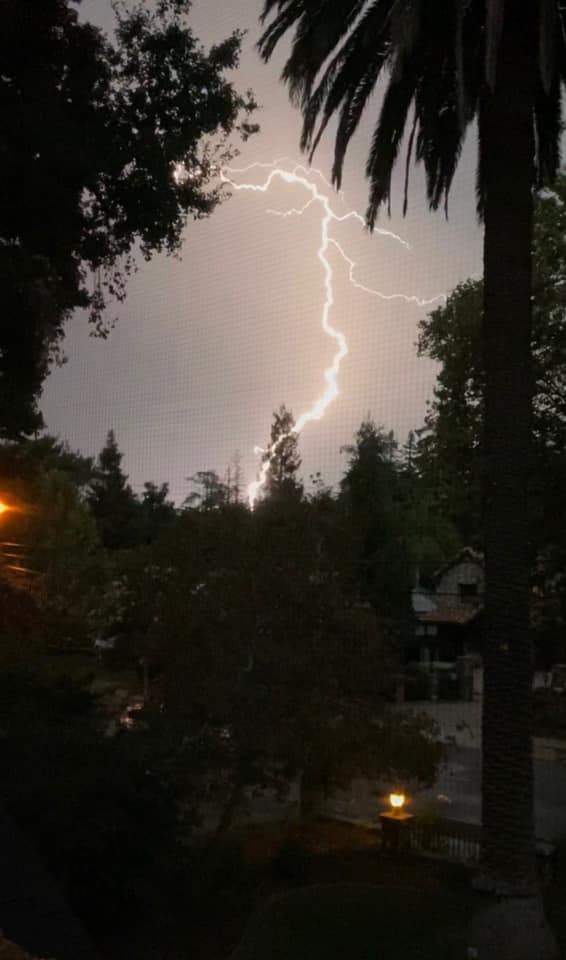
Many of us are facing significantly more uncertainty and loss now than we were when I posted about San Jose’s freak lightning storm last week. I’m grateful that my and Ivan’s families have been able to stay in our homes thus far, but the number of families in our Hillside and VCS communities who have evacuated or lost their homes seems to increase every day. It’s one thing to read about natural disasters happening in distant locations, but it’s entirely different to face one in real time.
These fires seem like the latest link in a chain of inexplicable crises that have impacted us in 2020. It’s easy to ask “Why, God?” or to give in to bitterness, or to crumble before the overwhelming uncertainty of it all. But these crises can also enable us to share the gospel by demonstrating there’s a different way to face difficulty – a superhuman way. And that way begins with trusting God’s goodness, even when we’re most afraid.
Thanks to Deanna Rosa for sharing her amazing photo from yesterday! 🙂
CRACK. I was fumbling around for some bagels to throw in the toaster early yesterday morning when the kitchen went white. Strobe-light white. Light is silent (according to my non-scientific opinion), but this light felt loud. I blinked at the toaster for the next couple of seconds, philosophizing over the implications of a silent flash. Was that heat lightning? Can heat lightning be that bright? Does heat lightning preclude thunder within a certain proximity? Can lightning even occur without thunder? Thankfully the absentee thunder arrived and prevented my mind from wandering to any more obscurely existential questions. Said thunder also reminded me that I’d burned up valuable seconds that I should have been using to get to our bedroom.
We’ve learned from experience that I have around 60 seconds between seeing a light trigger and having a seizure – only enough time to find a place to sit or lie down. I’d just wasted an indeterminate number of these seconds pondering the implications of noiseless lightning, when what I’d really needed was to get very far away from all the condo windows in case the rogue lightning strike turned into a rare NorCal thunderstorm.
I shielded my eyes with my hand and groped down the stairs toward our bedroom. Somehow I made it to the bed and tugged off my glasses just before the seizure started.
Between that seven-minute seizure (possibly my record for 2020), the heat wave that impacted Hillside’s second week of outdoor church services, and the pandemic anxiety that manifests in so many aspects of all our lives, the “Verse of the Day” from my Bible app this morning seemed particularly relevant:
“Dear brothers and sisters, when troubles of any kind come your way, consider it an opportunity for great joy. For you know that when your faith is tested, your endurance has a chance to grow.” ~James 1:2-3
My health status often makes me feel like a magnet for “troubles of any kind,” so I have to remind myself that Ivan and I have been spared many trials that other people experience daily. I do excel at viewing my troubles as “opportunities,” though. The problem is that I don’t view them as the kind of opportunities James was writing about.
Unfortunately, I tend to view my troubles as opportunities for complaining rather than rejoicing. Counting yesterday’s seizure (and ensuing migraine), or the weekend’s stifling heat as opportunities for joy did not cross my mind. True, it crossed my mind today as I read those verses. But that’s just my point. Offering “retroactive praise” is relatively easy, since I can wait until I’m feeling physically and emotionally stable before I compliment God on a finished product I can already see. Giving thanks when the physical and emotional odds are against me and I can’t see God producing anything good yet? That is a skill I desperately need to cultivate.
So while I doubt San Jose has more spontaneous thunderstorms in its immediate future, and while I hope our heat wave relents in time for Hillside’s services next weekend, I’m positive that God will unleash other surprises to keep honing my ability to praise Him in the moment. Retroactive praise is important, but present-tense praise is essential for developing that all-important character trait, endurance. That character trait might only feel good once I’m surveying my life from the finish line, but I’m grateful that God continues providing opportunities to consider troubles “great joy” – whether I like those opportunities or not.
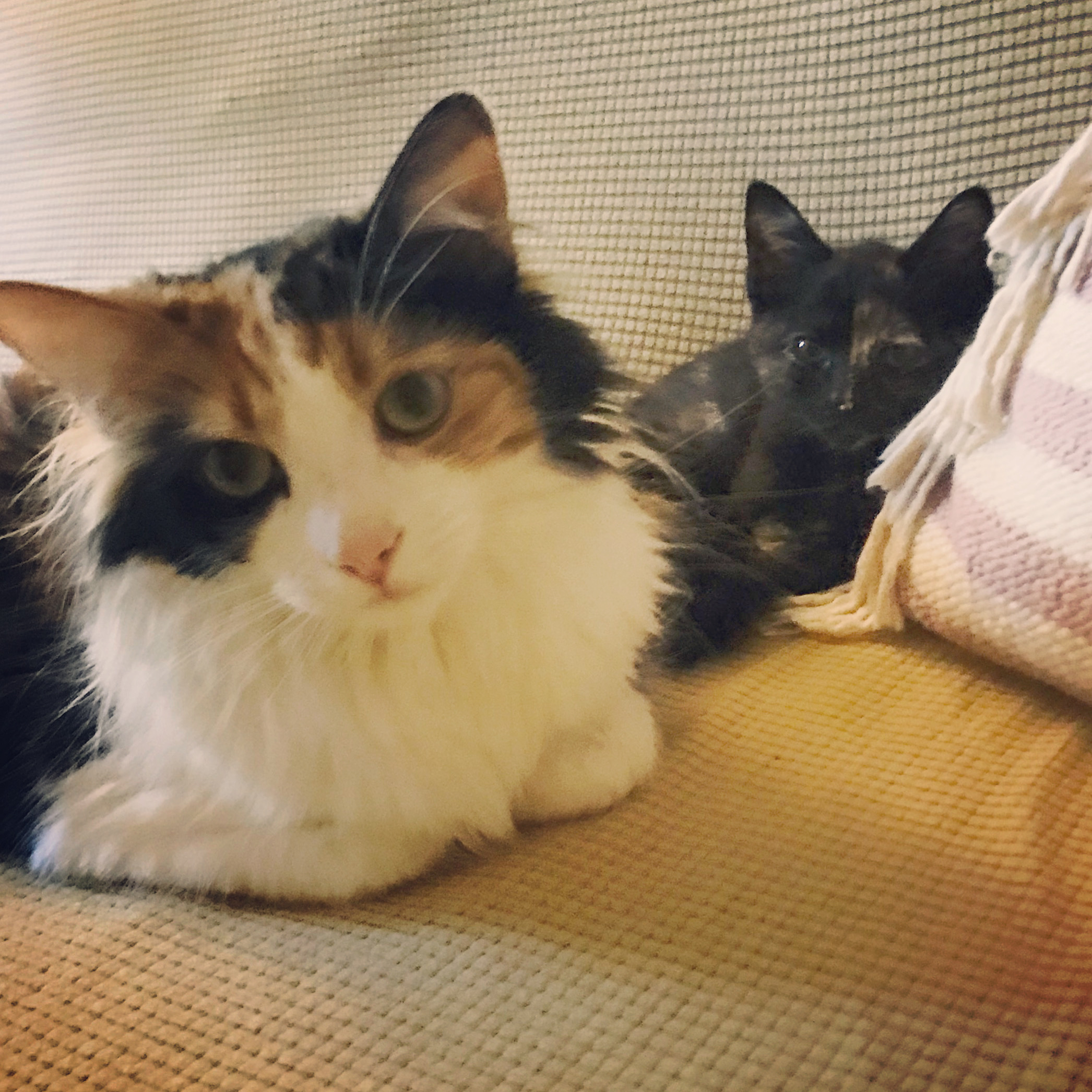
“There was a kitten with a patched eye and a calico cat with a frightened face….”
Prologue
It was the best of times, it was the worst of times…it was a week of strategy, it was a week of speculation…it was a fresh start, it was a final chapter…it was a time of excitement, it was a time of anxiety…it was a period of imagining a golden future and praying furtively against catastrophes that were equally probable. In short, the events of Moving Week felt so much like news headlines that they must be compared – for better or worse – in superlatives.
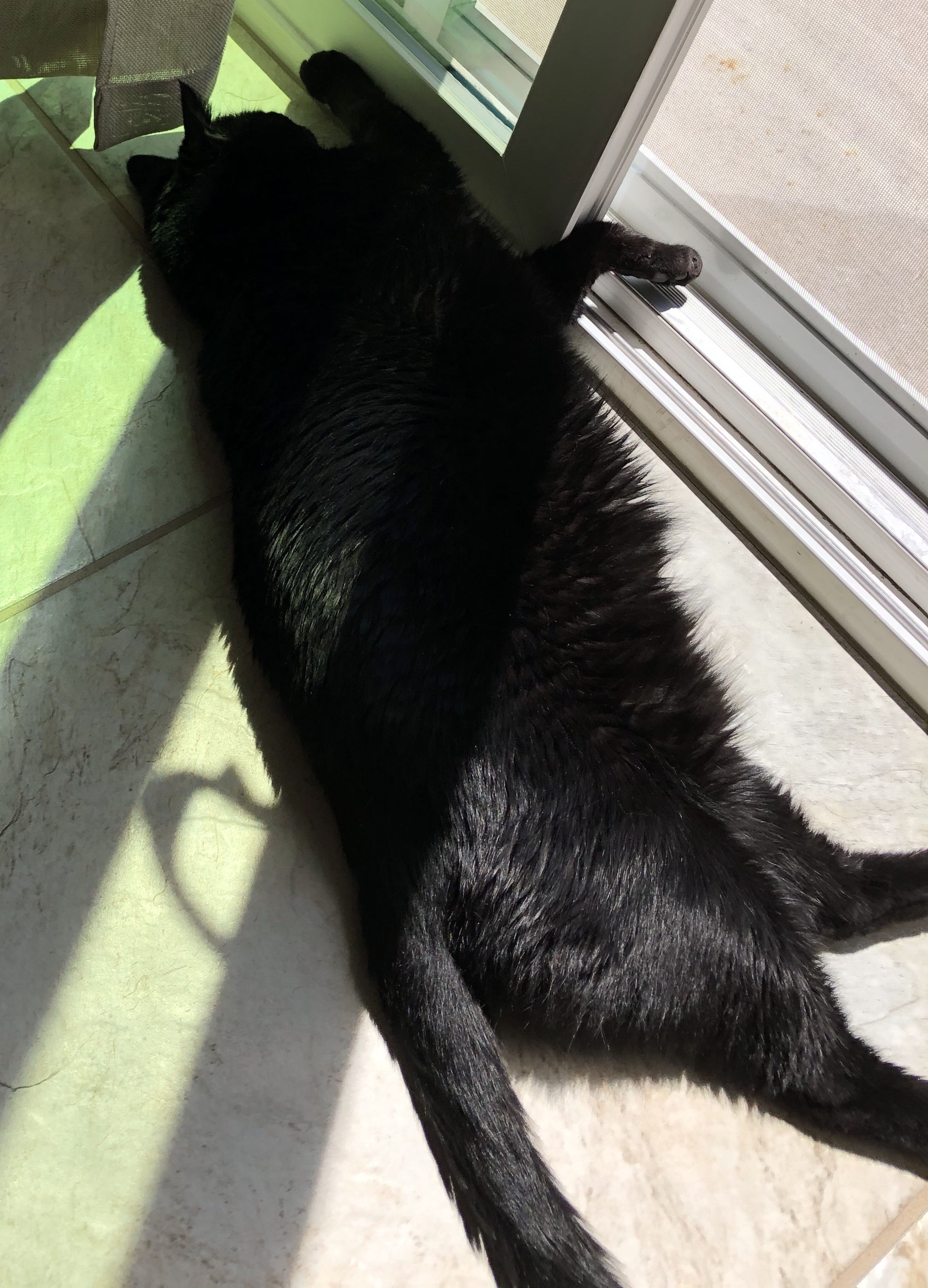
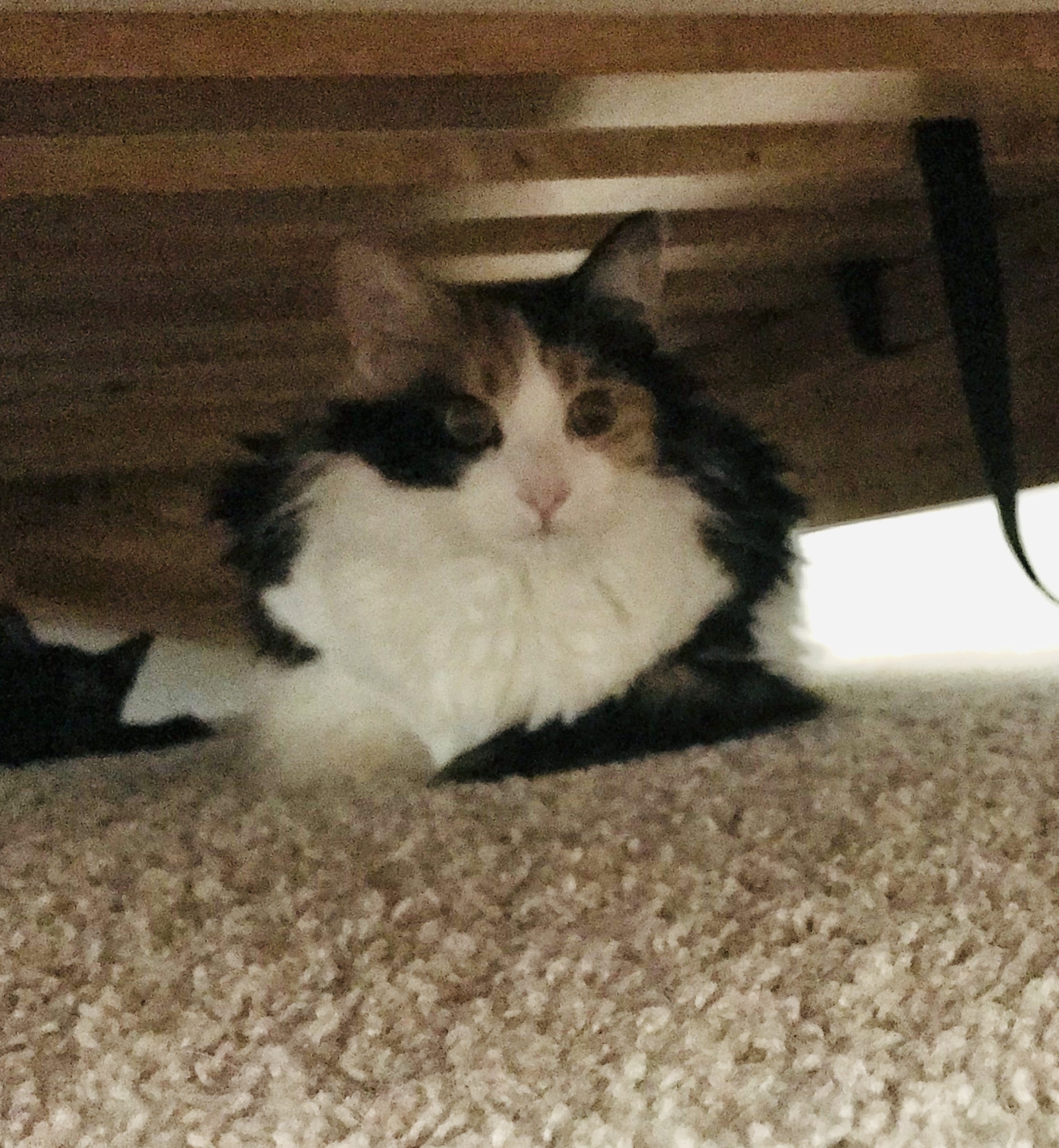
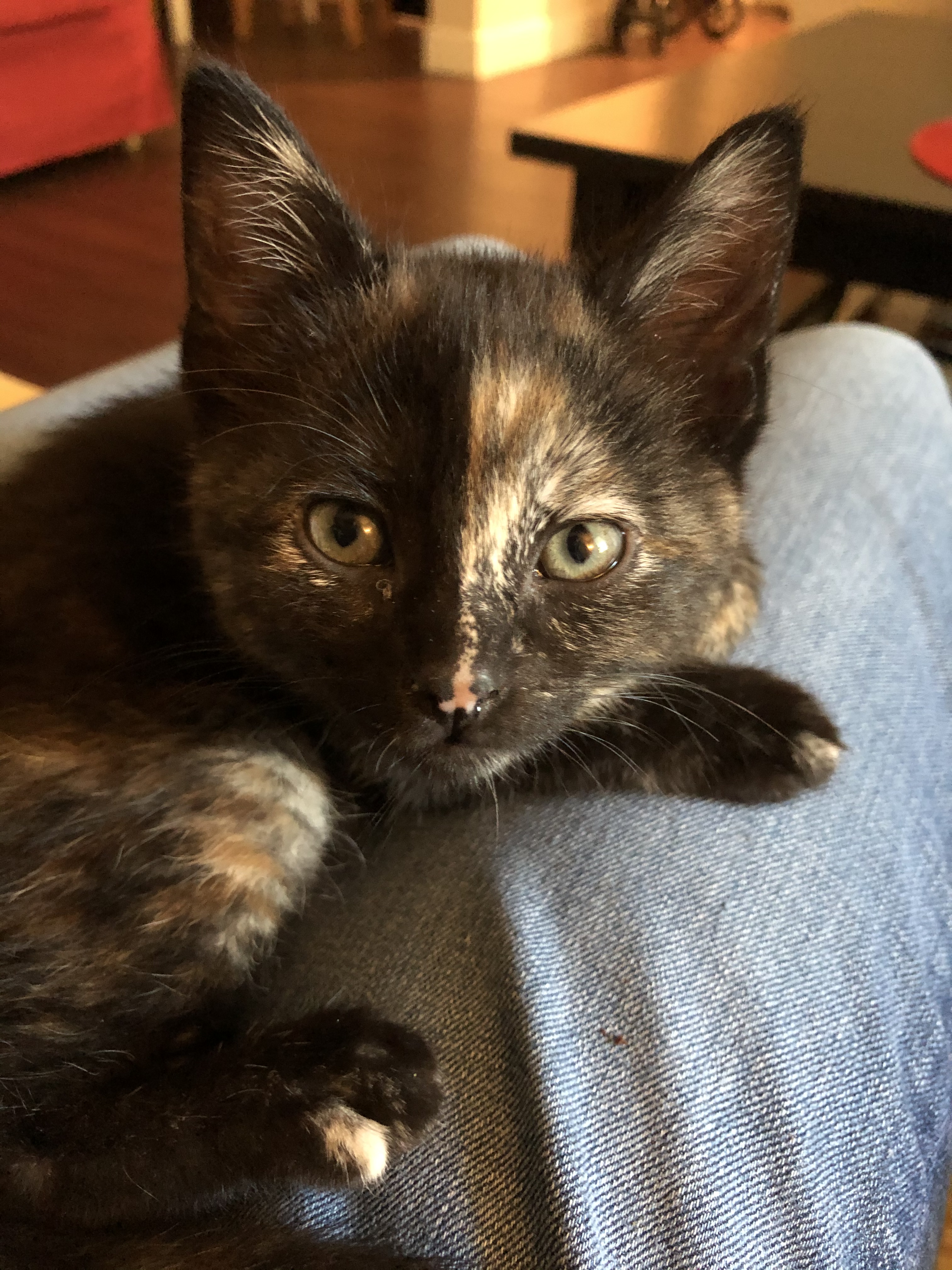
There was a kitten with a patched eye and a calico cat with a frightened face in an apartment on Charlotte Drive. There was a black cat with a blank face in a condominium on Black Onyx Court. The feline monarchs of both residences were absolutely certain that things in general were settled forever.
***
As much as Ivan and I tried to anticipate every possible moving variable, our two cats remained wild cards. We knew they would accompany us to my parents’ condo, but we knew very little beyond that. You see, my parents already have a cat. While the Crosby/Utomo families have integrated two kitties several times (usually we add a kitten to a pre-existing cat), no one has mixed three pre-existing cats. But in spite of this uncharted territory, we could make some predictions based on personality:
Zelda, our extroverted kitten, would be unphased and probably end up dominating the other two
Daisy, our emotionally fragile cat, would probably have a psychiatric crisis but eventually adjust to her new environment
Scheherazade, my parents’ older cat, might be too apathetic to care about the two invaders. [Note: Her name is pronounced “Shuh-HAIR-uh-zahd,” which is a famous piece of classical music with a violin solo. I’ll let you guess who named her…;)]
My parents (and Anna and Robert) agreed these were fairly educated guesses. How hard could integrating three non-aggressive cats be? We concluded our moving day under the golden impression that worst (i.e. my TBI triggers) was behind us.
And then Scheherazade happened.
“O Sleep! O Gentle Sleep!”
‘Herazade is a 14 pound, eight-year-old black cat. Daisy weighs ten pounds and Zelda weighs four, so she’s the size of both our cats combined. Her girth discourages physical effort of any kind, so we’ve come to know and love her as a furry mass that sprawls in various sunbeams around the house or lumbers over to her food bowl for a snack. Occasionally she’ll get up and scream to be held.
We’ve integrated enough cats to know better than to turn them loose immediately. After giving Zelda and Daisy a peaceful night in the “Cat Sanctuary” (aka our first-floor bedroom), we thought it was time for Zelda to meet ‘Herazade. Daisy had lodged herself under a corner of our bed and was unlikely to dislodge herself for several days, given her previous psychiatric history.
‘Herazade’s unseemly girth was sprawled in her “Cup” – a sort of UFO-shaped cat bed stationed in the second-floor living/dining area. Mom found the Cup at Costco last year. It was the only bed large enough to accommodate ‘Hereazade’s size, plus it came with a scratching post. Ivan and I had no trouble coaxing Zelda up from the Cat Sanctuary for a visit. Not only is Zelda hyper-intelligent for a 5-month-old kitten (I blame it on her being half Siamese), but she matches her intelligence with an equal – if not greater – dose of obnoxiousness. Most kittens would have approached the unfamiliar giant tentatively, but Zelda marched straight up to her drowsy victim and bopped her across the face.
This did not go well.
‘Herazade – the cat we believed incapable of anything more than an ungainly amble – shot over the edge of her Cup and across the length of the second floor, driving Zelda before her. If her vocalizations had been transliterated into a human movie, the movie would have been rated R. Zelda slid under a china cabinet just in the nick of time. If she’d been a quarter of a second later, we might well have spent the night cleaning up kitten fur. ‘Herazade devoted the next 15 minutes to screaming and trying to jam herself under said cabinet, most likely to exact a blood penalty for invading her territory. Zelda should be grateful there is a marked difference in spaces that are feasible for 4 lb. kittens vs. 14. lb. cats.
As for Zelda the Indomitable – the kitten who’d terrorized Daisy since arriving in our apartment at eight weeks old – this same kitten had become the terrorizee. Neither Mom, Ivan, nor I could do much about ‘Herazade till Dad got home, but after he removed her and restored order we all admitted that our Worst of Times was far from over.
“Well, what should we do next?” Mom was smiling at me over her Five Cheese Rigatoni. She always cooked the Rigatoni on special occasions, and tonight was our official “welcome dinner.” I looked up at her and shrugged.
“Why is it always me?” I’d been having a terrible week with my TBI symptoms, and as much as I’d have loved to add “Cat Heroine” to my resume, I wasn’t feeling particularly heroic.
“You always know what to do with the other cats. Besides – you got Daisy to get along with Zelda.” I resented the fact that she was right.
“Well, I can’t deal with this right now. Ivan – you’re going to have to take this one for me.” Poor Ivan never had any cats growing up. He didn’t even want to get a cat after we got married. He definitely didn’t deserve being saddled with a cat integration right after our move. But when is TBI ever convenient? Something had to give.
“Umm…okay.” He might have skipped a beat, or his mouth might have been full of rigatoni. I tried not to guess. “Maybe we could try a cage integration…didn’t you say something about that, Grace?”
I shrugged. “Yeah, sure. That way I guess we could keep Zelda in our bedroom all day and then take her up for a visit while ‘Herazade’s in her cage. At least she wouldn’t die that way.”
Mentioning the third cat lodged under our bed was out of the question.
“Fools rush in where calicos fear to tread.”
Like all our previous cat plans, “Cage Integration” was not as simple as it sounded. There was ‘Herezade’s profanity, to begin with. Obscenities emanated from the depths of her cat carrier, sounds which sent Zelda scrambling the first few times we introduced her to her caged attacker. As for Zelda, it took her three visits to edge close enough to peek inside. Apparently near-death experiences scar even the most intrepid kittens.
And then there were the stakeouts. Not only had we underestimated ‘Herezade’s speed and verbal ability, but we’d also underestimated her intelligence. She identified both the Cat Sanctuary and our cats’ essential items – food bowls and litter box – then waited for hours outside the Sanctuary door until one of them responded to Nature’s call. If we accidentally left the door cracked, she’d unleash a war cry and charge in using her head like a battering ram. Daisy nearly eliminated litter box trips. I wondered if all were lost.
Never discount the power of a man with his cat.
With only three days until Ivan resumed work at VCS, and under intensifying reminders that Mom and I would not referee a feline civil war, the men reengineered “Cage Integration.” Ivan is the only one who can soothe me during my worst TBI episodes, and Dad posseses a bizarre telepathic bond with ‘Herazade (formed while Mom lived with us in Riverside after the accident). If anyone possessed the emotional intelligence to de-escalate the feline feud, it was probably the men.
I confess that I was too stressed to observe “Men and Cats” Day One, but was encouraged to learn that ‘Herazade only let out a single shriek and Zelda held her ground instead of shooting off to the Sanctuary. I heartened myself to witness “Men and Cats” Day Two, but opted out of active participation lest I reverse the previous day’s good fortune. I also ignored the fact that my default “flight” and “avoidance” responses were starting to resemble the cats’. Poor ‘Herazade demonstrated an admirable amount of tact on Day Two and restricted herself to a couple of low rumbles. Zelda rewarded this restraint by waltzing around the living area, stuffing her face in ‘Herazade’s food bowl, and trying to punch her caged opponent through the carrier bars. Clearly her fear of death had worn off. Ivan finally grabbed her and shuttled her back down to the Cat Sanctuary, but one thing was very clear. It was time to go Cage Free.
“Men and Cats: Cage Free” was to be a study in stealth and surprise. Dad would soothe ‘Herazade into her carrier and Ivan would let Zelda bounce around the living area like the day before, keeping her away from the cage until we were sure her opponent wasn’t going to throw a fit. After Dad unlatched the carrier door? Mom was optimistic about Cage Free’s results, Dad and Ivan were pleasantly neutral, and I was…anxious.
Mom seemed correct about “Men and Cats: Cage Free.” ‘Herazade self-caged, for starters. Fifteen minutes hunting under sofas and chairs revealed she was already installed in the plastic cage that was integral to our 4 pm “Men and Cats” ritual. Five days of foreign feline invasion and four days of coercion had transformed ‘Herazade into a self-caging kitty. Her pre-emptive gesture might have been more tragic if it had been less practical, but at the time we just clicked her door shut and summoned her arch-nemesis. Zelda was more than willing to repeat her antics from the day before, complete with shloshing ‘Herazade’s water all over the floor and trying to see how much big-cat food she could fit in her kitten mouth.
I looked over at Ivan and Dad. “Do you guys think this is it?”
“I don’t know – you tell me.” Dad was sitting cross-legged on the floor next to the cage. “Do you think you can take it? We can wait until you leave if you want….That’s okay, girl!” It suddenly struck me as comical that he was torn between a brain-injured daughter and a traumatized cat.
“What do you think?” I looked at Ivan. He still had to deal with my brain-injured self, but at least his kitten wasn’t traumatized.
“I say we go for it. I mean, we know Zelda’s fast enough to get away. And ‘Herazade hasn’t resorted to profanity yet. But do you need to leave, Grace?”
I shook my head. “I think I’m going to stick this one out. It’s turned into some sort of bad soap opera with this whole self-caging thing.”
“Okay, then.” Dad collected himself from the tile floor. “Here goes.”
Even Mom gasped as the door swung open – thus commencing one of the more notable anticlimaxes in recent memory. ‘Herazade sat blankly in her carrier as Zelda trounced all over her beloved living room. The condo at Black Onyx Court had effectually been ceded to a five-month-old kitten – apparently out of emotional exhaustion. Zelda’s ego ballooned to about three times its usual size after her cage-free victory, which has blessed no one but herself.
***
Epilogue
The feline monarchs of two residences, having been reduced to the single monarch and two vassals of one residence, are no longer certain that things can be settled forever.
The kitten with the patched eye rules two cats, two floors, two food bowls, and one litter box, and is mounting an attack on the elusive third floor (complete with a third food bowl and second litter box). The calico with a frightened face maintains the same fealty to her patch-faced sovereign that she originally swore in the apartment on Charlotte Drive, and still depends on said sovereign’s protection to venture past the Cat Sanctuary. The black cat with a blank face self-cages regularly and appears to have relinquished all hope of reclaiming the condominium on Black Onyx Court. The sovereign with the patched eye is enjoying the Best of Times.